You might spend hours in the gym building muscle, but true physical capability requires a deeper foundation. Sophisticated wellness routines now look beyond aesthetic training to prioritize joint preservation, daily mobility, and structural alignment. When you address the subtle imbalances created by your busy schedule, you protect your body from premature wear. Building durable posture habits gives you the structural resilience needed to perform at your peak every day.

How does corporate travel strain your spinal alignment?
Frequent flights and long train rides force your spine into prolonged flexion. Cramped seats compress your lumbar discs, while tight hip flexors pull your pelvis forward once you stand. You carry heavy briefcases or lift luggage into overhead compartments, adding uneven torque to cold shoulder joints and strained spinal ligaments.
The hidden toll of transit seats and heavy luggage
Transit environments rarely support natural spinal curves. When you slump in an airplane chair for 4 hours, your neck leans forward to view screens, multiplying the effective weight your upper back must carry.
Slip a rolled lumbar cushion behind your lower back immediately after boarding. Walk the aisle during long flights to rehydrate spinal discs and restore healthy blood flow through your legs.
Why do sedentary desk hours compromise your body mechanics?
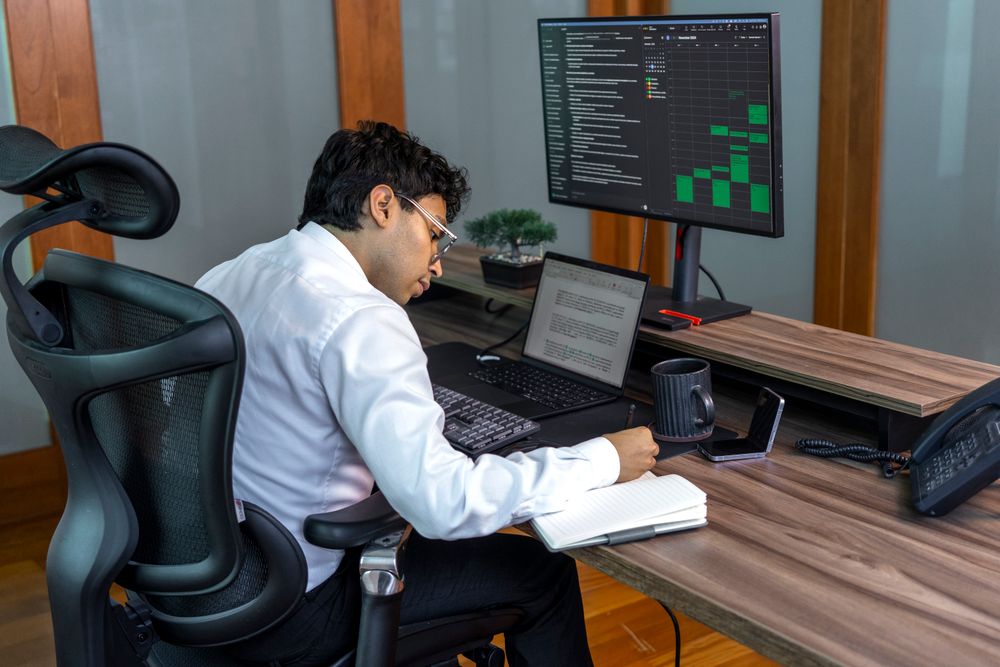
Desk work keeps your body locked in a static position that restricts circulation and tightens connective tissue throughout your hips. Remaining frozen in an office chair tightens your hip flexors, collapses your chest, and leaves your spine vulnerable to daily strain. Your postural muscles slowly fatigue, forcing your lower back to absorb excessive tension as the workday drags on.
Sitting for long stretches weakens your posterior chain and pulls your shoulders into an unnatural slump. When you learn more about targeted movement assessments and corrective routines, you catch subtle structural imbalances before they become persistent pain. Addressing joint restrictions early keeps your body balanced and fully supported through demanding workdays. You regain effortless stability while working at your desk instead of fighting constant muscular fatigue.
What shifts occur when you choose functional movement therapy?
Traditional fitness routines often isolate individual muscles rather than training full movement patterns. Functional movement therapy shifts your focus toward how your kinetic chain functions as an interconnected system. You retrain the deep stabilizing muscles that align your pelvis and keep your shoulder blades flush against your rib cage. A restorative approach teaches your nervous system to distribute mechanical loads smoothly across your entire body.
Clinicians at Harvard Health Publishing explain that prolonged sitting reshapes spinal structures and drives continuous compressive pressure into your intervertebral discs. Targeted movement therapy counteracts the compression by decompressing the spine and restoring rotational freedom to stiff joints. Instead of loading compromised joints with heavy weights, you rebuild fundamental ranges of motion through your hips and mid-back. Your body learns to absorb physical stress efficiently, protecting your cartilage and keeping you resilient through every active pursuit.
How clinical exercise physiology safeguards your joints
Targeted exercise physiology transforms standard workouts into precise, therapeutic conditioning for your entire body. Specialists at the Cleveland Clinic note that correcting persistent postural issues requires active conditioning of foundational stabilizer muscles instead of relying on passive braces or temporary supports. When you activate deep muscular networks, you build dynamic joint stability that holds up through long workdays and demanding physical routines.
A clinical movement specialist evaluates your gait, joint angles, and movement habits to design a tailored corrective program. You strengthen underactive muscle groups along your spine and hips while releasing chronically tight tissues around your chest and neck. A deliberate approach protects cartilage surfaces from excessive friction and shields your body against repetitive wear.
Simple movement rituals you can integrate into your workday
You do not need hours of free time to counteract the strain of desk work. Integrating brief movement breaks into your regular calendar resets your posture and refreshes your focus throughout the business day.
- Reset your thoracic spine: Stand tall and extend your arms overhead every 60 minutes to open your chest and decompress tight vertebrae.
- Wake your hip stabilizers: Perform 10 controlled bodyweight squats before sitting down after lunch to reengage dormant glute muscles.
- Align your workstation monitor: Position your primary screen directly at eye level so your neck remains completely neutral during typing sessions.
- Pace during phone calls: Take audio meetings on your feet and walk around your office to keep your lumbar spine unloaded.
Build lasting structural strength for your future
Protecting your physical capability requires consistency rather than extreme bursts of effort. When you practice intentional movement patterns each morning, your body adopts neutral posture automatically.
Your joints function like high-performance machinery that demands precise alignment to avoid friction. Investing time into foundational movement patterns preserves your athletic capacity and daily comfort across every stage of life.
Physical vitality represents the true foundation of an active, fulfilling lifestyle. When you replace passive sitting with mindful posture habits and structured physical therapy, your body responds with greater energy and resilience. Commit to regular mobility assessments and treat your joint health as a daily priority. Your structural strength will reward you with seamless movement for years to come.
