Best Electrolytes for Toddlers
Managing a toddler who refuses to drink during a fever or a hot vacation day can be genuinely stressful. While toddlers usually get enough hydration from plain water, milk, and their regular meals, certain situations can make parents consider electrolyte support. You do not need to provide electrolyte drinks daily, but during vomiting, diarrhea, heavy sweating, or reduced fluid intake, a pediatric oral rehydration solution may be helpful. The goal is to help parents compare options safely and practically. This guide covers when the best electrolytes for toddlers may help, what parents should look for, what to avoid, and several parent-friendly brands to consider.
What Are Electrolytes and Why Do Toddlers Need Them?
Electrolytes are minerals such as sodium, potassium, and chloride that help the body manage fluid balance. Pediatric ORS also contains glucose in carefully measured amounts to support fluid absorption. Simply put, true hydration is about more than just drinking water; it requires these minerals to function properly. For example, sodium and glucose help the body absorb water, while potassium helps replace minerals lost during vomiting or diarrhea.
Toddlers require a very specific, gentle balance of these minerals, meaning their needs are entirely different from those of adults, athletes, or older children. They do not need complicated sports nutrition products. For young children, pediatric ORS can help restore fluid balance during fluid loss, such as vomiting or diarrhea, ensuring healthy muscle function without overwhelming their developing bodies.
When Might a Toddler Need Electrolytes?
Because toddlers have higher metabolic rates and a larger body surface area relative to their weight, they are biologically predisposed to rapid dehydration. While everyday routines do not require supplements, electrolyte support becomes useful in situations where a toddler is losing fluids faster than they can replace them.
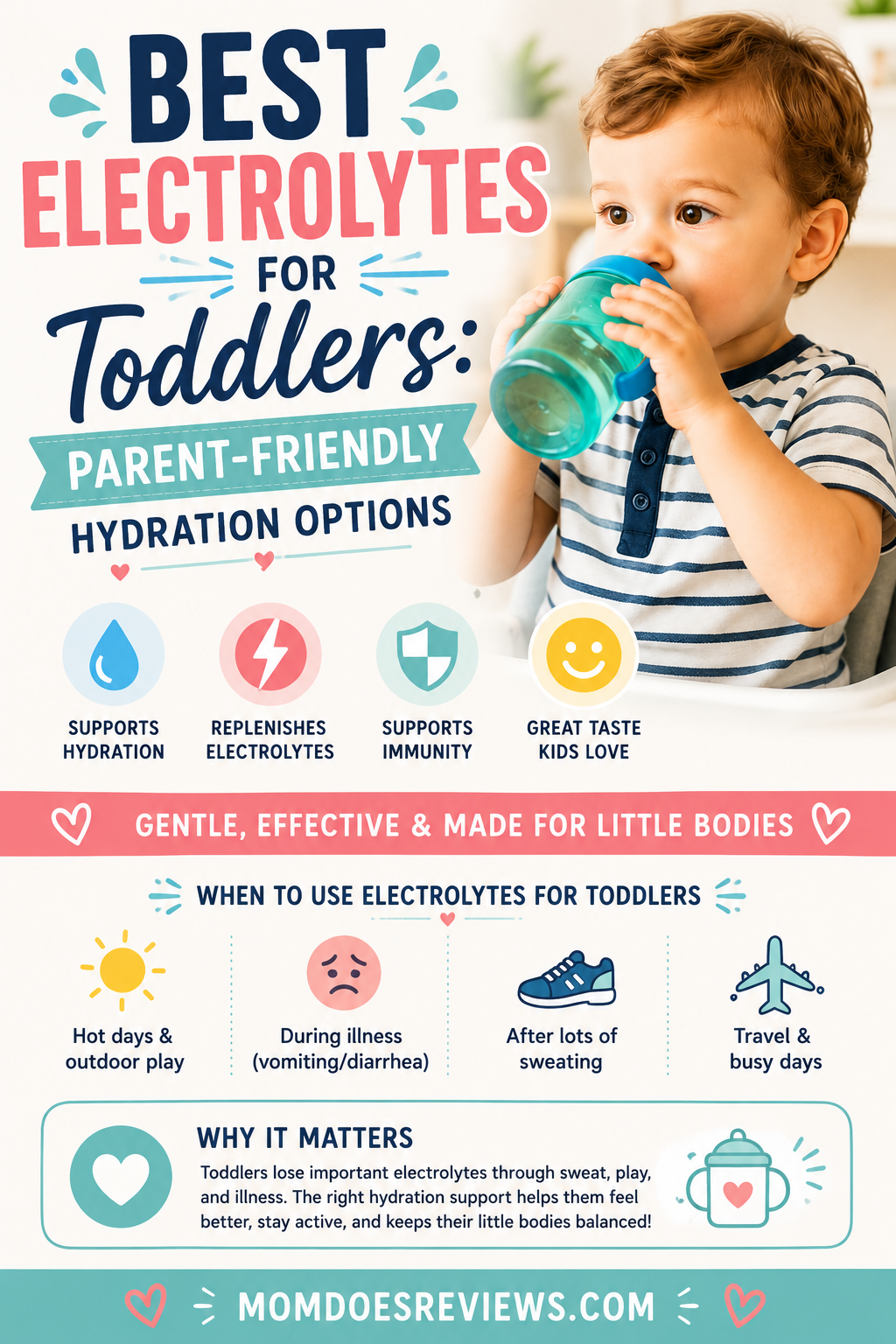
Consider using an oral rehydration solution (ORS) during:
- Vomiting or frequent diarrhea.
- Fever or heavy sweating.
- Exposure to hot weather.
- Active outdoor play with heavy sweating or poor fluid intake.
- Travel days when normal drinking is disrupted, especially in hot weather or during illness.
- Periods where they are refusing fluids or drinking less than usual.
During these high-loss scenarios, electrolytes facilitate more effective fluid absorption than plain water. However, parents should immediately contact a pediatrician if symptoms are severe, dehydration signs appear, vomiting or diarrhea continues, or if the child is very young or medically fragile. Electrolyte drinks must never serve as a replacement for professional medical care. Watch for critical red flags indicating moderate-to-severe fluid loss, such as decreased tears, altered mental status, passing out, or if an infant has not had a wet diaper in several hours.
What to Look for in Electrolytes for Toddlers
Selecting the right electrolyte supplement requires evaluating strict safety and ingredient criteria. Parents should use these specific buying guidelines before choosing an option:
- Appropriate sugar level: Pediatric ORS usually contains some glucose to support absorption, but parents should avoid high-sugar drinks, sodas, juices, and adult sports drinks.
- No caffeine: Stimulants have no place in toddler hydration.
- No energy-drink ingredients: Avoid performance additives meant for adults.
- No artificial dyes: Some parents prefer dye-free options. The FDA says most children do not have adverse effects from approved color additives, though some children may be sensitive.
- Balanced minerals: The product should prioritize functional sodium and potassium ratios.
- Toddler-appropriate serving sizes: Avoid massive single-serving packets intended for adults.
- Easy mixing or easy serving: Formats should allow for simple, precise preparation.
- Mild taste toddlers may accept: Lower-sodium formulas often allow for milder tastes that young children tolerate better.
- Clear label instructions: Age guidelines and mixing ratios must be explicit.
- Pediatrician guidance when needed: Ensure the product is safe for your child’s specific age and medical background.
Best Electrolytes for Toddlers: Parent-Friendly Options to Compare
When comparing specific products, always weigh convenience against ingredient quality to find what works best for your child.
Product formulas and age guidance can change, so parents should check the current label and ask a pediatrician before using any electrolyte product for a toddler, especially during illness.
Buoy — Best for Parents Looking for a Clean, Low-Sugar Option
Buoy is a convenient option for parents comparing the best electrolytes for toddlers and wanting low-sugar hydration support without introducing a new flavored drink. Its unflavored liquid drops can be mixed into water, juice, milk, smoothies, or other drinks a toddler already accepts, which can make it easier for picky children who resist new tastes, powders, or ready-to-drink options.
For families looking for the best healthy electrolytes, Buoy stands out for its simple drop format and flexible use. Parents can add it to familiar beverages in small amounts, making it practical for travel, hot weather, sweating, reduced fluid intake, or mild sick-day hydration support. As always, parents should follow the label and ask a pediatrician when using electrolytes during illness or dehydration concerns.
Pedialyte — Best Widely Available Pharmacy Option
As one of the most familiar electrolyte options for parents, Pedialyte is commonly found in pharmacies and grocery stores. Parents often choose it for its easy availability, ready-to-drink formats, and sick-day familiarity. However, it is essential to check the specific sugar content and flavors and to follow the serving instructions explicitly.
Kinderlyte — Best Pediatric-Focused Ready-to-Drink Option
Kinderlyte offers a child-focused electrolyte option with ready-to-drink convenience. It may appeal to caregivers who want a product strictly marketed for children rather than adult sports hydration products. Remember to check age guidance and ingredient labels carefully.
Cure Hydration Kids — Best Powder Mix Option
For families who prefer packets that can be mixed with water at home, Cure Hydration Kids provides a reliable powder mix option. Powders offer great convenience for travel, diaper bags, daycare bags, or keeping at home for sick days. They are especially useful when parents want more control over mixing and serving.
Liquid I.V. Kids — Best Flavor Variety Option
Liquid I.V. Kids is an option that may appeal to children because of its wide flavor variety. You must balance this preference against a careful label review; evaluate the sugar content, sweeteners, sodium levels, and age suitability before using.
Earth’s Best Organic Electrolyte Solution — Best Organic Ready-to-Drink Option
Earth’s Best is a practical choice for parents who prefer organic-positioned products paired with ready-to-drink convenience. It offers standard illness support with an organic focus.
Zarbee’s Hydration — Best Convenient Pouch Option
Zarbee’s pouch-style packaging is a convenient option for busy parents, especially because pouch-style products can be so easy to carry. This portability is excellent for travel, outings, or keeping in an emergency sick-day supply. Keep in mind that convenience should still be balanced with label checking and serving guidance.
Electrolytes vs Water: When Is Water Enough?
For normal everyday toddler hydration, plain water is almost always enough. Parents should not feel pressured to give an electrolyte product on a daily basis. Standard meals, fresh whole fruits, appropriate volumes of milk, broths, and daily water intake effortlessly supply the essential minerals a growing toddler requires. Specialized electrolyte solutions are usually most relevant when a child is actively losing fluids, sweating heavily in extreme heat, or struggling to drink enough.
What to Avoid in Toddler Electrolyte Drinks
Toddlers need gentle, age-appropriate hydration support, not performance drinks designed for adults. When treating fluid loss, avoid:
- Adult sports drinks: These lack the proper sodium balance for pediatric care.
- Energy drinks: These are entirely inappropriate for children.
- High-sugar drinks: High carbohydrate concentrations can worsen fluid loss by drawing water back into the intestine.
- Artificial dyes: Synthetic colors offer no functional hydration benefits.
- Caffeine: Watch out for hidden botanical stimulants.
- Products with unclear age guidance: Never guess with an unknown formulation.
- Overuse when the child is not dehydrated or losing fluids: Avoid supplementing when the toddler is perfectly healthy.
Safety Tips Before Giving Electrolytes to a Toddler
Follow these practical safety protocols before giving a toddler any hydration supplement:
- Read serving instructions: Administer targeted amounts based on the label, rather than letting the child drink unlimited volumes.
- Use toddler-appropriate products: Ensure the formulation is age-appropriate.
- Ask a pediatrician if unsure: Always consult a professional if you are unsure about dosing.
- Watch for dehydration signs: Seek immediate emergency care if you notice unusual sleepiness, dry mouth, no tears when crying, or highly decreased urine output.
- Do not ignore ongoing vomiting, diarrhea, fever, or lethargy: Electrolytes do not cure underlying illnesses.
- Avoid giving electrolyte products as a daily habit unless advised: Supplementation shouldn’t replace regular water intake without a doctor’s recommendation.
Final Thoughts
The best electrolyte option ultimately depends on your toddler’s exact age, specific symptoms, taste preferences, and your own ingredient priorities. While plain water and regular food are usually enough to meet everyday hydration needs, specialized electrolyte options can be incredibly helpful in specific situations such as illness, heat, or extra fluid loss. As a parent, always take time to compare labels, choose age-appropriate products, and speak with a pediatrician when symptoms are concerning.
