For people curious about family origins, potential genetic relatives, or specific health-related genetic information, the 23andMe DNA testing company offers an at-home testing process using a saliva sample. The value of the service depends on having realistic expectations: it can provide useful genetic insights, but it does not replace diagnostic care, routine screening, or advice from a qualified clinician.
23andMe uses genotyping, a method that examines selected locations in DNA rather than reading every letter of a person’s genome. Its available services may include ancestry tools, DNA-relative matching, trait information, carrier status information, health predisposition reports, wellness reports, and medication-related genetic insights. Features and report availability can vary by product, location, eligibility, and time.
What Can 23andMe Tell You About Ancestry?
Ancestry Estimates and Genetic Background
23andMe’s ancestry tools compare a customer’s genetic markers with reference populations to estimate where their recent genetic ancestry is most closely associated. Results are commonly displayed as percentage estimates across geographic regions. These percentages are not a complete account of culture, nationality, identity, or every ancestor in a family tree. They are scientific estimates based on the company’s available comparison data and statistical methods.
Because reference databases grow and analysis methods evolve, ancestry results may be refined over time. Siblings can also receive somewhat different ancestry estimates because each sibling inherits a different combination of DNA from their parents.
DNA Relatives and Family-History Discovery
DNA Relatives is an opt-in matching feature that can identify other participating customers who appear to share your DNA. It may help family-history researchers build branches of a family tree, help adoptees investigate biological connections, or help users confirm relationships suggested by traditional genealogy records. Matching depends on other people choosing to participate and on the amount of DNA shared.
Family discoveries can be meaningful, but they can also be unexpected. A relative match may reveal information about parentage, adoption, donor conception, or relationships that were previously unknown. It is wise to consider the emotional impact before enabling matching features or contacting a newly discovered relative.
What Health Information Can 23andMe Provide?
Depending on the service selected, 23andMe may offer reports related to genetic health predisposition, carrier status, wellness, traits, and pharmacogenetics. A genetic health risk report identifies whether certain tested variants are associated with an increased likelihood of a specific condition. It does not diagnose that condition or predict with certainty whether it will occur.
Genetics is only one part of health. Family history, age, environment, lifestyle, medical history, and genetic variants that were not tested can all matter. The FDA’s guidance on direct-to-consumer genetic tests underscores why consumers should understand test limitations and seek professional input when results could affect medical decisions.
How Can Carrier-Status Reports Support Family Planning?
Carrier-status reports look for selected variants associated with inherited conditions. Being a carrier generally means a person has one copy of a variant linked to a condition and may not have the condition themselves. However, carrier information can be relevant when both biological parents carry variants associated with the same recessive condition.
Consumer carrier reports do not test for every variant associated with every inherited condition. If a result could influence reproductive planning, or if there is a relevant family history, clinical confirmation and genetic counseling are appropriate next steps. Guidance on interpreting direct-to-consumer genetic test results explains why these reports are informative but generally not diagnostic.
How Does Pharmacogenetics Fit Into Medication Decisions?
Pharmacogenetics examines selected genetic variants that may influence how a person processes certain medications. These results can give a healthcare professional another piece of information when considering medication options, dosing, or potential side effects. They do not predict every possible response to a medication.
Do not start, stop, or change a prescription based only on a consumer genetic report. Medication response can also be affected by age, other medicines, health conditions, diet, and many non-genetic factors.
How Does the Testing Process Work?
- Choose a service that matches your primary goal, such as ancestry discovery, family matching, or selected health reports.
- Register the kit through your account and follow the included instructions.
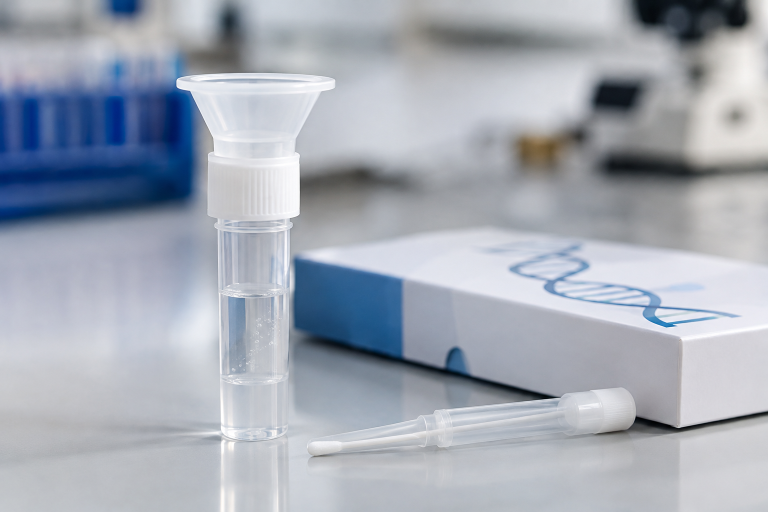
- Provide a saliva sample and send it to the designated laboratory.
- Monitor the account while the sample is processed and quality-checked.
- Review the reports that become available in your secure account.
- Discuss findings with a clinician or genetic counselor when they may affect healthcare, medication use, or reproductive decisions.
How Accurate Are 23andMe Results?
It helps to separate laboratory accuracy from clinical meaning. A genotyping process can accurately identify a tested variant, while the health significance of that variant may still be limited or uncertain in the context of one person’s complete health picture. Ancestry reports are also probability-based estimates rather than fixed statements of identity.
For health-related results, a negative finding means the report did not detect the specific variant tested. It does not mean that every genetic cause of the condition has been excluded. Likewise, an increased-risk result is a reason to consider professional follow-up, not a diagnosis.
What Should You Consider About Privacy?
Genetic information is personal and can also reveal information about biological relatives. Before testing, review the company’s current privacy policy, DNA Relatives’ settings, research participation options, sample storage choices, and deletion procedures. Consider whether you want to participate in matching or research before activating those features.
Protect the account with a strong, unique password and any available security measures. Be cautious about uploading raw genetic data to third-party services, since those services may have privacy practices that differ from the original testing provider.
When Should You Speak With a Doctor or Genetic Counselor?
- A report indicates increased genetic risk for a serious condition.
- A carrier result may affect family-planning decisions.
- Your result conflicts with your personal medical history or known family history.
- You are considering a medication change.
- You receive an unexpected family-relationship finding that causes distress or uncertainty.
Is 23andMe Right for You?
23andMe may be a useful starting point for people who want convenient access to ancestry exploration, relative matching, and selected genetic reports. Its strengths include at-home collection and a broad set of consumer-facing DNA tools. Its limits are equally important: it does not provide a complete medical assessment, test every meaningful variant, or replace clinical genetic testing.
Conclusion
The most responsible approach is to define your goal before ordering, review the reports included with the service, understand the privacy choices, and plan for professional follow-up if findings could affect your health or family planning.
