You’ve picked the spot for the swing set, the kids are already begging, and now someone asks what goes underneath it. Surfacing is the part of a home play area that’s easy to skip and hard to fix later. This review covers what to check before you buy rubber mulch, in the order you’ll need it.
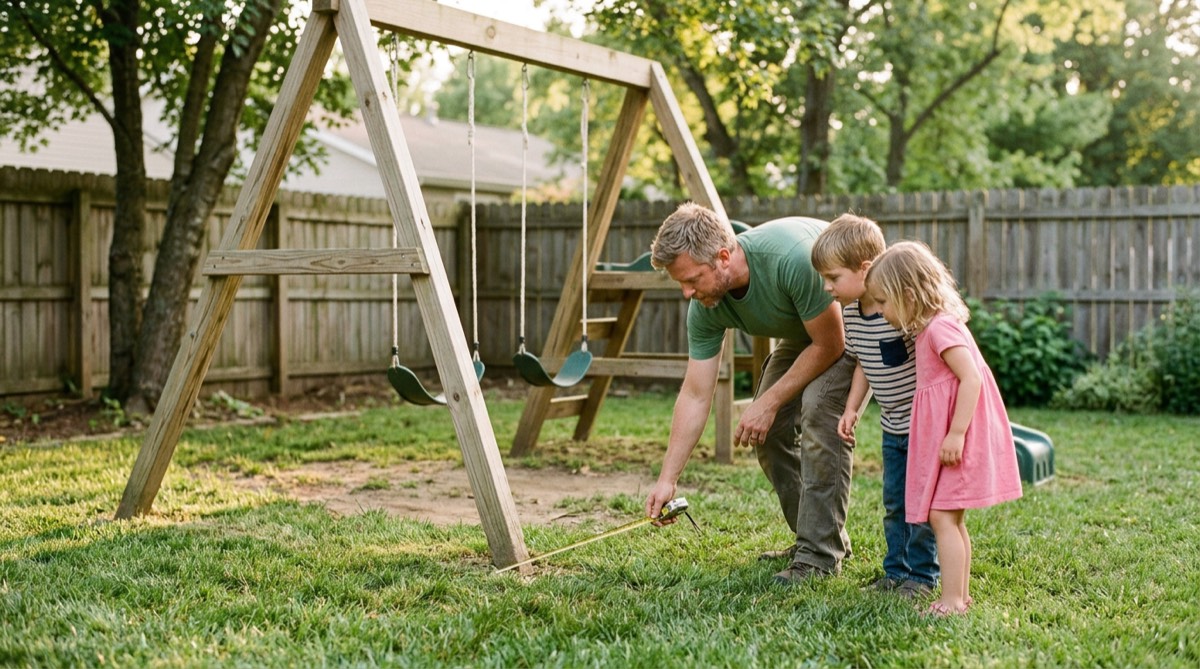
Start With the Safety Guidance for Your Equipment
The right surfacing depends on how high your kids can fall, so measure your equipment before you shop. The US Consumer Product Safety Commission’s home playground handbook says to maintain a minimum depth of 9 inches of loose-fill material, including shredded or recycled rubber mulch, for equipment up to 8 feet high.
Write down the highest platform on your equipment, since that’s the number every depth and coverage question comes back to. Measure your equipment height first. For anything taller than your set, or if you’re unsure, ask the equipment maker for the fall height.
What’s in the Range
Once you know the depth you need, compare what’s available against it. Surfacing sold as playground rubber mulch usually comes as loose-fill pieces with borders to hold them in place, plus mats for high-traffic spots. Take wheelchair-accessible rubber mulch for playground use from WillyGoat, where the page lists several loose-fill and border products. Ask any supplier which product matches your equipment’s fall height and how they rate it.
WillyGoat’s range includes:
- GroundSmart Rubber Mulch, listed as meeting major safety standards
- Loose Fill Rubber Mulch, made from recycled tire buffing
- Playground border timbers and J-Curb curbing to contain loose fill
- Swing mats for high-traffic areas under swings and slides
The page notes that its mulch is made from recycled tires and that the amount you need depends on your equipment’s fall height and the area to cover. That’s the right way to frame it, since a number that suits one set may not suit yours.
Work Out How Much You Need
Coverage is simple arithmetic once you have the depth. Measure the length and width of the play area, including the safety zone around the equipment, then multiply by the depth in feet to get cubic feet. Keep these figures on one sheet so every quote you get is for the same job:
- Length and width of the play area
- Highest platform on the equipment
- Target depth after settling
- Length of border you need
Add a margin for settling. The CPSC handbook notes that an initial fill level of 12 inches will compress to about a 9-inch depth over time, so plan to buy more than the final depth suggests. Calculate coverage with settling in mind before you place an order, and ask each supplier how they size their quotes so you’re comparing like with like.
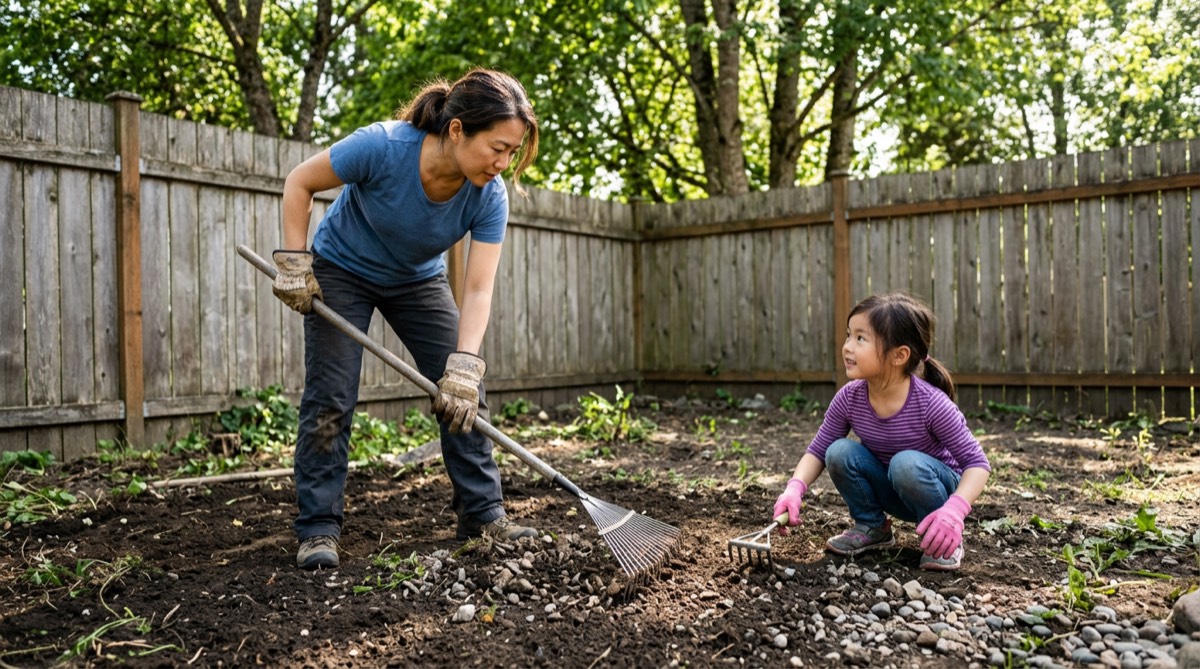
Prepare the Ground
A good surface starts with the base, and skipping prep is how loose-fill ends up patchy within a season.
Clear and Level
Remove large debris, roots and stones, then smooth the area so the depth is even across the whole surface. Low spots hold less mulch and let kids reach hard ground more easily. If the area slopes, level it or plan borders that hold the fill in place, since mulch drifts downhill.
Add Fabric and Plan Drainage
WillyGoat’s installation notes call for landscape fabric to limit weeds while allowing drainage. Check where water runs after rain, because puddles under a swing are a good sign the base needs another look.
Spread and Contain
Spread the mulch evenly to your target depth and install borders to hold the edges. Borders keep loose fill from drifting into the lawn and make depth checks easier.
Plan for Maintenance
Loose fill moves, compacts and wears, so plan to check it on a schedule. North Dakota State University Extension recommends at least 12 inches of loose fill around playground equipment, and the CPSC says to refill periodically to keep the minimum depth.
Check the areas where kids land most: under swings, at the bottom of slides and around climbing frames. These spots lose fill first, so look there before you check the rest of the surface. Rake displaced material back into place and top up thin spots.
Add a monthly check to your calendar and keep a ruler or depth marker handy so you can measure rather than guess. WillyGoat’s notes mention raking to keep the surface from compacting and using a leaf blower for debris.
| Top Tip: Mark the target depth on a post or border with a permanent line. A quick glance then tells you whether you need to rake or add more. Check after heavy use, big storms and school-break weeks when kids spend the most time outside. |
Make the Space Part of a Bigger Plan
Surfacing is one piece of a backyard that works for your family. If you’re thinking about outdoor play more broadly, think about shade, seating for adults and a clear sightline from the kitchen window.
Write your questions for suppliers down before you call: the product’s rated depth for your fall height, what the borders are made of, how the mulch is delivered and what upkeep they expect. A good supplier will answer each one clearly, and you’ll have a record to compare later.
Measure First, Then Order
The best purchase comes from numbers you’ve checked yourself: equipment height, area and depth. Measure your equipment this weekend and write the height at the top of your shopping list.
Frequently Asked Questions
How deep should rubber mulch be under a swing set?
It depends on equipment height. The CPSC says at least 9 inches of loose-fill, including rubber mulch, for equipment up to 8 feet high.
Does loose-fill rubber mulch need refilling?
Yes, because it settles and gets displaced. The CPSC says to refill periodically to keep the minimum depth.
Do I need landscape fabric under rubber mulch?
WillyGoat’s installation notes call for it to limit weeds while allowing drainage. Check your supplier’s guidance for your base.
