Introduction
Walking down a baby superstore aisle or browsing online newborn checklists for the first time can leave expectant parents convinced they need an entire room packed with specialist gadgets just to change a nappy. In reality, newborns go through roughly eight to twelve nappies every twenty-four hours, which means the most valuable equipment is whatever makes a 3:00 AM change quick, hygienic, and straightforward. Alongside a wipe-clean mat, gentle cleansers, and spare vests, researching well-sealed bins for nappies is one of the practical decisions worth making before your due date so soiled items stay contained between trips outside. Sorting through essential baby changing supplies for first-time UK parents becomes much easier once you separate everyday workhorses from bulky extras that end up gathering dust in the spare room.
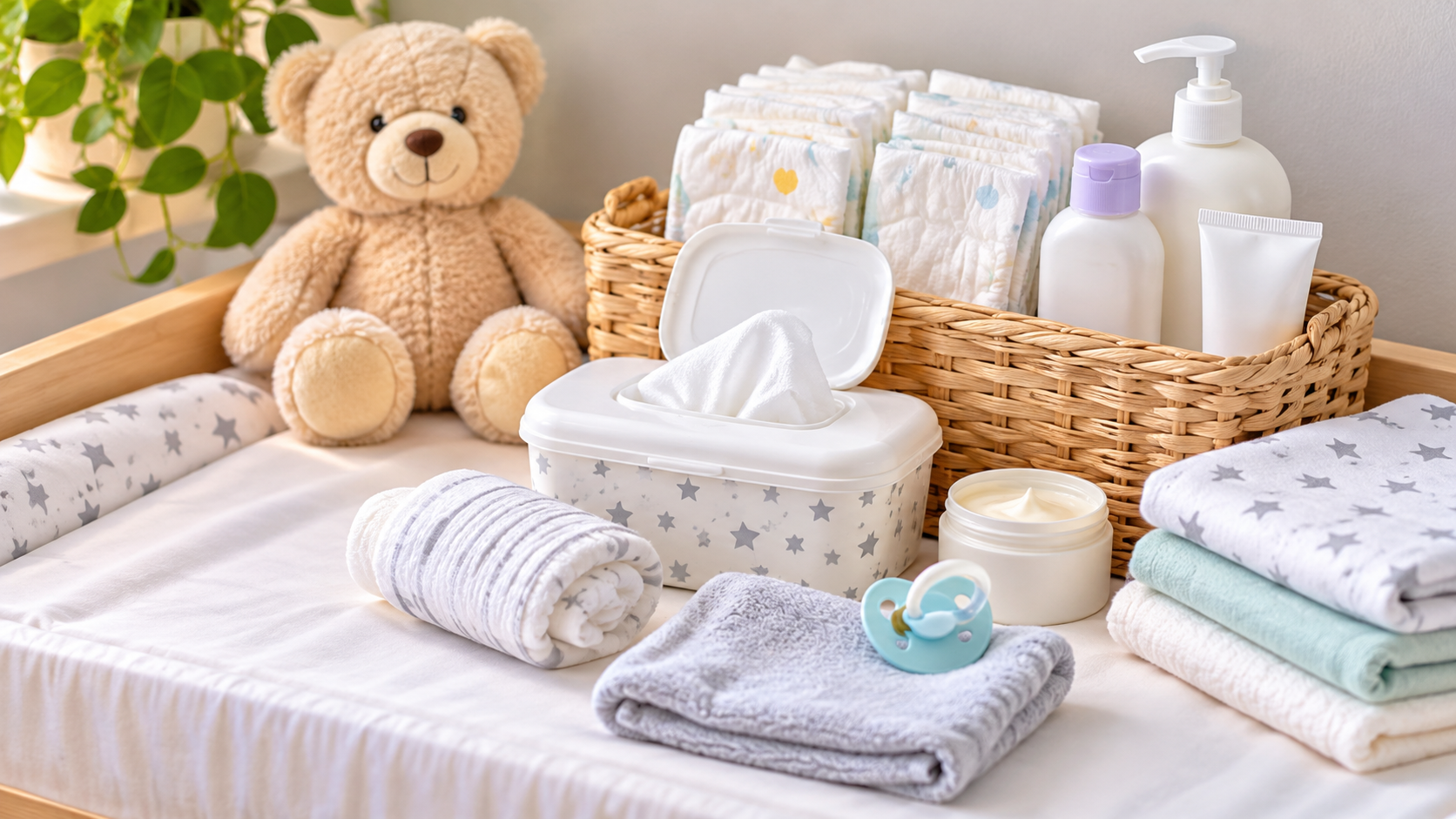
The Core Essentials You Will Use Every Single Day
Before buying decorative baskets or multi-tiered nursery furniture, focus on the small group of items you will reach for during almost every nappy change over the next two years.
1. A Wipe-Clean Changing Mat With Raised Edges
A basic, non-porous PVC or sealed polyurethane foam mat is far easier to live with than a fabric-covered cushion. Newborn nappy changes regularly involve unexpected leaks, and a smooth surface wipes clean in seconds with warm soapy water or a baby-safe spray. Raised foam sides help gently cradle your baby during wriggly changes, though you should always keep one hand on your child and use mats on the floor or inside a secure surface rather than leaving a baby unattended on raised furniture.
2. Nappies in Two Early Sizes
Babies grow rapidly during their first month, and hospital estimates of birth weight are not always exact. Having one pack of Size 1 newborn nappies and one pack of Size 2 ready at home covers most bases without leaving you stuck with hundreds of unopened packs your baby outgrows in a fortnight.
3. Gentle Wipes or Cotton Wool and Warm Water
During the first few weeks, many UK midwives recommend cleaning a newborn’s skin with plain warm tap water and large cotton wool pads or pleated cotton wool. Once you start using pre-moistened wipes—especially when out of the house—look for fragrance-free, water-based formulas to reduce the risk of skin irritation.
4. Barrier Cream
A simple, gentle barrier cream protects delicate skin against prolonged moisture, particularly overnight when stretches between feeds gradually lengthen. Keeping the tube uncapped or using a clean finger or silicone applicator saves getting thick ointment onto clothing and wipe packets.
5. Spare Vests and Sleepsuits Within Arm’s Reach
Nappy leaks rarely happen at convenient moments. Storing two or three clean cotton vests and sleepsuits directly beneath your changing spot saves carrying a half-dressed baby across a cold landing to reach the wardrobe.
Setting Up a Practical Nappy Disposal Routine
Where used nappies go immediately after a change has a major impact on how tidy and fresh your bedroom or hallway feels. During the first few days at home, some parents try tossing rolled nappies into a standard bedroom wastebasket or walking each one straight outside to the household wheelie bin. While walking outside works well in mild weather if you have direct garden access, it quickly loses its appeal during rainy evenings, night feeds, or when living in an upper-floor flat.
Choosing a dedicated nappy bin gives you a hygienic place to store soiled nappies indoors until you are ready to take a full bag outside. When comparing options before your baby arrives, focus on everyday usability rather than decorative finishes:
- Lid Seals and Odor Containment: A triple-seal lid structure is designed to help trap smells inside the main chamber both when closed and while dropping a wrapped nappy through the opening.
- One-Handed Operation: Because one hand should stay safely on your baby throughout a change, a bin that opens and closes smoothly with a single hand avoids awkward juggling.
- Capacity and Standing Height: Full-height models typically hold around 60 newborn nappies or 24 larger sizes, reducing how often you need to replace liners while keeping the opening at a comfortable standing height.
- Standard Bag Compatibility and Visibility: Checking whether a bin works with standard 13-gallon household bin bags avoids relying exclusively on expensive specialist refill cassettes, while a clear viewing window lets you check fill levels without opening the lid.
- Child-Safety Locks: Once your baby begins crawling and pulling up on furniture, a built-in safety lock helps keep curious hands out of the bin.
Simple Disposal Habits Worth Starting Early
- Keep Bins Away From Heat: Avoid placing any nappy container directly beside a radiator, heated towel rail, or sunny window, as warmth accelerates odors.
- Empty Solids Into the Toilet After Weaning: Once your baby starts solid foods around six months, tipping solid waste into the toilet and flushing it before rolling up the nappy keeps indoor bins noticeably fresher.
- Check Local Council Guidance: Disposal rules vary across UK local authorities—most require disposable nappies to go into general residual waste rather than recycling bins, though some councils offer separate hygiene waste collections or extra capacity allowances.
Helpful Extras That Make Daily Life Easier
Once the core essentials are covered, a handful of modest additions can make everyday routines smoother—especially in two-story UK houses or busy shared living rooms:
- A Portable Downstairs Changing Caddy: Carrying a newborn upstairs ten times a day soon wears thin. A lightweight handled basket stocked with ten nappies, wipes, cream, and a folding travel mat lets you handle daytime changes comfortably on a downstairs rug or sofa.
- Washable Muslin Squares: Placing a folded muslin square over your changing mat takes the chill off cold PVC in winter and catches minor spills so you can toss the cloth into the wash rather than scrubbing the whole mat.
- Zipped Waterproof Wet Bags: Useful both in your changing bag when visiting family and beside the nursery laundry basket for holding soiled vests until wash day.
- Alcohol-Based Hand Sanitizer: Handwashing with warm water and soap is always best after a change, yet keeping a pump bottle of sanitizer by the changing mat helps when you need to clean your hands quickly before lifting your baby safely into their cot.
Items Most First-Time Parents Can Safely Skip
Baby checklists often encourage buying single-use gadgets that take up valuable floor space in modest UK bedrooms without solving a real problem:
- Electric Wipe Warmers: While warm wipes sound comforting, wipe warmers plug into mains sockets, dry out open packets if left on too long, and condition babies to expect heated wipes—making changes in public baby-changing rooms harder later on.
- Dedicated Freestanding Changing Tables: Unless you specifically want extra open shelving, placing a secure changing mat on top of an existing waist-height chest of drawers saves money and gives you storage furniture your child can use for years.
- Disposable Changing Mat Liners: Single-use paper or plastic bed pads create unnecessary household waste and ongoing expense when a wipeable mat or washable muslin square does the exact same job.
- Heavily Perfumed Nappy Sprays: Strong synthetic room sprays rarely eliminate odors and can irritate sensitive newborn airways; brief daily window ventilation and regular bin emptying are far more effective.
Conclusion
Preparing for a newborn’s arrival does not require turning your spare bedroom into a baby equipment showroom. By focusing on a wipe-clean mat, gentle cleansers, spare clothes within easy reach, and a practical, well-sealed disposal routine, you will have everything needed to handle day and night changes calmly. Start with the everyday basics that suit your home’s layout, keep clutter to a minimum, and add extra caddies or organizers only once you see how your family’s daily routine naturally takes shape.
