The alert pops up while you are packing lunches. A brand of vitamins sold at a big chain store has been recalled. A supplement bottle with a similar name sits above your coffee maker. Is it the same one? The answer usually sits in a few tiny characters printed beside the best-by date.

Photo by Vitaly Gariev on Unsplash
That short code is the lot number, and it ties your bottle to one production run in one factory. Many supplement brands never run a factory of their own. They hire private label and contract makers such as Superior Supplement Manufacturing, which produces capsules, tablets, powders, liquids, gummies and softgels for other companies’ labels. Federal rules make those factories keep records for every batch, which lets a recall name one lot instead of a whole shelf.
Where Does a Supplement Recall Notice Come From?
The FDA says plainly that it does not approve dietary supplements before they are sold to the public. The agency says that is why reports from shoppers matter so much once a product is on sale.
The FDA defines a recall as an action a firm takes to remove a product from the market. It can happen on the firm’s own initiative, at the FDA’s request, or by FDA order. Each recall gets a class based on how much harm the product could cause.
The FDA’s recalls page says not all recalls have press releases or appear on that page. Notices stay up for three years before they are archived. For a wider search, Recalls.gov gathers recall news from six federal agencies in one place.
What Do the Recall Classes Actually Mean?
Here is how the FDA describes each type, with a plain reading for home.
| Notice type | FDA description, in short | What it means for your cabinet |
| Class I | A reasonable probability of serious adverse health consequences or death | Stop using it now and follow the notice |
| Class II | May cause temporary or medically reversible problems; serious harm is remote | Stop using it and follow the notice |
| Class III | Not likely to cause adverse health consequences | Read the notice for the company’s instructions |
| Market withdrawal | A minor violation that would not be subject to FDA legal action | Check the company’s update before you buy again |
How Do You Check the Bottle In Your Cabinet?
Work through the label in this order, in good light.
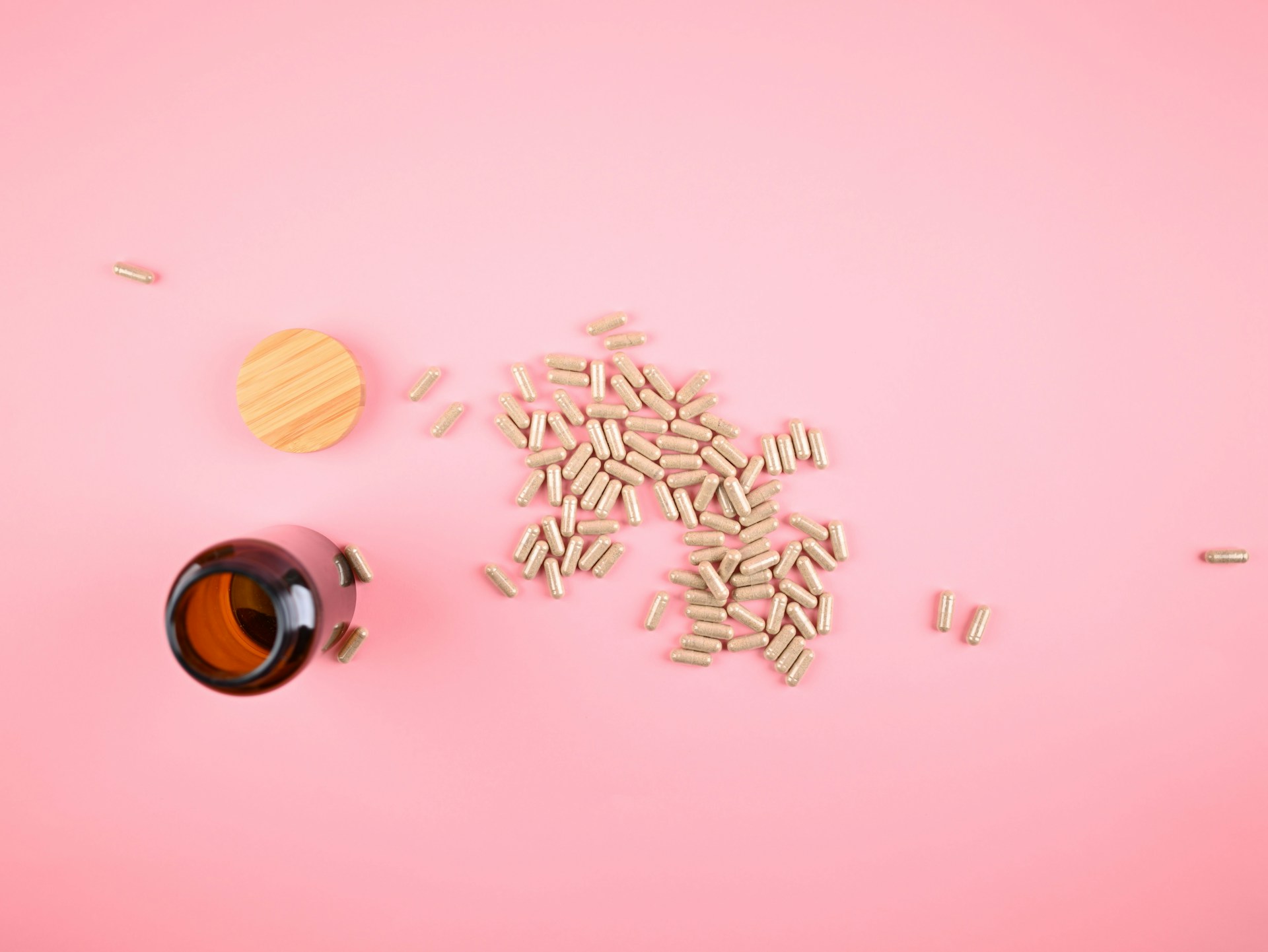
Photo by Harrison Cohen on Unsplash
- Match the full product name. Compare the name, count and bottle size word for word.
- Find the lot number. It may say “Lot” or “LOT #,” or it may be a short string of letters and digits.
- Compare the date. Notices often list best-by or expiration dates next to the lot codes.
- Take a photo. Capture the front label, lot code and date.
- Follow the notice itself. Some ask you to return the product for a refund.
Meanwhile, move the bottle out of everyday reach. Many parents already keep the highest cabinet in the family bathroom for medicines. Later, give every supplement one home. A clear kitchen storage plan makes the next lot check much faster.
Why Can a Factory Trace One Batch Back?
The rules for supplement makers sit in 21 CFR Part 111, the current good manufacturing practice (cGMP) rule. Section 111.260 lists what every batch production record must hold. That includes the batch or lot number, the equipment and lines used, and the identity and weight of each ingredient.
Factories also hold back part of every lot. Section 111.83 requires reserve samples of each lot of packaged and labeled supplements they distribute. Each sample must be at least twice the amount needed for the product’s tests. It must be kept for 1 year past the shelf life date, or 2 years from distribution if no shelf life date is used. Written records follow the same clock under section 111.605.
Testing paperwork adds another layer. Superior Supplement Manufacturing’s certificate of analysis page describes a COA as a document verifying that a specific batch has been tested and meets predetermined quality specifications.
What Should You Keep When Someone Feels Unwell?
If you think a supplement caused a serious reaction, the FDA’s advice is to stop using the product right away. It then asks people to file a safety report through its Safety Reporting Portal. Its list of possible reactions includes hives, swelling of the lips or tongue, fainting and chest pain. Get medical care first.
Before anything goes in the trash, set aside:
- The bottle, with the label and lot number intact
- Any capsules, tablets or gummies still inside
- The receipt or online order confirmation
- A short note of who took it, how much, when and what happened
The lot number matters on the company’s side too. Under 21 CFR 111.570, a maker’s written record of each product complaint must include the batch or lot number, if available. Your photo of that code points the investigation at one run.
You can also call the phone number on the label. A law signed on December 22, 2006 set a deadline for companies. Serious adverse event reports that arrive through the label’s address or phone must reach the FDA within 15 business days. Companies must keep records of every adverse event report, serious or not, for six years.
What to Remember Next Time an Alert Pops Up
- The lot number and date decide whether your bottle is affected, not the brand name alone.
- Class I notices carry the highest risk, so act on those the same day.
- Not every recall appears on the FDA’s main page, so check two sources.
- Keep the bottle and a photo of its label if anyone in the house reacts badly to it.
The Small Code Worth Knowing
Most recall alerts will never touch your cabinet. When one does, the lot code answers the question in minutes. A factory uses the same code to find its batch record. Show everyone at home where to find it.
Frequently Asked Questions
Has a Supplement Been Cleared by the FDA Before Sale?
No. The FDA says it does not approve dietary supplements before they are sold to the public. Reports from the public help it act on unsafe products after sale.
Where Is the Lot Number On a Supplement Bottle?
It is usually printed near the best-by or expiration date. It may be marked “Lot” or appear as a short mix of letters and digits.
Is a Market Withdrawal the Same Thing as a Recall?
No. A recall is a firm’s action to remove a product from the market, sorted into three classes by risk. The FDA describes a market withdrawal as a response to a minor violation that would not be subject to FDA legal action.
Should I Report a Reaction That Was Not Serious?
The FDA asks consumers to report health-related reactions or illnesses, which it calls adverse events. The agency says even partial information can help it identify potentially dangerous products.
