Hand a four-year-old a plastic knife and a magic sand “cake,” and something magical happens: total silence. Tongue out. Eyebrows down. Slice. Inspect. Slice again.
That focus is not an accident. Every pinch, press, and slice is a tiny workout for little hand muscles. Kids will later use those same muscles to hold a pencil, work a zipper, and cut with real scissors. In other words, sand cake is secretly homework. (Let’s keep that between us.)
Two moldable sands land in most parents’ carts: magic sand and Kinetic Sand. In the tub, they look like twins. In small hands, they behave more like cousins with very different personalities. So we held a very official, slightly messy Sand Cake Bake-Off for ages 3 to 8. There was one question on the scorecard. When a child slices a sand cake, which one keeps a clean edge?
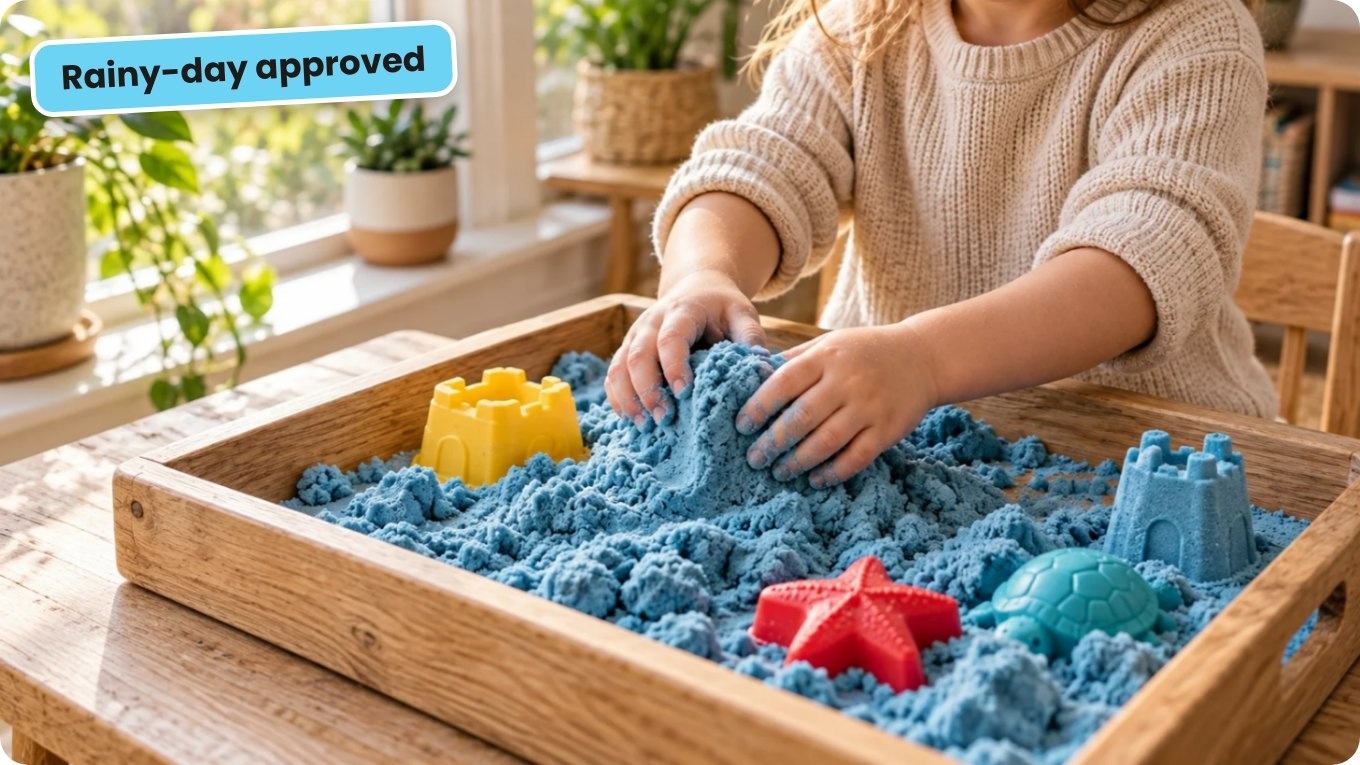
Meet the contestants: what’s the difference between magic sand and Kinetic Sand?
Both are moldable play sands that stay soft, never need water and can be reused for months. The real difference is hiding inside each grain.
Contestant #1: Kinetic Sand. Made by Spin Master, it is widely reported to be about 98% fine sand and 2% polydimethylsiloxane. That’s a silicone oil, also called dimethicone. That coating lets the grains cling to each other. Leave a shape alone and it slowly relaxes back into a loose, sandy pile. That dreamy, flowing feel is exactly what kids love.
Contestant #2: moldable magic sand. This one skips beach sand entirely. The version we tried, from Magic Sand Factory, uses tiny glass beads bonded with a binder developed in the lab. Different recipe, different personality, and you will see it the moment the knife comes out. If you want the full breakdown of what kinetic sand is made of and how Magic Sand gets its firmer feel, the factory’s recipe explainer covers both. Its product pages also list safety testing against American and European toy standards.
| Name check: “Magic sand” can also mean the water-repelling science-kit sand that stays bone-dry underwater. Cool trick, different product. In this post, magic sand always means the soft, moldable kind. |
The Sand Cake Test: try it at home
It takes five minutes, two tubs of sand, and one very serious taster. Kids love being the judge, so hand over the job title.
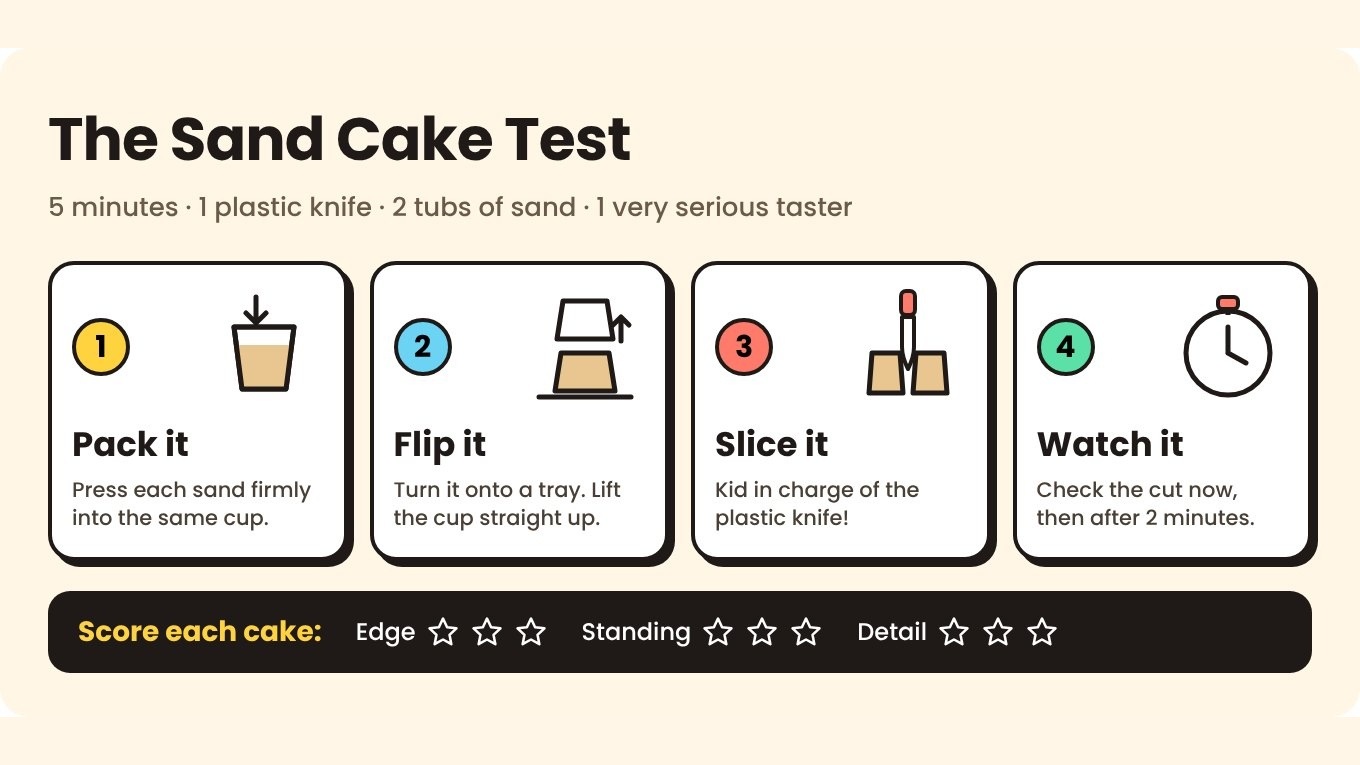
- Pack it. Press each sand firmly into the same small cup or mold.
- Flip it. Turn it onto a tray and lift the mold straight up.
- Slice it. Let your child cut the cake in half with a plastic knife or a craft stick.
- Watch it. Look at the cut face right away, then again after two minutes.
Then let your judge give each cake up to three stars in three categories:
- Edge. Is the cut line crisp, or crumbly around the corners?
- Standing. Does the slice keep its straight wall, or slump and spread?
- Detail. Press a fork pattern or a fingerprint into the top. Can you still see it?
And the results?
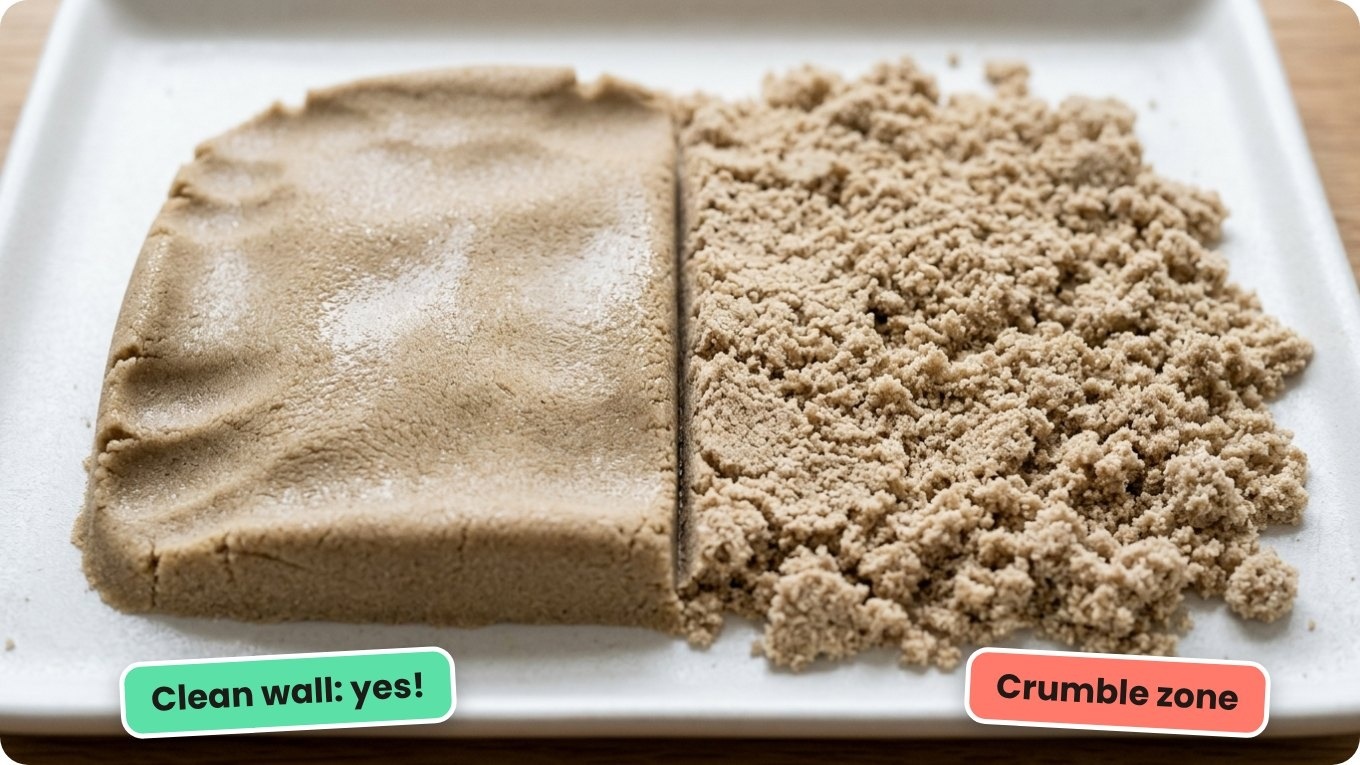
In our tub test, the glass-bead magic sand gave a straighter, firmer wall that still looked the same at the two-minute check. The Kinetic Sand slice was softer and had visibly relaxed at the edges by then. Honestly, plenty of kids find that slow-motion slump mesmerizing in its own way.
So nobody gets voted off the tray. The two sands simply suit different kinds of play.
Little hands, big skills: ages 3 to 8
Here is the simple version. A firm sand rewards control: press, line up, cut carefully, ta-da. A flowing sand rewards exploration: squeeze, pull, watch it move. Both count as fine-motor practice, so pick the sand that matches the skill you want to grow.
| Age | Skills in focus | Try with magic sand | Try with Kinetic Sand |
|---|---|---|---|
| 3–5 | Whole-hand squeezing, pinching, pressing molds, first tool grips | Bake a “cupcake” in a mold and slice it into two or four pieces | Squeeze a fistful and watch it ooze through the fingers |
| 3–5 | Hand strength, two hands working together | Roll “snakes” and cut them into beads with a craft stick | Pull a sand ball apart slowly with both hands |
| 6–8 | Precise cutting, controlled pressure, planning | Build a block letter and trim it with clean, straight cuts | Make a tower and time how long it stands before it relaxes |
| 6–8 | Pattern making, finger isolation | Stamp patterns with a fork, comb or toy brick and keep the detail | Draw in a flat layer with one finger and smooth it away to start again |
| Pro tip: Have kids hold the plastic knife like a pencil. It is the same tripod grip they will use when they start writing. Sneaky, right? |
Mess, cleanup and storage (the part parents really care about)
Good news first: both sands are far tidier than beach sand. The grains stick to each other more than to carpets or clothes. A few habits keep cleanup to under a minute:
- Use a tray with a rim. A baking sheet or a shallow storage bin keeps the sand in the “kitchen.”
- Dab, don’t sweep. Press a ball of the same sand onto stray crumbs and they lift right up.
- Close the lid. Store each sand in its own airtight tub so it stays clean and keeps its texture.
- Keep colors apart if it matters. Mixed colors still play the same, but some kids have very strong opinions about it. (Ask anyone who guards a tub of blue magic sand.)
We did notice one difference. Kinetic Sand moves more, so it tends to creep toward the edge of the tray during long play. The firmer magic sand stayed right where the kids built it.
Safety first: a quick checklist for grown-ups
Moldable sand is a toy, not a snack, and the rules are the same whichever brand you buy. Poison control experts note that play sand is not poisonous. Still, swallowed sand can be a choking hazard and can cause constipation or, rarely, a blockage.
☐ Check the age label. Most moldable sands are labeled for ages 3 and up.
☐ Look for independent safety testing on the box or the brand’s website. Examples include ASTM F963 in the US and EN 71 in Europe.
☐ Choose unscented sand for kids with sensitive skin or allergies.
☐ Supervise younger players and keep sand away from mouths, noses and eyes.
☐ Store the tub closed and out of reach of toddlers and pets.
☐ Wash hands after play, especially before snack time.
So which one should you pick?
If your kid is a builder, a cutter or a pattern-maker, pick magic sand. If they are a squisher who loves watching sand ooze and flow, Kinetic Sand is a lovely fit. Plenty of families end up with a tub of each, and two very busy bakers.
| Magic sand | Kinetic Sand | |
|---|---|---|
| Base material | Fine glass beads with a binder | Fine sand with silicone oil |
| Holds a cut edge | Firm, crisp walls | Soft edges that slowly relax |
| Best for | Cutting, molding, stamping detail | Squeezing, pulling, flowing play |
| Ages | 3+ | 3+ |
| Dries out? | No | No |
Whichever you choose, a tub of moldable sand is a rainy-afternoon hero. It’s one of the easiest ways to sneak in hand-strength practice. Your kids will just call it baking cakes. We won’t tell them if you don’t.
