Children learn some of their biggest lessons while stacking blocks, inventing characters, and turning cardboard boxes into houses. Flashcards can help with specific skills, but play gives children a reason to communicate, experiment, and solve problems. It also lets them practice new ideas at a pace that feels natural.
Parents don’t need an elaborate playroom or expensive learning materials to support this process. A few open-ended supplies, enough time, and an interested adult can create rich learning opportunities at home.
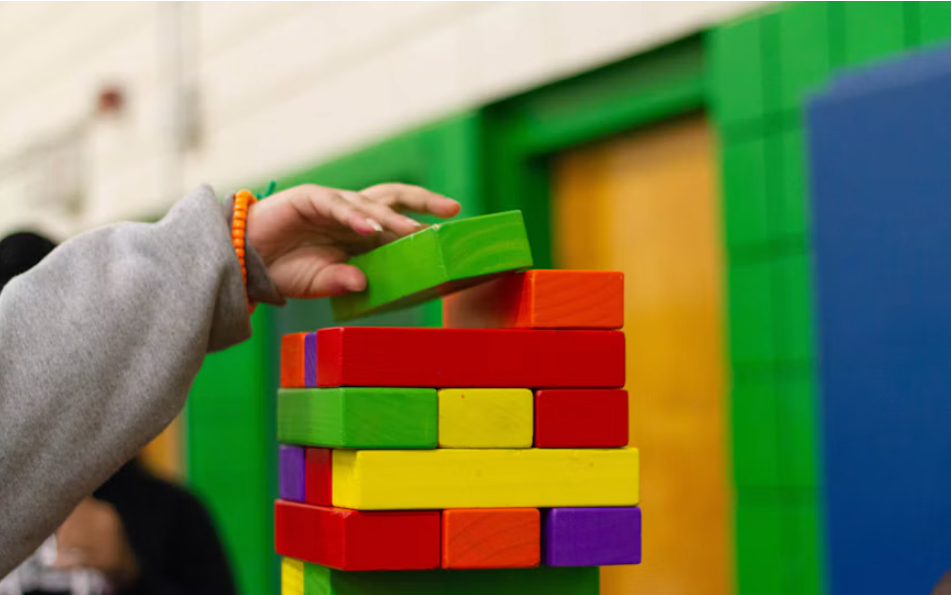
Image Credit: Unsplash
The Power of Unstructured Play
Unstructured play gives children room to decide what happens next. They might build a tower, knock it down, and redesign the base after noticing why it fell. That simple sequence involves prediction, cause and effect, persistence, and basic engineering concepts.
The benefits of unstructured play also include creativity and independent decision-making. Children choose their own goals and adjust them as the activity develops.
Offer materials that can become many things, such as blocks, paper, washable markers, fabric scraps, and empty containers. Then give your child time to explore without demonstrating a finished result first. This keeps the activity open and allows unexpected ideas to emerge.
Social Skills Built on the Rug
A shared play space gives children regular practice with communication. Two children building a pretend grocery store must decide who takes each role, where the food belongs, and what to do when both want the same basket. Small disagreements create opportunities to name feelings, listen, and negotiate.
Group care settings can support this kind of daily interaction. When considering an early learning center, look for welcoming spaces, engaged educators, and plenty of time for child-led activities. Seedlings Early Learning provides childcare and early learning programs in safe, nurturing environments designed to foster learning, growth, and belonging.
At home, resist solving every disagreement immediately. Pause long enough for children to suggest an answer, then offer simple language if they’re stuck: “You both want the truck. What could we try?”
What Guided Exploration Looks Like
Guided exploration begins with the child’s interest and adds gentle adult support. If your child is lining up toy animals, you could ask which animal is first or suggest making a shelter. The idea is to extend the play without taking control of it.
Questions such as “What do you think will happen?” and “How could we make it taller?” encourage observation and problem-solving. Limit yourself to one question at a time so the activity doesn’t start feeling like a quiz. This balance is one reason why child-led play matters.
Building toys are particularly useful because children can test ideas with their hands. This article on the learning power of LEGO shows how a familiar toy can support creativity and learning through hands-on construction.
Simple Shifts for Everyday Play
Start by protecting a small block of unhurried playtime. Even 20 minutes after breakfast or before dinner can work when screens and scheduled tasks are put aside. Keep a few materials within reach so your child can begin without waiting for an adult to set everything up.
Rotate toys instead of displaying everything at once. A basket containing six familiar items often invites deeper play than an overflowing shelf. Every week or two, swap in different blocks, figures, puzzles, or art supplies.
You can also turn ordinary routines into playful learning. Sorting socks builds matching skills, pouring water between cups introduces volume, and setting the table practices counting. Follow your child’s comments and ideas during these moments. A conversation about why one container fills faster can offer more meaningful learning than drilling the same concept on a card.
Pay attention to effort as play unfolds. Comments such as “You kept changing the bridge until it stayed up” help children recognize persistence and strategy. Specific observations give them useful information about what they did and encourage them to keep experimenting.
The next time a carefully built tower falls, wait before stepping in. That quiet moment may lead to a wider base, a new plan, or an imaginative story about the world’s clumsiest giant. The lesson belongs to the child, and play gives it room to take shape.
