There is a specific moment on a Tuesday morning, between the bathroom light coming on and the first coffee, when you look at your reflection and think: I slept a full night, so why does my face disagree? The rest of you feels fine. The eyes did not get the message. Tired-looking eyes may be the most common complaint people bring to a mirror and one of the least precisely diagnosed. The phrase covers at least four unrelated things, and the right response to each one is different, which is why so many people work through a drawer of products that were never going to help.
What follows is a plain map of the territory. Where the look actually comes from, how much you can influence from your own bathroom, what changes once a clinician is involved, and in what order any of it is worth trying.
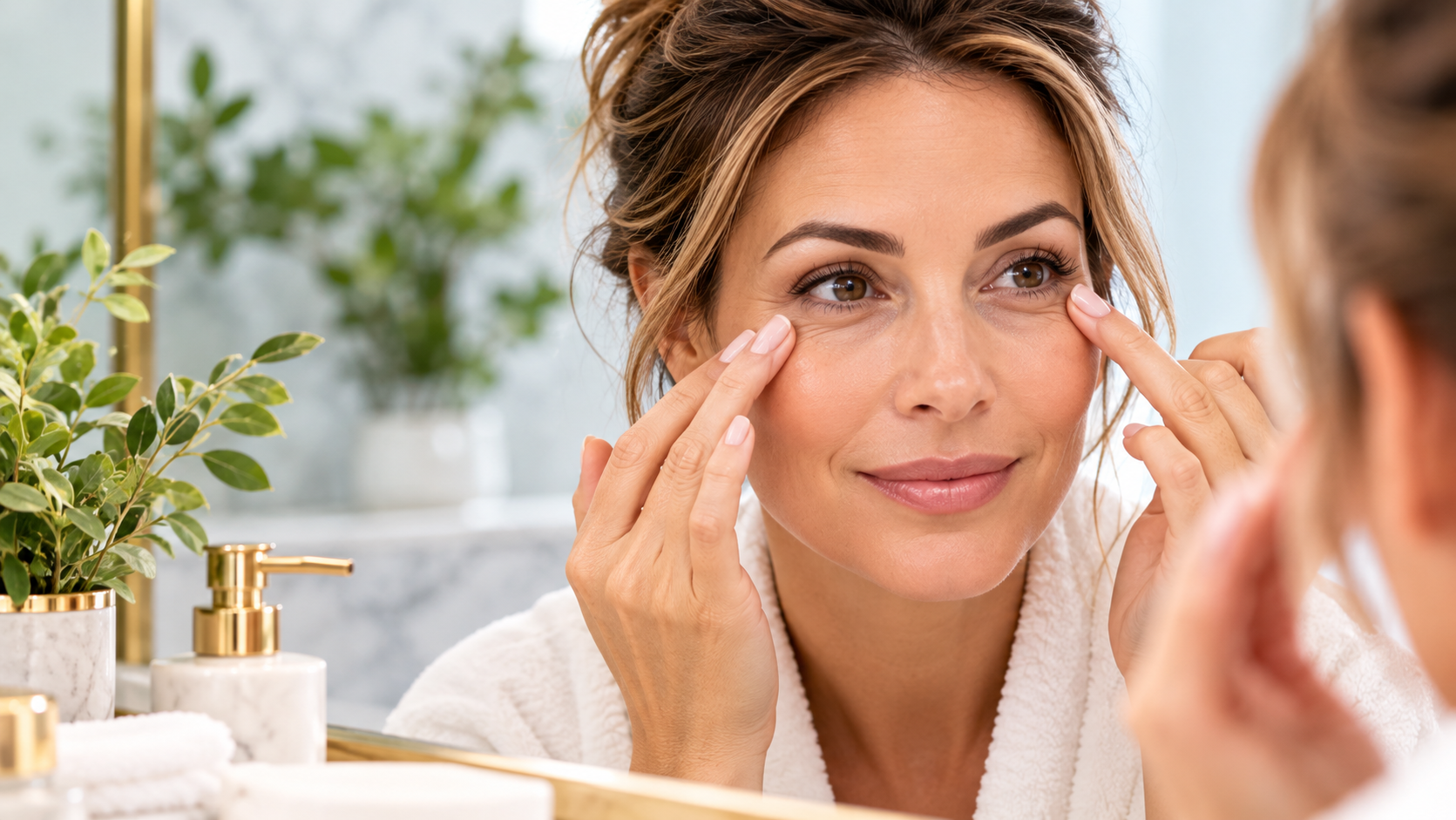
Tired Eyes Usually Have More Than One Cause
Separate the look into its components, because they rarely travel alone. Fluid gathering in the lower lid creates morning puffiness that eases as the day goes on. Pigment is a different matter, sitting in the skin itself and often running in families. Shadow is a third thing entirely, cast by a hollow where volume used to be, and no cream reaches a shadow. Then the structural layer: skin loosened across the upper lid, a lid margin sitting lower, fat drifted forward behind a thinning membrane.
Allergies deserve their own mention because they are so often missed. The American College of Allergy, Asthma and Immunology explains that congestion in the small blood vessels under the eyes produces swelling and discoloration, the circles that allergists call shiners and look for when diagnosing nasal allergy. Treat the congestion and the circles can lift on their own.
Most people have two or three of these at once. Working out which dominates is the whole game, and it is hard to do from a selfie in bad light.
The Overnight Variables Worth Ruling Out First
Before spending money, spend a fortnight on the variables you control. Sleep is the obvious one and also the one people quietly skip. The American Academy of Sleep Medicine and Sleep Research Society recommend seven or more hours a night for adults, with the panel concluding that six or fewer is not enough to sustain health. Puffiness responds to that more reliably than almost anything you can buy.
Salt and alcohol both pull fluid into the wrong places overnight, and a flat sleeping position lets it settle where you will notice. Raising your head slightly costs nothing. Rubbing deserves a hard look too, since the tissue is thin and repeated friction leaves pigment and laxity behind.
Two weeks of honest adjustment gives a cleaner baseline. Whatever remains is the part a product or procedure would have to address, and now you know its size rather than guessing.
What At-Home Care Can and Cannot Change
Topical care has a real but narrow remit. Cool compresses move fluid. Caffeine-based formulas constrict vessels briefly, so the effect shows up for a few hours and then leaves. Over months, a gentle retinoid can thicken thin skin somewhat and soften fine texture, provided your lids tolerate it, and plenty do not.
Sun protection is the highest-value habit in the whole category, since ultraviolet exposure degrades the collagen holding that skin together. Health Canada advises a broad-spectrum product at SPF 30 or above, applied at least fifteen minutes before going out and reapplied every two hours, which matters around the eyes where coverage is usually thinnest.
Here is the honest ceiling. Skincare can improve the surface, the tone and some of the pigment. It cannot remove a fold of excess skin; it cannot lift a lid, and it cannot refill a hollow, because those are architectural problems and topicals are a finish, not a renovation.
Where Professional Treatment Begins
Clinical options sort themselves by what they physically do. Injectable volume can soften a tear trough shadow by replacing what left. Energy-based resurfacing and peels work on texture and pigment at a depth creams cannot reach. Surgery is the only tool that removes tissue, which is why it is the answer for redundant upper lid skin.
Diagnosis comes before any of that, and a good assessment looks at tear film, lid position, brow height and skin quality together. Clinics that build the plan around an individual assessment, rather than around whatever device they bought last year, tend to produce results that look like the person.
There is also a medical branch to rule out. A lid that drops over days, double vision, or a lesion on the lid margin all belong in a doctor’s office immediately, and none of them are cosmetic conversations.
Building a Sensible Order of Operations
Sequence saves money. Habits first, since they cost nothing and change the baseline. Then daily protection and a tolerated topical, given a genuine three months rather than three weeks. Then a consultation, with a photograph from several years ago, because change is more informative than a snapshot.
Ask what each option does mechanically and what it leaves untouched. A reputable eyelid surgery Toronto practice will happily tell you that your issue is fluid, or allergy, or pigment, and that nothing surgical is warranted yet. That answer is a good sign rather than a disappointing one.
Reversibility is the other useful filter. Start with what washes off, move to what fades, and only then consider what is permanent. Nobody has ever regretted taking the cheaper step first.
Final Thoughts
The eye area draws attention out of proportion to its size, so small changes there carry social weight that a comparable change on your forearm never would. Worth knowing, mostly so you can decide how much attention the subject deserves.
Precision is the useful habit here. Name what you see, test the free variables, then ask a professional what category your particular version falls into before paying for a solution to a problem you have not identified.
Tired-looking eyes are solvable in the sense that most of them have an explanation. Finding the right explanation is slower than buying a jar, and considerably more effective.
