Charleston’s humid climate pushes dust, pollen, and mold spores deep into residential ductwork faster than in most other regions. Many homeowners schedule a cleaning without knowing what separates a thorough job from a surface-level one – and the answer usually comes down to equipment. Understanding the tools professionals use helps you ask smarter questions before a technician shows up. Here are five types of equipment professional air duct cleaning companies use in Charleston homes, and why each piece plays a specific role in the process.
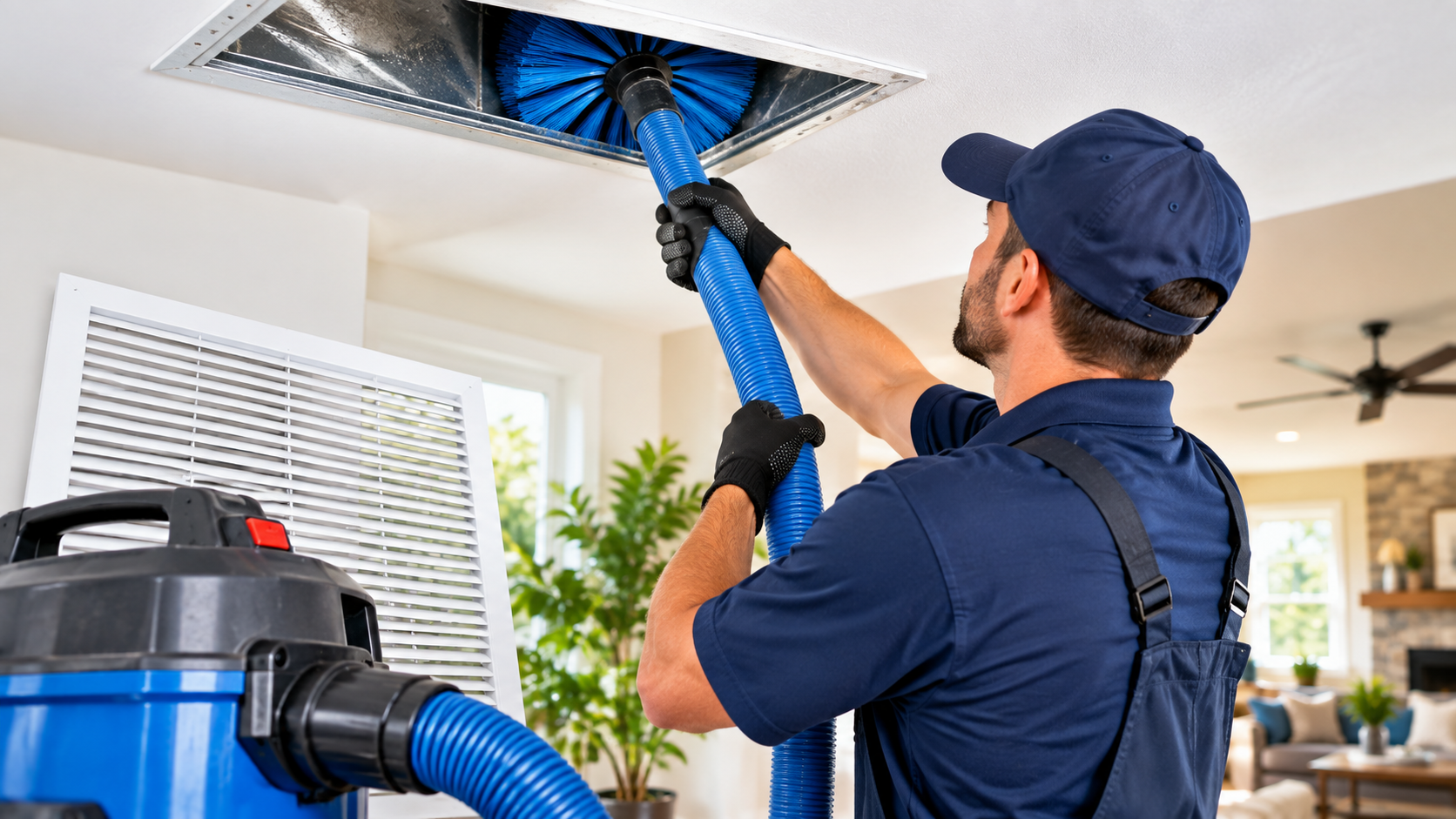
High-Powered Negative Air Machines
The negative air machine sits at the heart of any professional duct cleaning operation. Charleston air duct cleaning services that follow NADCA standards rely on these units to maintain sustained negative pressure throughout the duct system, ensuring every particle knocked loose during cleaning gets drawn toward the collection point rather than drifting back into your living space. Industrial units typically move between 2,000 to 4,000 cubic feet per minute, a figure no residential vacuum comes close to matching.
Negative pressure is what prevents cross-contamination. If a technician agitates debris without that suction running, loosened dust and allergens travel through your home’s air supply. The machine connects directly to a main duct access point and runs continuously throughout the job. In Charleston’s older housing stock, where duct systems sometimes stretch across large square footage, contractors often use two units running together to cover the full system without pressure loss at the far ends.
Rotary Brush and Pneumatic Agitation Tools
Suction alone can’t free debris that’s bonded to duct walls over years of accumulation. That’s where rotary brushes and pneumatic whip systems earn their place. Rotary brush systems connect to flexible cables and spin at high RPM, scrubbing the interior surfaces of rigid metal ducts and breaking apart compacted dust, debris, and even light biological buildup. The cable reaches deep into straight runs, and interchangeable brush heads let technicians match the tool to round, rectangular, or oval duct profiles.
Pneumatic air whips work differently. These are compressed-air tools with flexible poly tails that spin and slap the duct wall as they travel forward, knocking debris loose from irregular surfaces and elbow sections where a rigid brush won’t reach. Both tools work in combination with the negative air machine already running, so everything they dislodge immediately gets pulled toward the collection unit. In fiberglass-lined ductwork, which appears in some Charleston homes built between the 1970s and 1990s, technicians swap to softer-bristle systems to avoid damaging the liner while still getting the job done.
Video Inspection Cameras
Before any cleaning starts – and again after it finishes – professionals use push-rod or robotic inspection cameras to see what’s actually inside the ducts. These systems carry a small camera head on a flexible cable, broadcast a live feed to a monitor at the technician’s side, and often record the footage for documentation. Without a camera, a technician is estimating contamination levels by indirect signs. With one, there’s no guesswork.
The before-and-after comparison also works in your favor as a homeowner. You see the starting condition of your ducts, then review post-cleaning footage to confirm the result. In Charleston, where crawl-space ducts sometimes show moisture damage or visible mold growth, inspection cameras help technicians spot sections that need targeted treatment rather than standard mechanical cleaning. Some inspection systems also carry humidity and temperature sensors, giving contractors data about interior conditions that don’t show up on the camera feed alone. It transforms the whole job from guesswork into documented, verifiable work.
Air Compressors and Compressed-Air Tools
A high-capacity air compressor powers the pneumatic tools described above, but it also drives a range of standalone compressed-air applications throughout the job. Technicians direct compressed air into register boots, diffusers, and supply plenum boxes where mechanical brushes can’t reach. Short bursts of high-pressure air knock buildup loose from corners and joints, and the negative air machine captures everything before it can escape back into the room.
Compressed-air skippers – small torpedo-shaped tools with a rear-facing nozzle – travel forward through ducts on their own air pressure, cleaning as they go. They’re especially useful in long horizontal runs where pushing a brush cable by hand loses effectiveness past a certain distance. In Charleston homes with complex multi-story duct layouts, air-driven tools give technicians access to sections that mechanical systems can’t reliably reach. The compressor itself typically delivers between 150 to 185 PSI, enough to produce the sharp, directed bursts that dislodge years of settled particulate from duct interiors.
Sanitizing and Deodorizing Equipment
Once mechanical cleaning wraps up, many professionals apply a sanitizing agent to the interior duct surfaces. This step uses a fogger or ULV (ultra-low volume) sprayer to distribute an EPA-registered antimicrobial product evenly across the duct walls. The goal is to address any residual biological contamination – mold spores, bacteria, or odor-producing organic material – that mechanical cleaning alone may not fully clear.
Charleston’s combination of heat and humidity creates conditions where mold can recolonize a duct system faster than in drier climates. A post-cleaning sanitizer extends the window before contamination rebuilds. ULV foggers break the solution into extremely fine droplets, typically between 5 and 50 microns, so the mist reaches the far ends of branch ducts without oversaturation. Reputable contractors use products rated safe for HVAC applications that won’t leave a chemical residue off-gassing into your indoor air. If a company skips this step entirely or can’t name the product they’re using, ask about it before the job starts.
Conclusion
The equipment a company brings to your home says a lot about the quality of work you’ll get. Negative air machines, rotary and pneumatic agitation tools, inspection cameras, compressed-air systems, and proper sanitizing equipment are the five categories that separate a professional job from a cut-rate one. If you’re comparing quotes in the Charleston area, asking what equipment a company uses is one of the most practical questions you can lead with.
