Essential Checklist for Routine Garage Door Maintenance
Owning a truck, SUV, or RV often requires a larger garage door to accommodate its size. This specialized door is a significant investment, vital for protecting your valuable vehicle. Unlike standard residential doors, those designed for tall vehicles are typically heavier and endure more operational stress. Ensuring their long-term performance, safety, and reliability hinges on consistent, routine garage door maintenance. Neglecting these crucial steps can lead to costly repairs, unexpected malfunctions, and potential hazards. In this guide, we will share practical maintenance tips specifically for the unique demands of garage doors housing larger vehicles, helping you protect your investment. For initial setup or confirming the right dimensions for your larger vehicles, we recommend seeking expert garage door maintenance.
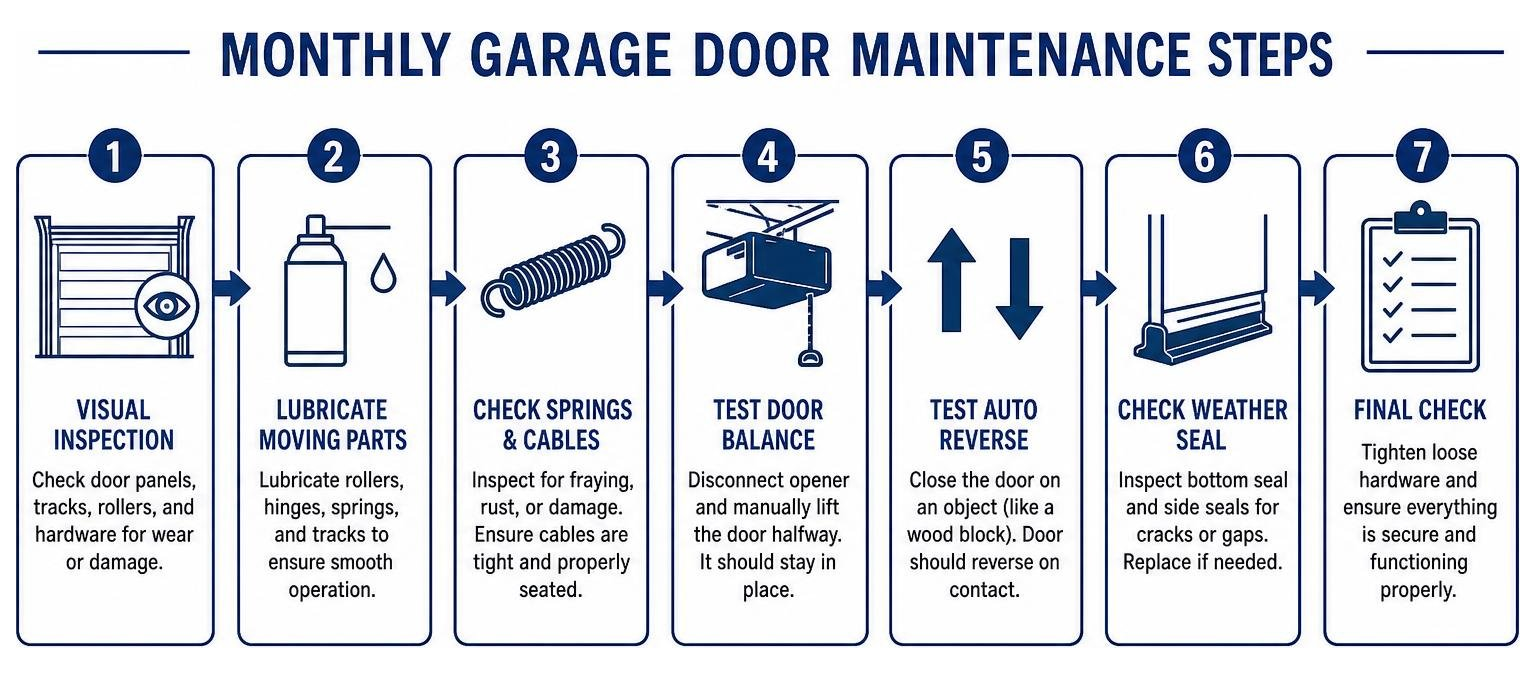
Regular inspections are the cornerstone of effective garage door maintenance, particularly for the larger, heavier systems used with trucks and tall vehicles. These doors often operate with more powerful springs and openers, making consistent checks even more critical. We recommend a monthly visual inspection to catch potential issues before they escalate. This includes observing the door’s movement, listening for unusual noises, and looking for any visible wear or damage.
Start by performing a thorough visual check of all components. Look for frayed cables, worn rollers, loose hardware, or signs of rust. Pay close attention to the tracks—ensure they are clean, free of debris, and properly aligned. Weatherstripping along the bottom and sides of the door should also be inspected for cracks or damage, as this protects your garage and vehicle from the elements.
Primary Steps for Effective Garage Door Maintenance
Beyond a simple visual scan, a more detailed inspection of your garage door system involves several key steps:
- Vibration Analysis: During operation, listen carefully for any excessive vibrations or grinding sounds. These can indicate issues with the opener, rollers, or tracks.
- Bolt Tightening: Over time, the constant movement of a garage door can cause bolts and screws to loosen. We advise checking all nuts and bolts on the tracks, hinges, and opener mounting brackets. Tighten any that appear loose, but be careful not to overtighten, which could strip threads.
- Bracket Stability: Examine the mounting brackets that secure the tracks to the garage walls. Ensure they are firmly attached and show no signs of bending or stress.
- Hinge Inspection: Hinges on larger doors can bear significant weight. Check them for cracks, rust, or excessive wear. If any hinges appear damaged, they should be replaced promptly.
Cleaning Tracks and Lubricating Hardware
Proper cleaning and lubrication are vital for smooth and quiet operation, especially for the robust systems designed for larger vehicles.
- Track Clearance: First, ensure the tracks are clear of any obstructions, dirt, or debris. Use a damp cloth to wipe down the inside of the tracks. Never apply grease or oil to the tracks themselves, as this can attract dirt and impede roller movement.
- Silicone Lubricant: The moving parts of your garage door system benefit greatly from regular lubrication. We recommend using a high-quality silicone-based garage door lubricant. This type of lubricant repels dirt and won’t gum up like oil-based products.
- Roller Maintenance: Apply lubricant to the rollers, focusing on the bearings and stems (but not the wheels themselves if they are nylon). Rollers on heavy doors can wear quickly, so check them for flat spots or excessive play.
- Torsion Springs: Torsion springs, located above the door, are under immense tension and play a crucial role in balancing the door’s weight. While they should not be adjusted by an untrained individual, a light spray of silicone lubricant on the coils can help reduce friction and prevent rust. Always exercise extreme caution around springs.
Specialized Care for Oversized Openings and Heavy-Duty Systems
Garage doors designed for trucks, SUVs, and RVs are inherently different from standard residential doors. Their increased size and weight necessitate specialized components and a more rigorous maintenance approach. These systems often feature commercial-grade hardware, heavy-duty springs, and reinforced tracks to withstand the greater operational demands.
Oversized doors benefit from track reinforcement to maintain stability and prevent warping under the door’s weight. High-lift tracks, which allow the door to rise higher before curving, are common in garages with ample headroom, especially for RVs. These specialized setups require meticulous attention during maintenance to ensure every component functions flawlessly.
Maintaining Heavy-Duty Openers and High-Lift Tracks
The openers for large garage doors are typically more powerful and complex than those for standard residential doors.
- Wall-Mounted Openers: For garages accommodating tall vehicles, wall-mounted (or jackshaft) openers are a popular choice. They free up valuable ceiling space, which is often critical for vehicle clearance. Maintenance for these units involves checking the drive belt or chain tension and ensuring the safety sensors are clean and aligned.
- Trolley Systems: Traditional trolley-style openers, if used, require inspection of the trolley mechanism, ensuring it moves smoothly along the rail and that the chain or belt is properly tensioned.
- Horsepower Requirements: Heavy-duty doors require openers with sufficient horsepower to lift their weight safely and efficiently. Regularly check the opener’s performance for any signs of strain or sluggishness, which could indicate an impending issue.
- Drive Belts/Chains: Inspect the drive belt or chain for wear, fraying, or excessive slack. Adjust tension as needed, following the manufacturer’s guidelines.
Seasonal Weatherstripping and Alignment Inspections
Weatherstripping is particularly important for large garage doors, as bigger openings mean more potential for drafts, moisture, and pests to enter.
- Bottom Seals: The rubber or vinyl seal along the bottom edge of the door is crucial for creating a tight barrier. Inspect it for cracks, tears, or hardening, especially with seasonal temperature changes. A damaged bottom seal can compromise your garage’s thermal efficiency and allow water to seep in.
- Perimeter Weatherstripping: Check the weatherstripping along the sides and top of the door frame. This material helps seal the gaps when the door is closed, preventing air leaks and protecting the vehicle from dust and moisture. Replace any worn or damaged sections to maintain an effective seal.
- Thermal Efficiency: For attached garages, maintaining good weatherstripping contributes significantly to your home’s energy efficiency by preventing heat loss or gain.
- Alignment Checks: Seasonal changes can sometimes cause minor shifts in the garage structure, affecting door alignment. Periodically check that the door closes evenly and completely, without leaving gaps. Misalignment can put undue stress on the opener and other components.
Essential Safety Testing and Mechanical Adjustments
Safety is paramount when dealing with large, heavy garage doors. A malfunctioning safety feature can lead to serious injury or damage. We emphasize regular testing of all safety mechanisms to ensure they are fully operational.
Beyond safety, the mechanical balance of your garage door system is critical. A properly balanced door reduces strain on the opener and extends the lifespan of springs and other hardware.
Testing Auto-Reverse Systems and Sensor Alignment
Modern garage door openers are equipped with crucial safety features that must be tested regularly.
- Photo-Eye Sensors: These sensors, located near the bottom of the door tracks, emit an invisible beam. If an object breaks this beam while the door is closing, the door should automatically reverse. To test, simply place an object (like a cardboard box) in the door’s path while it’s closing. The door should stop and reverse.
- Sensor Cleaning: Keep the photo-eye sensors clean and free of dust, cobwebs, or debris. A dirty sensor can prevent the beam from connecting, causing the door to malfunction or reverse unexpectedly.
- Beam Alignment: Ensure the sensors are perfectly aligned. If they are out of alignment, the door may not close properly, or the opener’s indicator light might flash. Most sensors have an LED light that glows steadily when properly aligned.
- Obstruction Testing: In addition to the photo-eye test, place a 2×4 piece of wood flat on the floor in the door’s path. When the door contacts the wood, it should immediately reverse. This tests the pressure-sensitive auto-reverse mechanism.
- Safety Reversal: If your door fails either of these safety tests, disconnect the opener and do not use it until a professional can inspect and repair the system.
Checking System Balance and Spring Tension
The balance of your garage door is a key indicator of the health of its spring system. A well-balanced door should feel relatively light when operated manually.
- Manual Operation: To test the balance, first disengage the garage door opener using the emergency release cord (usually a red rope hanging from the trolley). With the opener disconnected, lift the door manually about halfway. A properly balanced door should stay in place without assistance. If it drifts up or down, the springs may need adjustment.
- Spring Tension: Springs lose tension over time, especially with the heavy demands of large doors. If your door is unbalanced, the springs are likely the culprit. Adjusting garage door springs is extremely dangerous due to the high tension they are under. We strongly advise against attempting this yourself. Always contact a qualified professional for spring adjustments or replacements.
- Cable Integrity: While checking the balance, also inspect the lift cables that run along the sides of the door. Look for any signs of fraying, rust, or damage. Damaged cables can snap, causing the door to crash down.
- Emergency Release: Familiarize yourself with the emergency release mechanism. In case of a power outage or opener malfunction, knowing how to safely open and close your door manually is essential.
Frequently Asked Questions
Many homeowners have questions about maintaining their garage doors, especially when those doors are designed for larger vehicles. Here, we address some common inquiries.
How Often Should Garage Door Maintenance Be Performed?
We recommend a multi-tiered approach to garage door maintenance. A quick visual inspection should be performed monthly, checking for obvious signs of wear or damage. Lubrication of moving parts should ideally occur every three to six months. For a comprehensive check and adjustment of all components, including spring tension and safety features, we advise scheduling professional maintenance annually. This annual tune-up is particularly important for oversized doors, as their heavy-duty components require expert assessment to ensure continued safe and efficient operation.
What Are the Signs That Springs Require Professional Attention?
The springs on your garage door are critical for its operation and safety. Several signs indicate they may need professional attention:
- Squeaking Springs: While some noise is normal, persistent squeaking or groaning from the springs often suggests a lack of lubrication or that they are nearing the end of their lifespan.
- Slow Operation: If your door struggles to open or close, or moves noticeably slower than usual, it could be a sign of weakened springs that are no longer adequately counterbalancing the door’s weight.
- Uneven Lifting: A door that lifts unevenly, with one side rising faster than the other, points to an imbalance in the spring system, potentially due to a broken or weakened spring.
- Visible Gaps: A visible gap in a torsion spring indicates it has broken and requires immediate replacement by a professional.
Never attempt to repair or adjust springs yourself, as they are under extreme tension and can cause severe injury.
How Does Weatherstripping Protect Vehicle Clearances?
Weatherstripping plays a crucial role beyond just insulation. For vehicles with tight clearances, such as those with roof racks or lifted suspensions, maintaining intact weatherstripping is vital. Damaged or missing weatherstripping can allow moisture and debris to enter the garage, potentially accumulating on the floor or on the vehicle itself. This can lead to rust on the vehicle or damage to sensitive electronic components. More importantly, compromised weatherstripping can affect the door’s seal, allowing cold or hot air to penetrate, which can impact the vehicle’s battery life or interior temperature, especially for RVs stored long-term. By ensuring seal integrity, weatherstripping acts as a critical moisture barrier and contributes to maintaining a stable environment around your vehicle.
Conclusion
The garage door for your truck, SUV, or RV is a robust system designed for heavy lifting and frequent use. To protect your investment and ensure the safety of your vehicles and family, consistent, routine maintenance is indispensable. By adhering to a schedule of regular inspection, cleaning, lubrication, and safety testing, you can significantly extend the lifespan of your garage door system. While many minor tasks can be performed by homeowners, certain critical adjustments, especially involving springs and heavy-duty components, should always be handled by qualified professionals. Prioritizing preventative care not only maintains system longevity and operational safety but also helps avoid the inconvenience and expense of unexpected repairs.

Enhance Your Minecraft Live Stream Experience https://streamtoearn.pages.dev
How to Use Lossless Scaling to Play Modern Games at Max Settings https://lsfg.pythonanywhere.com
The atmosphere here is just great and the game selection is massive. I always feel lucky whenever I play at magojilicasino.