Brushing is an essential part of daily oral care, but toothbrush bristles do not fully clean the tight surfaces where teeth meet. Between-teeth cleaning helps remove trapped food and plaque from areas that are easy to overlook. Whether you prefer traditional floss, small interdental brushes, or convenient floss picks, the best approach is the one you can use gently and consistently.
The challenge is rarely understanding that between-teeth cleaning matters. The real challenge is making it happen automatically, even on busy evenings. A simple setup, a comfortable tool, and a realistic routine can make this small step feel far less inconvenient over time.
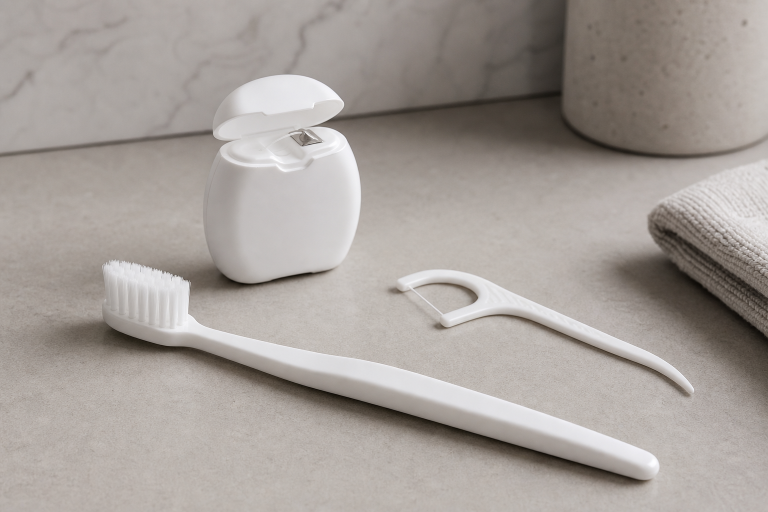
Why Between-Teeth Cleaning Gets Skipped
Most people do not skip this step because they do not care about their teeth. They skip it because bedtime routines are crowded, the tool is tucked away in a drawer, or cleaning feels uncomfortable when gums are tender. It is also easy to think that brushing has handled everything, especially when teeth look and feel clean.
A familiar scenario is remembering to floss only after getting into bed. At that point, fatigue often wins. The solution is not more guilt. It is reducing the effort required to begin. When the tool is visible and attached to a routine that already happens, the choice becomes easier.
What Current Research Shows
Evidence on interdental cleaning supports a practical message: technique and consistency matter. Cleaning between teeth can help disrupt plaque in places a toothbrush may miss, but it is not a substitute for brushing with fluoride toothpaste or for professional dental care. It also does not need to be complicated to be useful.
Recent research on flossing behaviors in the United States suggests that habits have changed little over time, a reminder that simply knowing what to do does not always lead to lasting behavior change. Readers who want to explore the data can review this recent U.S. research on flossing. The most effective format is usually the one that fits your mouth, your hands, and your schedule.
Choose The Right Tool For Your Mouth
There is no universal winner for cleaning between teeth. Different tools work better in different situations.
- String floss: Often useful for tight contacts. It allows you to curve the floss against each tooth surface.
- Floss picks: Can be easier to hold and convenient for travel, quick routines, or limited hand mobility.
- Interdental brushes: May work well in wider spaces, around some dental work, or where food tends to collect.
- Water flossers: Can be a helpful option for people with braces, bridges, or difficulty handling string floss.
Tight spaces may need a thin floss that slides through without force. Wider spaces may benefit from an appropriately sized interdental brush. Braces, implants, crowns, bridges, arthritis, and reduced dexterity can all affect the right choice. If a tool catches, shreds, hurts, or simply goes unused, it may not be the right fit.
Build A Simple Daily Routine
A dependable routine is usually built around convenience rather than willpower. Try this simple process:
- Choose one dependable time, such as immediately after evening brushing.
- Store the tool beside your toothbrush, skincare products, or another item you use every day.
- Plan for one or two minutes, not a perfect production.
- Clean every space, including the back teeth, not only spots where food gets stuck.
- Track your consistency for two weeks and change the cue, location, or tool if the habit still feels difficult.
Some people find it easier to clean between their teeth before brushing, while others prefer to do it afterward. Either can work when the routine is thorough and repeatable. The goal is to make the habit automatic, not to find a flawless time of day.
Use A Gentle, Effective Technique
Technique matters because aggressive cleaning can irritate the gums, while rushed cleaning can miss tooth surfaces. With string floss, guide it between teeth using a gentle rubbing motion rather than snapping it downward. Once it reaches the gumline, curve it around one tooth in a C-shape and move it up and down lightly. Then repeat against the neighboring tooth before moving on.
Use a fresh section of floss as you move through the mouth. If you use a pick, work carefully along both sides of each space without forcing it. Mild bleeding can occur when an area has not been cleaned regularly, but recurring bleeding, pain, swelling, or persistent tenderness deserves attention from a dental professional. The ADA flossing guidance offers a clear visual review of basic string-floss technique.
Solve Common Barriers
When The Routine Feels Too Long
Start smaller. If cleaning your entire mouth feels overwhelming, divide it into sections while you build the habit. Pair the routine with something pleasant, such as a short podcast, a skincare step, or winding down before bed. Once the action becomes familiar, completing every space usually feels faster.
When Gums Feel Tender
Slow down and use lighter pressure. Consider trying a different tool if floss repeatedly shreds or an interdental brush feels too large. Do not force anything through a tight space. Ongoing tenderness, swelling, or bleeding should be evaluated instead of ignored.
When Forgetfulness Is The Problem
Use a discreet reminder until the behavior becomes routine. Keep a backup tool in a travel bag, desk drawer, or bathroom cabinet. Missing one day does not erase progress. Resume the next day rather than deciding the routine has failed.
Adjust The Routine For Special Situations
Braces may require threaders, specialty cleaners, or a water flosser to reach around wires and brackets. Implants, bridges, crowns, and larger spaces between teeth may call for a more individualized approach. Children often need help until they have enough coordination to clean effectively on their own.
People with gum disease, frequent cavities, dry mouth, or complex dental work should ask for instructions tailored to their needs. Home care is important, but it does not replace examinations and professional cleanings.
Questions To Ask A Dental Professional
- Which tool best fits the size and shape of the spaces between my teeth?
- Is my current technique unnecessarily irritating my gums?
- How often should I clean between my teeth for my specific dental needs?
- Could dry mouth, medication, braces, or dental work affect my routine?
- What symptoms mean bleeding or soreness need prompt evaluation?
The Bottom Line
A steady, comfortable between-teeth cleaning routine is more valuable than an elaborate plan that rarely gets done. Choose a safe tool that suits your mouth, keep it where you will see it, use a gentle technique, and return to the habit after missed days. When discomfort or uncertainty gets in the way, a dental professional can help you build a routine that is both effective and realistic.
