Summer heat puts every part of your home to the test, and your roof takes the hardest hit. It sits directly in the sun for hours, absorbing heat that eventually seeps into your living space, driving up indoor temperatures and pushing your air conditioning to its limits. The good news is that the right roofing materials can change that equation entirely. Some roofing materials reflect solar energy rather than absorb it, helping keep attic temperatures lower and your home noticeably cooler during the hottest months of the year.
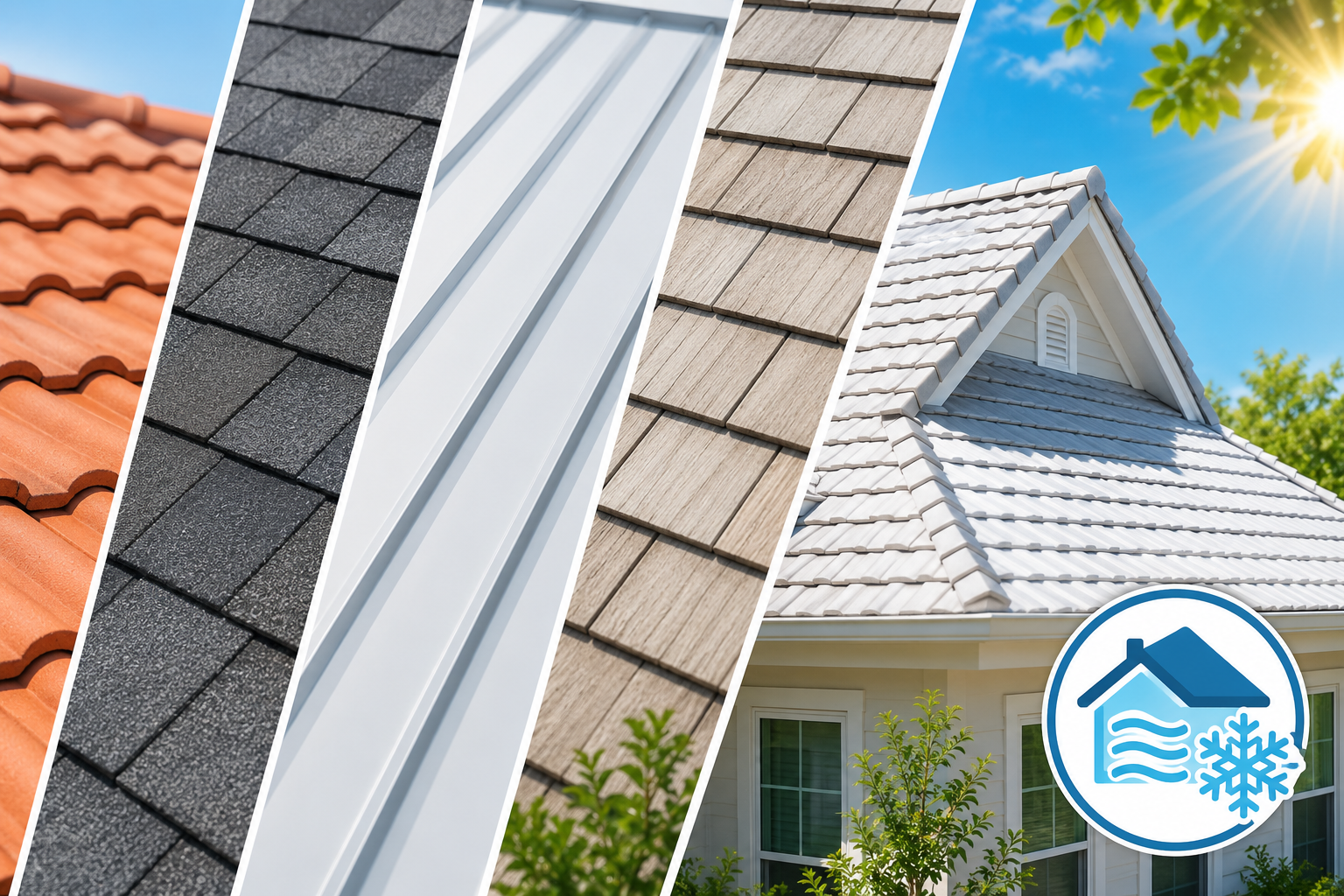
Why Your Roof Choice Affects Home Temperature
Your roof covers more surface area than any other part of your home’s exterior, and on a clear summer day, it absorbs an enormous amount of solar radiation. That heat doesn’t just stay on the surface. It transfers downward into the attic, raises the temperature of the air trapped there, and eventually pushes warmth into the rooms below. The difference between a roof that manages heat well and one that doesn’t can be ten to twenty degrees inside your attic alone.
Reflectivity is the core principle here. A material’s ability to reflect sunlight rather than absorb it determines how much of that solar energy ever becomes a problem in the first place. Renowned Minnesota roofing contractors point out that homeowners often overlook this when choosing materials, focusing on aesthetics or upfront cost while underestimating the long-term impact on cooling expenses.
You see, the color and composition of a roofing material both play a role. Dark asphalt shingles, for example, can reach surface temperatures above 150°F on a hot day. A metal roof or a cool-rated shingle under the same conditions might stay 50 to 60 degrees cooler at the surface. That gap matters when you’re trying to keep your home comfortable without running your AC around the clock.
Also worth understanding is the concept of thermal mass. Some materials, like clay tile, absorb heat slowly and release it gradually, which delays the transfer into your living space. Others rely almost entirely on reflectance. Both approaches work, and the best choice depends on your climate, your roof structure, and your home’s overall ventilation.
Metal Roofing: High Reflectance, Long Lifespan
Metal roofing has earned a strong reputation in warm climates, and the reason comes down to how it handles sunlight. Steel and aluminum panels reflect a large portion of solar radiation rather than absorb it, which keeps surface temperatures significantly lower than those of traditional asphalt. When you add a reflective coating or a light finish, that performance improves further, making metal one of the most effective cool roofing options available to homeowners today.
Standing seam and ribbed panel styles are the most common residential formats, and both carry practical advantages beyond just heat performance. They shed water efficiently, hold up well against wind, and require minimal maintenance over their lifespan. Moreover, metal roofs typically last 40 to 70 years, so the energy savings they generate compound over decades rather than just a few seasons.
The upfront cost is higher than that of asphalt shingles, and that gives some homeowners pause. However, the math tends to work out in favor of metal when you factor in reduced cooling bills, lower maintenance costs, and the fact that you likely won’t need a replacement for the life of the house. Some energy companies and local governments also offer rebates for installing cool roofing materials, which can offset a portion of that initial investment.
Metal roofing also pairs well with proper attic ventilation, which amplifies its cooling effect. When hot air can escape the attic freely, and the roof surface reflects most incoming solar energy, the combination helps keep indoor temperatures stable even during prolonged heat waves. It’s a practical choice for homeowners who want long-term performance without constant upkeep.
Clay and Concrete Tiles: Natural Heat Management
Clay and concrete tiles have been used in hot climates for centuries, and their continued popularity in places like the American Southwest and Mediterranean regions is no accident. The materials themselves have natural thermal mass, meaning they absorb heat slowly during the day and release it gradually as temperatures drop in the evening. That delay prevents rapid heat transfer into the attic and the living spaces below, which helps keep interiors more stable throughout the day.
The barrel tile shape adds another layer of benefit that often goes unnoticed. Those curved profiles create small air gaps between the tiles and the roof deck underneath, allowing air to circulate freely. You see, that airflow acts as a passive insulation layer, reducing the amount of heat that ever reaches the roof’s structural surface. Flat tiles offer less of this effect, but they still outperform standard asphalt shingles in thermal performance.
Clay tiles, in particular, come in light earthy tones that naturally reflect more sunlight than darker roofing materials. Concrete tiles offer a wider range of colors and are slightly more affordable, though they are heavier and may require additional structural support, depending on your home’s framing. Both materials are worth discussing with a contractor before committing, since the weight factor is a real consideration that varies from house to house.
The lifespan of clay and concrete tiles is another argument in their favor. With proper installation and occasional maintenance, these roofs routinely last fifty years or more. Also, their resistance to fire, insects, and rot means fewer unexpected repair costs over time. For homeowners in hot, dry climates, tile roofing remains one of the most reliable long-term investments available.
Reflective Asphalt Shingles: The Budget-Friendly Cool Option
Standard asphalt shingles are the most widely installed roofing material in North America, and for most of their history, they ranked among the worst performers in terms of heat. Dark granules absorbed solar energy efficiently, which was the last thing anyone needed during a summer heat wave. The introduction of cool-rated shingles changed that. Manufacturers now produce asphalt shingles embedded with specially coated granules that reflect infrared radiation, cutting surface temperatures considerably without requiring a different material altogether.
Energy Star certification is the benchmark to look for when shopping for reflective shingles. Products that carry that rating meet specific standards for solar reflectance and thermal emittance, meaning they reflect incoming sunlight and also release absorbed heat more efficiently than standard options. Moreover, many of these products come in a wider range of colors than you might expect, including darker shades that still carry the cool-roof rating because of how the granules are engineered, not their appearance.
The cost advantage is real and worth stating plainly. Reflective asphalt shingles typically cost only marginally more than their standard counterparts, and the installation process is identical. That means you get a meaningful improvement in thermal performance without the structural considerations required for tile or the higher material costs associated with metal. For homeowners replacing an aging roof on a tight budget, this is often the most practical path to a cooler home.
Compatibility is another strong point. Cool-rated shingles work with standard roof structures, standard underlayment, and standard installation practices. You don’t need a specialist or a modified framing system. Any qualified roofing contractor can install them, which keeps labor costs in line with a conventional replacement. The performance won’t match metal or tile at the extremes, but as an accessible upgrade from a standard dark shingle roof, the difference is noticeable.
Wrap Up
Keeping your home cool this summer starts well before you touch the thermostat. The material on your roof directly affects how much heat enters your living space, and choosing a reflective or thermally efficient option can make a real difference in both comfort and energy bills.
Whether you choose metal, tile, upgraded shingles, or membrane roofing, each material offers practical benefits. The right choice depends on your roof type, your budget, and your climate, but any of them will outperform a standard dark asphalt roof on a sweltering July afternoon.
