Water damage can occur in any home or business. If water enters your property, it can quickly harm walls, floors, furniture, and other valuables. Prompt restoration is essential, and taking the right steps can help reduce the impact. For anyone facing water problems in their area, learning about water damage restoration Central Massachusetts can make a real difference in how quickly and safely you can recover.
Responding to water damage the right way not only saves property but also protects you and your family from health risks. The first hours are the most important. Reacting quickly and following proven methods will minimize damage and prevent future problems, like mold or weakened structures.
Water can enter a property from many sources, such as leaking pipes, broken appliances, storms, or roof issues. Knowing where the water is coming from and what kind it is helps guide the cleanup. Damage can range from small leaks to large floods that affect entire rooms or buildings.
When starting the restoration process, focus on safety, then remove water and begin cleaning and drying. If you are not sure where the water is coming from, professional water leak detection Central Massachusetts can help you locate hidden leaks or moisture sources.
Assess the Extent of Damage
The first step is to carefully inspect your property. Find out how much water has entered and which materials are affected. Is the water clean, gray, or black? Clean water generally comes from a broken pipe or rain. Gray water may contain some impurities, often from dishwashers or washing machines. Black water is contaminated and dangerous, usually coming from sewage or flooding. Take pictures and write detailed notes for your insurance company. Accurate records help when you file an insurance claim.
Ensure Safety First
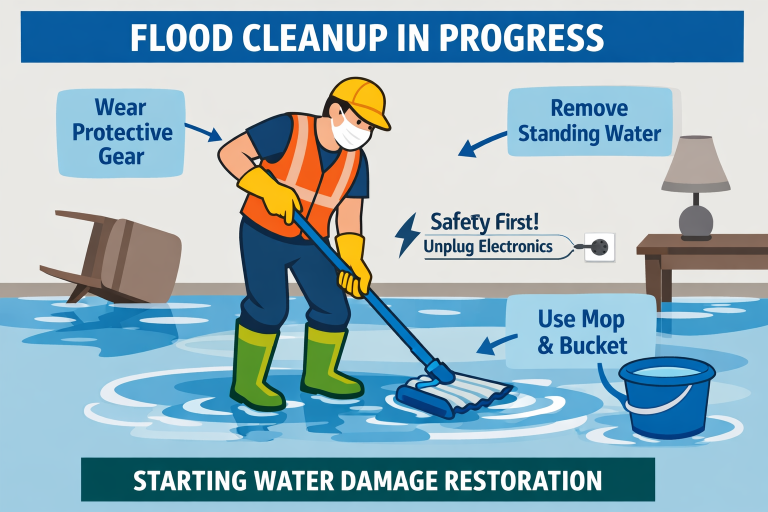
Safety must be your top priority. Before going into a flooded area, turn off electricity and gas to prevent fires and electric shocks. Wear gloves, boots, and face masks; this protects you from germs and chemicals in the water. If you are not sure about the structure’s safety, especially after heavy flooding or if the walls seem weak, get help from professionals before entering.
Stop the Source of Water
When water is still entering, act quickly to stop it. Shut off the main water valve if a pipe bursts or a fixture breaks. If water is coming from outside, like heavy rain or flooding, wait until conditions are safe before trying to fix the cause. Fixing the water source is the only way to keep the problem from getting worse.
Remove Standing Water
Once the area is safe and the water source is shut off, start removing the water immediately. Using buckets, mops, wet vacuums, or pumps helps speed up the process. The longer water sits, the more it soaks into floors and walls, causing greater damage. Do not forget to check hidden spaces such as under carpets and behind baseboards, where water often collects unnoticed.
Dry and Dehumidify the Area
Once all standing water is gone, focus on drying out the space. Use fans to move air, and install dehumidifiers to remove moisture from the air and surfaces. Open doors and windows if the weather is dry, which helps dry the area faster. Drying must be thorough to prevent mold growth and protect your home’s integrity. According to the Red Cross guide to flood safety, proper ventilation is important for drying and air quality.
Clean and Disinfect Surfaces
Cleaning and disinfecting are needed after water removal to protect your health. Use cleaning products that kill bacteria and mold to scrub walls, floors, and furniture. Be careful with porous materials, like carpets and drywall; sometimes, these must be replaced if they cannot be fully cleaned. Sanitizing every surface that came into contact with the water reduces the risk of illness and prevents odors from lingering.
Repair and Restore
Once everything is dry and clean, start making repairs. Replace parts of walls, flooring, or ceilings that are too damaged. Repaint, refinish wood, and repair any fixtures as needed. If the damage is severe, especially involving structural parts of your home, call in experts to make sure all repairs are done safely and correctly. The Federal Emergency Management Agency (FEMA) also offers helpful advice on repairing a home after flooding to guide homeowners through the rebuilding process.
Prevent Mold Growth
Mold can start to grow within 24 to 48 hours after water damage. To keep mold from spreading:
- Keep humidity levels below 50 percent.
- Regularly check and clean your heating and cooling system.
- Use paints and building materials that resist mold.
- Repair any leaks in plumbing or roofing right away.
If you see mold growing or smell a musty odor, professional mold removal may be necessary for your household’s health and safety.
Work with Water Damage Restoration Professionals
Some water damage is easy to fix, but serious cases need help from certified restoration technicians. Professionals have the right tools and experience to safely remove water, dry your property, and prevent future problems. Restoration experts can also help with insurance paperwork and make sure your property meets health and building standards.
Following these steps after water damage helps keep your home or business safe, saves money in repairs, and protects your health. Always consider professional restoration if the damage is more than you can handle or if you want peace of mind knowing everything is done properly.

https://shorturl.fm/O6cOy