Introduction to Electric Baby Swings
Finding ways to soothe a baby can be challenging, especially during periods of fussiness when caregivers are still learning what works best for their infant. Some babies respond well to gentle movement, familiar sounds, or close contact, while others prefer different forms of comfort. Electric baby swings are one option families may consider as part of their everyday soothing routine.
Unlike manually operated swings, electric models use powered movement, reducing the need for a caregiver to push the seat continuously. However, every baby responds differently, and an electric swing is not necessary for every family. Understanding the available features, appropriate uses, and safety limitations can help caregivers decide whether this type of equipment suits their needs.
How Electric Baby Swings Work
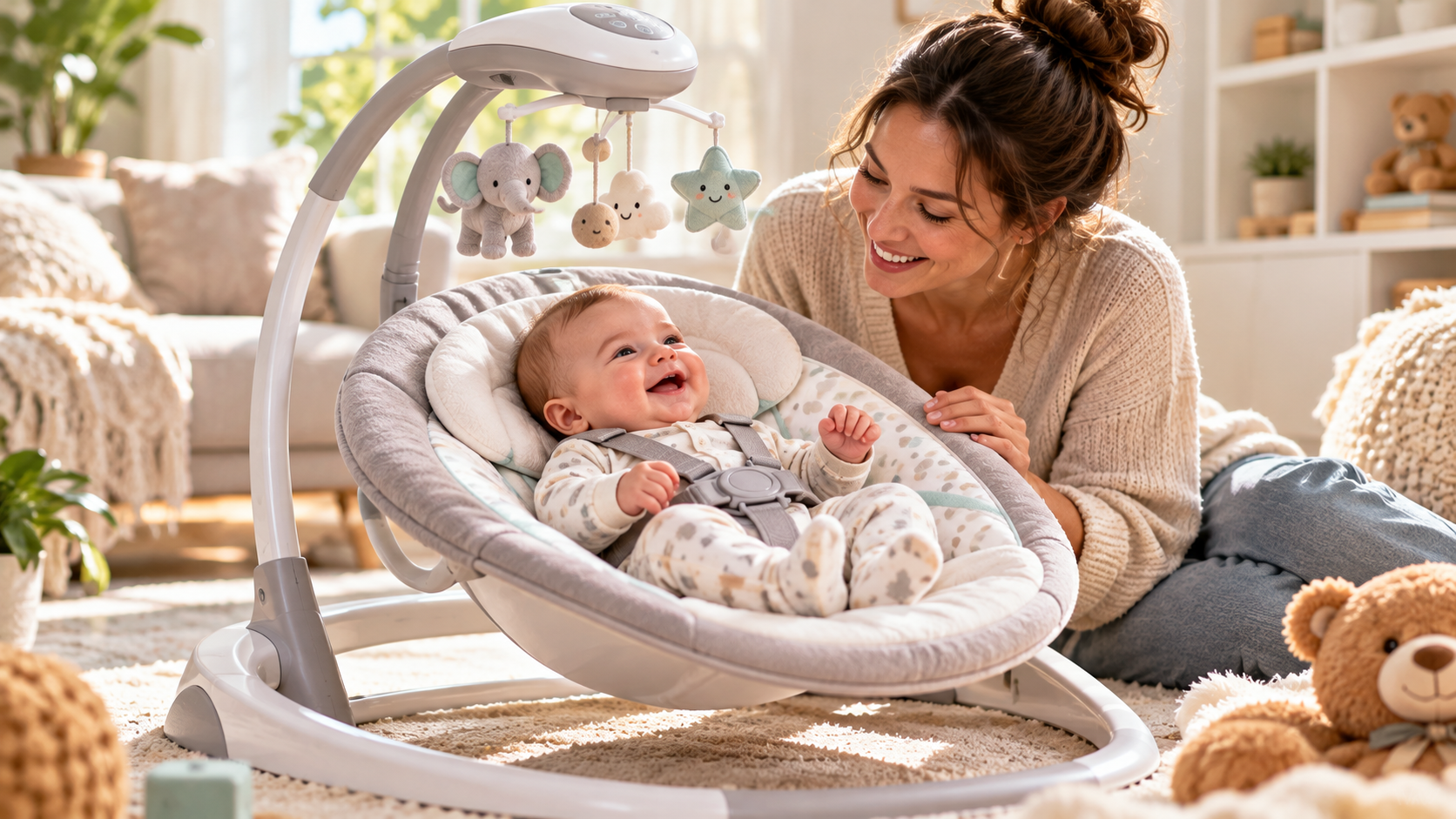
An electric baby swing uses a motorized mechanism to move an infant seat according to the product’s design. Depending on the model, the movement may be from side to side, from front to back, or follow another manufacturer-defined pattern. Some models offer multiple movement settings, while others have simpler controls.
When researching an electric baby swing, caregivers should consider several practical factors:
- Movement options: Different speeds and patterns may appeal to different babies, but no setting guarantees that an infant will settle.
- Power requirements: Check whether the model uses batteries, an electrical adapter, or another specified power source. Keep cords away from the baby and moving parts.
- Seat design: Use the seat only in the positions and configurations permitted by the manufacturer.
- Cleaning and maintenance: Review instructions for cleaning the fabric and maintaining mechanical or electrical components.
- Space and stability: Make sure the swing fits in the intended area and can be positioned on a stable, level floor.
- Developmental suitability: Check the product’s age, weight, and developmental restrictions before placing a baby in the seat.
Additional features may affect convenience, but they do not automatically make a swing safer or more effective. A suitable design, clear operating instructions, and correct use are more important than the number of available settings.
Potential Uses and Limitations of Electric Baby Swings
Gentle movement may help some babies relax while they are awake and supervised. Powered movement can also reduce the need for caregivers to push the swing manually. Even so, a swing should be viewed as an optional soothing tool rather than a solution for every episode of crying.
Infant fussiness can have many causes, including hunger, tiredness, a wet diaper, temperature discomfort, overstimulation, or other physical concerns. Caregivers should check their baby’s needs and respond to their cues rather than assuming that changing the swing’s settings will solve the problem.
Other soothing methods may be helpful, depending on the infant:
- Holding and gentle rocking: Close contact may offer reassurance and help caregivers respond to their baby’s signals.
- Soft singing or talking: Familiar sounds can provide comfort in a calm environment.
- Checking basic needs: Feeding cues, diaper changes, and comfortable clothing are important starting points.
- Reducing stimulation: A quieter space may help some babies settle when they seem overwhelmed.
- Following a flexible routine: Predictable patterns around feeding, interaction, and rest can help caregivers understand their baby’s preferences.
An electric swing does not replace holding, feeding, supervision, or responsive interaction. If a baby cries persistently, behaves unusually, or shows concerning symptoms, caregivers should seek advice from a pediatrician when appropriate.
Choosing an Electric Baby Swing and Using It Safely
When evaluating an electric baby swing, prioritize safe design, developmental suitability, and clear operating instructions. Families researching different options can explore an electric baby swing as one category of infant soothing equipment.
A specific product, such as the Momcozy 2-in-1 electric baby swing, is another example caregivers may encounter during their research. Product features and usage requirements vary, so consult the manufacturer’s information before making assumptions about its functions or suitability.
Regardless of the model, follow these essential precautions:
- Supervise the baby continuously. Never leave an infant unattended in a swing, even when the movement operates automatically.
- Use the restraint system correctly. Secure the baby as instructed and never modify the harness.
- Choose a safe location. Place the swing on a stable, level floor away from stairs, furniture edges, cords, and other hazards.
- Follow developmental limits. Some swings must no longer be used once a baby reaches a specified age, weight, or milestone, such as rolling over. Follow the exact instructions for the product.
- Keep the seat clear. Do not add pillows, blankets, toys, or accessories that have not been approved by the manufacturer.
- Follow electrical instructions. Use the specified power source and keep cords away from the infant and moving components.
- Use the product as intended. Do not modify the equipment or operate it contrary to the manufacturer’s instructions.
Electric Baby Swings and Safe Sleep
An electric baby swing is not a safe routine sleep space. Although gentle movement may make a baby drowsy, a swing’s seated or inclined position is not a substitute for an appropriate infant sleep surface.
If a baby falls asleep in a swing, caregivers should move the infant to a firm, flat, noninclined sleep surface as soon as practical and place the baby on their back. Swings should not be used for overnight sleep or planned naps. Reclining the seat does not make it safe for sleep.
Caregivers should also avoid relying on a swing to treat reflux, colic, breathing difficulties, or other medical conditions. If an infant seems uncomfortable during use or has persistent crying, feeding concerns, or other symptoms that worry the caregiver, a pediatrician can provide appropriate guidance.
Conclusion
An electric baby swing may offer a convenient soothing option for some families when a baby is awake and continuously supervised. Understanding the available features, checking developmental suitability, and following the manufacturer’s instructions can help caregivers decide whether this equipment fits their daily routine.
Powered movement does not eliminate the need for supervision or change infant sleep-safety requirements. A swing is only one possible part of infant care, not a replacement for responsive caregiving. By prioritizing safety and paying attention to their baby’s individual needs, families can make informed choices about soothing methods and equipment.
