Australians are buying more of their homewares online, and the washable rug is increasingly part of that shift. Australians spent $9.9 billion online on home and garden products in 2025, up 9.9% year over year. Around 5.1 million households shopped the category online, representing 52% of Australian households that made online purchases, while 26% of total home and garden spending took place online (Australia Post, 2026).
That backdrop helps explain the space occupied by Double, the Australian rug brand founded in late 2022 (Life Interiors, 2023). Rather than treating washability as a feature reserved for thin synthetic rugs, the company has extended the idea across recycled polyester, New Zealand wool, organic cotton and natural jute. Its proposition addresses a familiar household compromise: wanting a rug with color, texture and presence without treating the floor as a no-go zone whenever children, pets or food are involved.
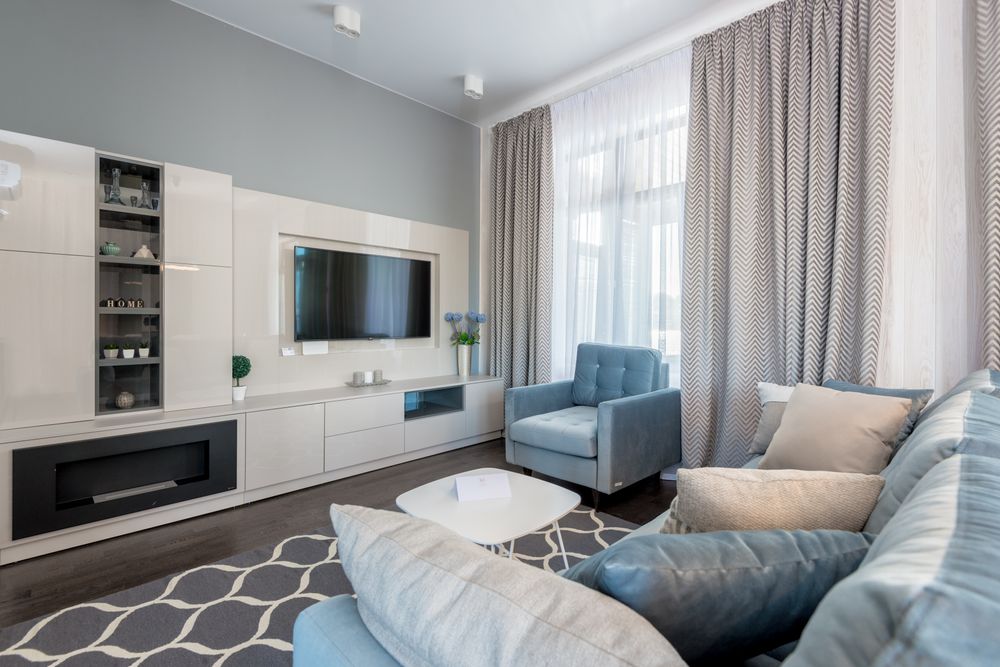
Washable Natural Fibers Change the Category
The washable rug market is already moving beyond niche status. Patel (2026) values the global segment at $4.8 billion in 2025 and projects it to reach $9.2 billion by 2034, representing a compound annual growth rate of 7.5%. Online stores accounted for 47.8% of the market in 2025, while polyester held the largest material share at 34.2%.
Double’s more unusual proposition sits outside that dominant polyester segment. Alongside its recycled polyester rugs, the company sells washable New Zealand wool, organic cotton and natural jute designs. The natural-fiber collections bring washability into materials more commonly associated with specialist cleaning and cautious maintenance.
That distinction needs some qualification. “Washable rug” does not mean identical care across every Double rug. The company states that cleaning requirements vary according to texture, construction and size. Some products can go into a washing machine, while others require hand washing, spot cleaning or different drying methods. That product-specific approach matters when comparing washable rugs with one another.
The surrounding home-textile market is also expanding. Mordor Intelligence (2026) estimates its global value at $145.29 billion in 2026, compared with $136.25 billion in 2025, and forecasts growth to $200.28 billion by 2031. Asia-Pacific accounted for 45.08% of the market in 2025, making Australia part of the world’s largest regional home-textile market.
Design Is More Than a Printed Surface
Double’s other defining characteristic is the attention given to the surface itself. The business develops original designs rather than relying solely on standard patterns sourced from rug suppliers. Colour, pile and construction vary considerably across the range, giving the brand more room to work with a rug as an interior object rather than simply a washable floor covering.
That difference is particularly visible in texture. Washable rugs have historically lent themselves to low-profile constructions because thinner pieces are easier to clean. Double has expanded into shag, plush, loop-pile and other more tactile formats, while its wool range includes handwoven designs. One current wool rug, for example, combines 100% New Zealand wool with organic cotton backing and an 18 mm pile.
Collaborations have also moved the brand further into the Australian interiors conversation. In 2025, interior designer Jono Fleming worked with Double on Wild South, a seven-rug collection drawing on the architecture, colour and landscape of Tasmania. Fleming described admiring “the quality, the simplicity, and how they design for real life” (Fleming, as cited in Karras, 2025, para. 5).
For shoppers comparing washable rugs Australia, that design breadth changes the buying question. It becomes less about finding a washable alternative to a conventional rug and more about choosing between materials, pile types, colours and styles within the washable category itself.
Testing and Styling Address Online-Buying Uncertainty
Buying a rug online presents some obvious problems. Scale is difficult to judge from a product photograph. A beige on one screen may look quite different on a timber floor or painted wall at home. Texture is harder still.
Double has built several services around those problems. Its website includes a virtual room styling tool that lets customers preview a rug in their own space, alongside a style quiz and access to styling support. Swatches are also available for customers who want to handle a material before ordering a full-sized rug.
These services sit within a broader change in Australian e-commerce. Megantic (2026) found that conversion rates for its Home & Garden clients increased from 1.6% to 1.9% between FY23/24 and FY25/26. Over the same period, cart-to-view rates remained almost unchanged, moving from 11.1% to 11.2% and back to 11.1%. The figures suggest that online homewares customers may be becoming more decisive once they reach the later stages of a purchase.
Double also reports using independent Eurofins wash testing across its product textures. Material specifications are published at product level, with relevant certifications identified where applicable. Its Checkline wool rug, for example, specifies OEKO-TEX-certified New Zealand wool rather than relying on a general certification claim across the entire collection.
Double currently offers free standard shipping on Australian orders over $140 and free returns or exchanges within 30 days on eligible items. Heavy Loop Pile products are subject to different return conditions.
A Growing Brand in a Much Larger Rug Market
Double is operating within a substantial global category. Baktash (2026) estimates global carpet and rug product revenue at approximately $60 billion to $65 billion in 2026 after comparing estimates from several research firms. The US market alone is projected to reach approximately $13.24 billion in 2026.
That scale provides context for Double’s international ambitions. BOSS Editorial (2025) reported that the company was considering expansion into the United States and United Kingdom, although no confirmed public launch date is currently available. The publication also reported that changes to Double’s supply chain had allowed prices to fall by up to 30%.
For now, Double’s position is more specific. It has taken the practical premise of the washable rug and applied it to a broader interior vocabulary: wool, jute, cotton, deeper piles, original patterns and stronger color. That does not remove the compromises involved in buying or caring for a rug. What Double has demonstrated is that washability no longer needs to describe one particular type of rug.
References
Australia Post. (2026). Home & garden: Category insights.
Baktash, I. (2026, July 31). The rug industry in 2026: Market size, the tariff reset, and who’s winning. RugIndustry.
BOSS Editorial. (2025, September 12). Effortless style, easy cleaning: Australia’s best machine washable rugs. BOSS Magazine.
Karras, C. (2025, October 9). Double + Jono Fleming create a range of Tassie-inspired rugs. The Design Files.
Life Interiors. (2023, November 2). Introducing: Double.
Megantic. (2026, April 16). FY26 Q3 Australian eCommerce benchmarking data.
Mordor Intelligence. (2026, March 9). Home textile market outlook: USD 200.28 billion by 2031 with specialty stores holding 43.88% share in 2025, says Mordor Intelligence. GlobeNewswire.
