We all strive to provide the best for our pets, and that journey often begins with their diet. With an abundance of pet food options available, understanding the specifics of ingredients, especially marine sources, has become increasingly vital for pet parents. Fish, celebrated for its high-quality protein and beneficial omega-3 fatty acids, is a popular component in premium pet food.
However, the conversation around fish often includes concerns about contaminants, such as methylmercury. This naturally occurring heavy metal can accumulate in seafood, leading many of us to wonder about its impact on our furry companions. How does mercury content differ across fish species, and what does this mean for our pets’ health?

We will explore the critical comparison between mercury levels in sardines versus tuna, two common fish found in pet food. We’ll examine the biological reasons behind these differences, including their positions in the marine food chain. Our discussion will also cover the nutritional trade-offs, such as omega-3 fatty acids and protein density, helping you navigate these choices for your pet’s optimal health and long-term wellness.
When we select premium pet food, the quality of its ingredients is paramount. Fish-based formulations are often chosen for their rich nutritional profile, offering a complete source of protein and essential fatty acids. Among the most common fish found in these diets are various types of tuna and sardines, each bringing its own set of benefits and considerations.
Skipjack tuna, often labeled as “light tuna,” is a smaller, faster-growing species. It’s a popular choice due to its mild flavor and widespread availability. Albacore tuna, on the other hand, is a larger species, known for its firmer, whiter flesh and distinct taste, often marketed as “white tuna.” Both types of tuna provide excellent protein, crucial for muscle maintenance, enzyme production, and overall bodily functions in pets. Sardines, small pelagic fish, are typically consumed whole, including bones and skin, which contributes to their unique nutritional advantages.
The protein quality in these fish is exceptionally high. They offer a complete amino acid profile, meaning they contain all the essential amino acids that pets cannot synthesize on their own and must obtain from their diet. This makes them highly digestible and efficient sources of building blocks for growth and repair.
Evaluating Protein Sources in Premium Pet Food
Beyond just protein quantity, the quality of protein sources in premium pet food is a key factor in supporting a pet’s vitality. Fish, particularly the lean muscle meat from species like tuna and sardines, provides highly digestible protein. This means that a significant portion of the protein consumed can be absorbed and utilized by the pet’s body, reducing waste and maximizing nutritional benefit.
Furthermore, these marine ingredients are celebrated for their omega-3 fatty acid density, specifically EPA (eicosapentaenoic acid) and DHA (docosahexaenoic acid). These essential fatty acids are critical for numerous physiological processes, including supporting cognitive function, maintaining healthy skin and a lustrous coat, and reducing inflammation. While both tuna and sardines contain these beneficial fats, their concentrations can vary significantly. For instance, a 3-ounce serving of canned sardines can offer between 1,000 and 2,000 mg of EPA/DHA, whereas a similar serving of light tuna might provide around 100-200 mg, and albacore tuna around 700-900 mg. This difference highlights that while both are good sources, sardines often provide a superior omega-3 boost per serving.
The overall dietary fats from fish are generally considered healthy, contributing to energy, vitamin absorption, and cellular health. When considering fish as a primary protein source, especially for long-term feeding, we must also weigh the potential for heavy metal accumulation, which brings us to the critical comparison of sardines and tuna.
Heavy Metal Bioaccumulation: Sardines vs Tuna
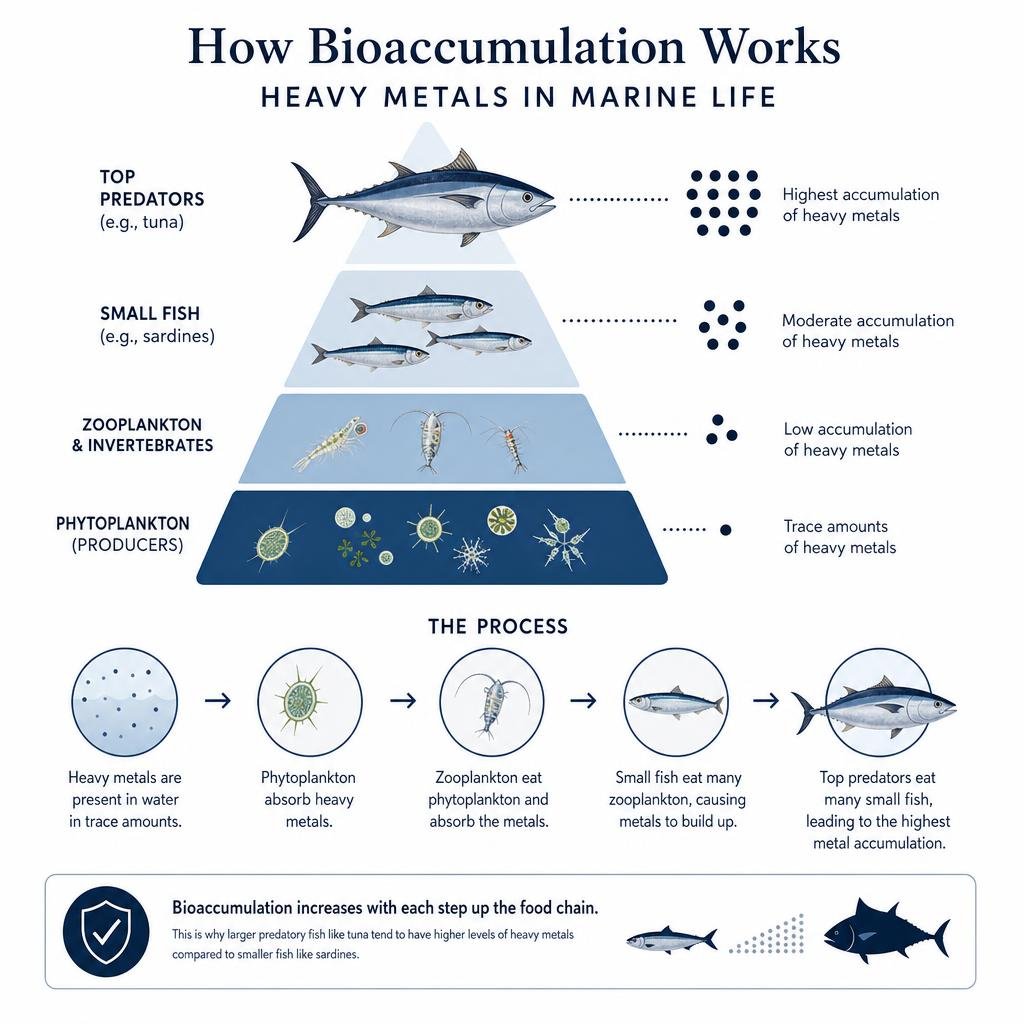
The presence of methylmercury in fish is a well-documented environmental concern, and understanding how it accumulates is crucial for making informed dietary choices for our pets. Methylmercury is a neurotoxin that forms when inorganic mercury, released into the environment from both natural processes and industrial activities, is converted by aquatic bacteria. Once formed, it enters the marine food web through plankton and bioaccumulates, meaning its concentration increases as it moves up the food chain.
This bioaccumulation process explains the significant difference in mercury levels between sardines and tuna. Sardines, being small, short-lived fish (typically 1-3 years), occupy a much lower trophic position in the food web. They primarily feed on plankton and small invertebrates. Consequently, they have less time and fewer opportunities to accumulate methylmercury. Research indicates that sardines have a remarkably low mean methylmercury concentration, around 0.013 parts per million (ppm). To put this in perspective, the FDA action level for methylmercury in commercial seafood for human consumption is 1.0 ppm; sardines are roughly 75 times below this threshold.
Tuna, on the other hand, are predatory fish that sit higher on the marine food chain. They consume smaller fish, which have already accumulated some mercury. As tuna grow larger and live longer (some species can live for over a decade), they continuously accumulate mercury through their diet, a process known as biomagnification. This results in significantly higher mercury levels compared to sardines. For example, albacore (white) tuna averages about 0.350 ppm of methylmercury, while skipjack (light) tuna, a smaller and shorter-lived tuna species, averages around 0.144 ppm. Fresh tuna, particularly larger specimens, can even exceed 1.0 mg/kg (equivalent to 1.0 ppm), making it more than ten times higher than the typical mercury levels found in sardines.

The implications for pet food are clear: fish species like sardines inherently pose a much lower mercury risk due to their ecological role and life cycle.
Trophic Biomagnification and Food Web Position
The concept of trophic biomagnification is central to understanding why certain fish contain higher levels of mercury than others. In marine ecosystems, energy flows from lower trophic levels (producers like plankton) to higher trophic levels (apex predators). As organisms consume others, persistent pollutants like methylmercury are not efficiently metabolized or excreted. Instead, they accumulate in the tissues of the consumer.
Sardines, as primary consumers or very low secondary consumers, feed on phytoplankton and zooplankton. Their short lifespans mean they have limited time for mercury to build up in their systems. This makes them an exceptionally clean source of marine nutrients.
Conversely, tuna, especially larger species like albacore and bigeye, are apex predators in their respective ecosystems. They consume many smaller fish throughout their longer lives, each of which has already accumulated some mercury. This compounding effect leads to substantially higher concentrations of methylmercury in tuna muscle tissue. Methylmercury has a strong affinity for cysteine residues in proteins, binding tightly to muscle tissue, which is precisely the part of the fish we (and our pets) consume. Furthermore, methylmercury has a biological half-life measured in years in fish, meaning it remains in their bodies for extended periods, contributing to continuous accumulation over their lifespan.
This scientific understanding underscores why a diet incorporating fish lower on the food chain, like sardines, can be a more prudent choice for minimizing heavy metal exposure in our pets over the long term.

Protective Nutrients and Selenium Ratios in Marine Diets
Beyond simply comparing mercury levels, it’s also vital to consider the role of other nutrients present in fish that can mitigate the risks associated with mercury exposure. Selenium is a trace mineral that has garnered significant attention for its ability to counteract mercury toxicity. This protective effect stems from selenium’s strong binding affinity for mercury. When consumed together, selenium can bind to methylmercury, forming an inert compound called mercury-selenide. This new compound is biologically inactive and can be more easily excreted from the body, preventing mercury from interfering with essential biological processes, particularly those involving selenoproteins.
Sardines are not only low in mercury but also rich in selenium. They boast an impressive selenium-to-mercury molar ratio, often ranging from 10 to 50. This indicates a significant excess of selenium relative to mercury, suggesting a highly protective effect. In contrast, fish higher in mercury, such as swordfish, might have a ratio closer to 0.5-1.5, where mercury can exceed selenium’s binding capacity, potentially increasing the risk of toxicity. Tuna species typically fall in between, with ratios around 2-5, still offering some protective capacity but less pronounced than in sardines.
The presence of this protective selenium in fish is a crucial factor in assessing overall safety. For pets, especially those consuming fish regularly, a high selenium-to-mercury ratio means that the inherent mercury present is likely to be neutralized, further enhancing the safety profile of the fish.
Furthermore, sardines offer other nutritional benefits when consumed whole, including their soft, edible bones. These bones are an excellent natural source of calcium, a vital mineral for bone health, nerve function, and muscle contraction in pets. This makes sardines a multifaceted nutritional powerhouse, offering both low mercury and protective nutrients, along with essential minerals.
Standards for Heavy Metal Screening in Premium Pet Food
Given the concerns surrounding heavy metals like mercury, responsible pet food manufacturers employ rigorous standards for screening their ingredients. Batch testing and comprehensive heavy metal analysis are critical steps in ensuring the safety and quality of fish-based pet foods. These tests measure the concentrations of various contaminants, including mercury, arsenic, cadmium, and lead, to ensure they fall within safe limits.
The FDA sets action levels for methylmercury in commercial seafood intended for human consumption at 1.0 ppm. While specific action levels for pet food can vary, the principle remains the same: ingredients must be carefully monitored to prevent harmful levels of contaminants. For pet food manufacturers committed to the highest standards, rigorous mercury-tested premium cat food protocols are essential to ensure product safety and compliance with health guidelines. These protocols often involve testing raw ingredients and finished products to verify that mercury levels are well below any established safety thresholds, providing peace of mind to pet parents.
Understanding these toxicity thresholds and the importance of screening helps us appreciate the efforts made by premium pet food brands to deliver safe and nutritious meals. It also empowers us as consumers to look for brands that prioritize transparency and provide evidence of their quality control measures, ensuring our pets receive the safest possible nutrition.

Frequently Asked Questions
How do mercury levels in sardines compare to canned tuna?
When it comes to methylmercury concentrations, sardines consistently rank among the safest choices. They are small, short-lived forage fish that feed low on the marine food chain, primarily on plankton. This ecological position and their brief lifespans mean they have very little time to accumulate methylmercury. On average, sardines contain about 0.013 parts per million (ppm) of methylmercury.
In stark contrast, canned tuna, particularly albacore (white) tuna, has significantly higher mercury levels. Albacore tuna averages around 0.350 ppm, which is approximately 27 times higher than sardines. Skipjack (light) tuna, while lower than albacore, still contains about 0.144 ppm, making it roughly 11 times higher than sardines. This substantial difference underscores why sardines are often recommended as a low-mercury seafood option for both humans and pets.
Why is selenium important when feeding fish-based pet diets?
Selenium plays a crucial role in mitigating the potential risks associated with mercury exposure in fish-based pet diets. Methylmercury is known to be toxic, but selenium has a unique ability to bind with it, forming an inert compound called mercury-selenide. This compound is less bioavailable and more readily excreted by the body, effectively neutralizing mercury’s harmful effects.
The importance of selenium is often assessed by the selenium-to-mercury (Se:Hg) molar binding ratio. A ratio greater than 1 suggests that there is sufficient selenium to bind with the mercury present, offering a protective effect. Sardines typically exhibit a very high Se:Hg ratio, often between 10-50, indicating a strong capacity to neutralize any mercury they contain. Tuna species also contain selenium, with ratios generally ranging from 2-5, which provides some protection, but less than what is found in sardines. By incorporating fish with a favorable Se:Hg ratio into a pet’s diet, we can enhance cellular protection and minimize the biological impact of any trace mercury.
Are sardines safer than albacore tuna for daily feeding?
Based on their mercury profiles and trophic positions, sardines are unequivocally safer than albacore tuna for more frequent or even daily feeding. Sardines’ extremely low methylmercury concentrations (0.013 ppm) mean that the bioaccumulation risk is minimal. For instance, to ingest the same amount of methylmercury found in a single 6-ounce can of albacore tuna, a pet would need to consume approximately 30 standard tins of sardines.
Albacore tuna, with its significantly higher mercury content (0.350 ppm), carries a greater bioaccumulation risk, especially with regular consumption. While occasional servings of albacore might be acceptable for some pets, it is generally recommended to limit its intake due to the higher mercury load. For long-term dietary safety and to minimize exposure to heavy metals, small pelagic species like sardines are the superior choice for consistent inclusion in a pet’s diet. Their low mercury levels, combined with their high omega-3 content and beneficial selenium, make them an excellent and safer option for promoting overall feline health and wellness.
Conclusion
As pet parents, our goal is to make informed choices that support the long-term health and vitality of our companions. When it comes to incorporating fish into their diets, understanding the nuances of mercury content in different species is paramount. Our exploration reveals a clear distinction: sardines, due to their low position in the marine food chain and short lifespans, consistently offer significantly lower mercury levels compared to various types of tuna, especially albacore.
Beyond just mercury, sardines also provide a compelling nutritional package, including high levels of beneficial omega-3 fatty acids, a protective selenium-to-mercury ratio, and valuable calcium from their edible bones. While tuna offers excellent protein and some omega-3s, the higher mercury risk, particularly in albacore, necessitates more cautious consumption limits.
For optimal feline health and long-term wellness, we recommend prioritizing low-mercury seafood options like sardines. Incorporating a rotation of fish types, with a strong emphasis on those lower on the food chain, allows us to harness the incredible nutritional benefits of marine ingredients while minimizing potential contaminant exposure. By making these informed choices, we can ensure our beloved pets thrive on a premium pet food diet that is both delicious and safe.
