How Eco-Friendly HVAC Systems Reduce Home Energy Consumption
In the United States, air conditioning systems for both residential and commercial buildings account for a significant portion of our nation’s total energy consumption, typically ranging from 4 to 7 percent. This substantial energy footprint highlights the critical need for more efficient cooling solutions, especially as summers grow hotter and demand for comfort increases. Eco-friendly HVAC systems play a pivotal role in mitigating this impact by offering advanced technologies designed to deliver superior comfort while drastically reducing energy use and, consequently, carbon emissions. For homeowners in Baltimore, where summer heat and humidity are a constant challenge, upgrading to high-efficiency equipment can translate into tangible savings on utility bills, which, in 2026, average around 14.5 cents per kilowatt-hour for BGE residential electricity supply and delivery charges. Embracing these greener technologies is not just about environmental responsibility; it’s also a smart financial decision that enhances indoor living quality.
Energy Efficiency Standards and Cost Savings
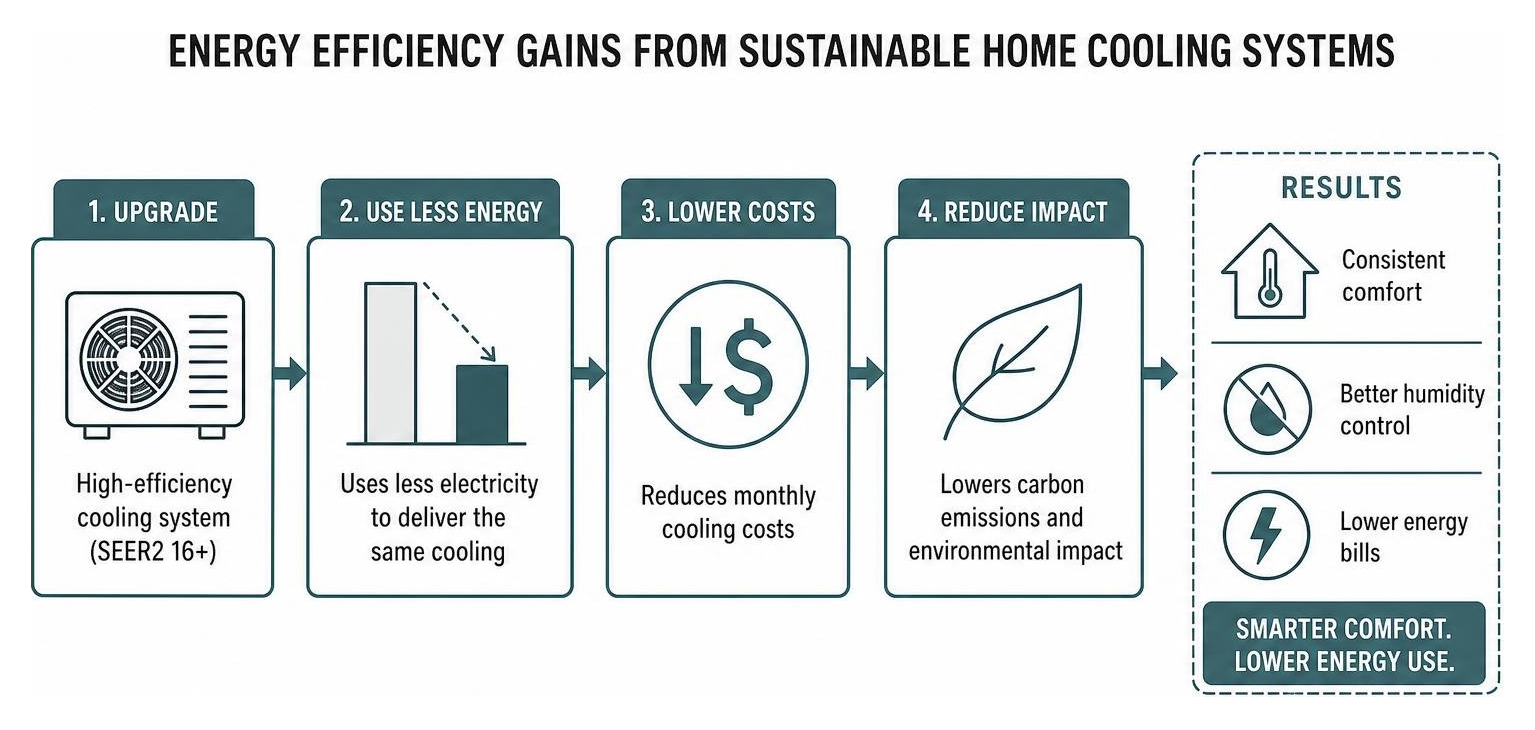
The evolution of HVAC technology has brought about significant advancements in energy efficiency, particularly with the introduction of new SEER2 (Seasonal Energy Efficiency Ratio 2) standards. Units boasting SEER2 ratings of 16 or higher represent the pinnacle of modern cooling efficiency. Compared to older, less efficient systems, these high-performance units can slash cooling costs by an impressive 20 to 40 percent. This reduction not only lightens the load on your monthly electricity bills but also contributes to a smaller carbon footprint, aligning with broader sustainability goals. Investing in a high-efficiency system means your home stays cooler with less energy, providing a comfortable sanctuary during Baltimore’s sweltering summers without the associated high operating costs.
Addressing Moisture Control in Humid Climates
Baltimore’s summer heat is often accompanied by high humidity, which poses a unique challenge for air conditioning systems. Beyond simply lowering the air temperature, effective cooling in humid climates requires significant dehumidification. This process, known as latent heat management, removes moisture from the air, making your home feel cooler and more comfortable even at higher thermostat settings. Older or inefficient AC units often struggle with this, leading to a phenomenon where the air feels clammy despite the temperature being set low. This can also contribute to short cycling, as the unit may cool the air quickly but fail to adequately remove humidity before shutting off, prompting it to turn back on shortly after.
High humidity, if not properly controlled, can have several adverse effects, including the proliferation of mold and mildew, which compromises indoor air quality and can trigger allergies or respiratory issues. Eco-friendly HVAC systems, particularly those with variable-speed technology, are adept at managing moisture. They can run for longer durations at lower capacities, allowing them to effectively dehumidify the air without overcooling your home. This continuous, low-level operation is essential for maintaining optimal indoor air quality and preventing the damp, uncomfortable feeling that often accompanies Baltimore’s muggy summer days.
Key Technologies and Solutions in Eco-Friendly HVAC
The landscape of home climate control is rapidly evolving, with a strong emphasis on sustainability and efficiency. Eco-friendly HVAC solutions integrate cutting-edge technologies to provide superior comfort while minimizing environmental impact. These innovations range from harnessing renewable energy sources like geothermal power to implementing sophisticated control systems that optimize energy use. By moving beyond traditional, energy-intensive methods, we can achieve significant reductions in energy consumption and enhance the overall sustainability of our homes.
Heat Pumps and Variable-Speed Eco-Friendly HVAC Units
At the forefront of eco-friendly HVAC technology are heat pumps and variable-speed units. Unlike older, single-stage air conditioners that operate on an “all-on” or “all-off” principle, modern variable-speed systems feature modulating compressors. This inverter technology allows the compressor to adjust its speed and output continuously, precisely matching the cooling demand of your home. Instead of cycling on and off frequently, these units run almost continuously at lower capacities, providing more consistent temperatures and significantly better humidity control.
This continuous, variable-speed operation is a stark contrast to older systems, which would simply switch the compressor on and off, leading to temperature fluctuations and less effective dehumidification. Heat pumps, in particular, offer a dual advantage, providing both highly efficient cooling in the summer and effective heating in the winter, making them a year-round eco-friendly solution. Their ability to adapt to changing conditions means they consume only the energy necessary to maintain your desired comfort level, leading to substantial energy savings and a more stable indoor environment.
Smart Thermostats and Zoned Eco-Friendly HVAC Solutions
Another cornerstone of modern eco-friendly HVAC is the integration of smart thermostats and zoned cooling systems. Smart thermostats, such as those made by Nest, offer unparalleled control and efficiency. By learning your household’s patterns and allowing for easy scheduling, they can automatically adjust temperatures to optimize energy use. For instance, setting your thermostat just 7 to 10 degrees Fahrenheit higher for eight hours a day when you’re away from home can lead to annual savings of up to 10 percent on heating and cooling costs. Even a modest adjustment of bumping up the thermostat by just 1 degree Fahrenheit can yield approximately a 3 percent savings in cooling expenses. Compared to manual thermostats, smart thermostats can achieve about 10 percent savings overall.
Beyond smart controls, zoned cooling systems further enhance efficiency by allowing you to independently control temperatures in different areas of your home. This means you only cool the spaces you’re actively using, avoiding energy waste in unoccupied rooms. However, even with the most advanced systems, efficiency can be undermined by issues like duct leakage. Typical homes, especially older Baltimore rowhouses, can lose 20 to 30 percent of conditioned air through gaps, holes, and poor connections in their ductwork. Addressing these leaks is crucial to maximizing the benefits of smart thermostats and zoned systems, ensuring that conditioned air reaches its intended destination efficiently.
Eco-Friendly Maintenance to Prevent Short Cycling and Energy Waste
Preventative maintenance is paramount in ensuring the longevity and efficiency of any HVAC system, especially in preventing the dreaded short cycling phenomenon. When an AC system short cycles—turning on and off repeatedly without completing a full cooling cycle—it undergoes significant stress. This frequent starting and stopping can lead to premature wear and tear on critical components, most notably the compressor, which is the heart of your cooling system. A short cycling AC will likely have a significantly reduced lifespan compared to the typical 15 to 20 years of a healthy unit, leading to costly repairs or early replacement. Moreover, it results in higher energy bills because the system is constantly restarting, consuming more power than if it ran for longer, more efficient durations. A healthy AC system should ideally run for 15 to 20 minutes at a time to effectively cool and dehumidify your home. Regular maintenance, including addressing airflow restrictions and adhering to a consistent schedule, is key to avoiding these issues and maintaining optimal performance.
Eliminating Airflow Restrictions and Filter Clogs
One of the most common culprits behind AC short cycling and inefficiency is restricted airflow, often caused by clogged air filters. A dirty air filter can reduce airflow by 20 percent or more, forcing your system to work harder and longer to achieve the desired temperature. This increased strain not only leads to higher energy costs, potentially raising them by 5 to 15 percent, but also contributes to short cycling as the unit struggles to move air effectively. Regularly replacing or cleaning your air filter, especially during peak cooling seasons in Baltimore, is a simple yet incredibly effective maintenance step.
Beyond filters, ensuring that supply and return vents are clear of furniture, curtains, or other obstructions is equally important for proper airflow. Blocked vents can create pressure imbalances within your ductwork, hindering the system’s ability to distribute conditioned air evenly. Furthermore, duct sealing is a critical component of maintaining efficient airflow. As mentioned, typical homes can lose 20 to 30 percent of conditioned air through leaky ducts. Sealing these leaks ensures that the cooled air reaches your living spaces rather than escaping into attics, crawl spaces, or walls. For a deeper dive into maintaining your HVAC system for optimal performance and efficiency, explore resources on eco-friendly operations and maintenance.
Proper System Sizing and Preventative Care
Improper system sizing is a significant,, cause of short cycling, particularly in older homes like Baltimore rowhouses. An oversized AC unit cools the space too quickly, satisfying the thermostat’s temperature setting before it has had enough time to adequately dehumidify the air or complete a full cooling cycle. This leads to frequent on-off cycles, which is the definition of short cycling. Proper sizing requires a professional Manual J load calculation, which takes into account factors like your home’s square footage, insulation levels, window types, and sun exposure to determine the exact cooling capacity needed. Without this, an oversized system will constantly short cycle, wasting energy and accelerating wear on components.
Preventative care extends beyond filters and sizing to include regular professional tune-ups. An HVAC technician can identify and address potential issues before they escalate, such as low refrigerant levels, dirty coils, or electrical problems. Low refrigerant, often indicative of a leak, forces the compressor to work harder and can cause short cycling. Electrical issues, such as faulty relays or control board problems, can also lead to erratic system behavior. During a tune-up, technicians inspect all electrical components, clean coils, check refrigerant levels, and ensure all parts are functioning optimally. This proactive approach not only prevents short cycling but also extends the lifespan of your unit, maintains efficiency, and ensures reliable comfort throughout Baltimore’s hot summers.
Frequently Asked Questions
What causes an AC system to short cycle during extreme summer heat?
Short cycling during extreme summer heat can stem from a variety of issues. Common culprits include clogged air filters, which restrict airflow and make the system work harder, and low refrigerant levels, often due to a leak, which prevents efficient cooling. Other causes can be faulty control boards or electrical components that send incorrect signals to the unit, or even improper thermostat placement, such as being too close to a supply vent, causing it to sense the desired temperature prematurely. An oversized unit, as discussed, will also short cycle because it cools the space too rapidly.
How do modern variable-speed ACs differ from older single-stage models?
Modern variable-speed ACs differ significantly from older single-stage models primarily in their compressor operation. Older units feature a single-stage compressor that is either fully on or fully off, leading to abrupt temperature changes and less effective humidity control. In contrast, modern variable-speed systems utilize modulating compressors with inverter technology. This allows the compressor to adjust its speed and output continuously, precisely matching the cooling demand. This continuous operation provides more consistent temperatures, superior dehumidification, and significantly lower energy consumption compared to the frequent on-off cycles of older models.
How much can a smart thermostat reduce annual home cooling costs?
A smart thermostat can significantly reduce your annual home cooling costs, often yielding about 10 percent in savings compared to traditional manual thermostats. This is achieved through features like programmable scheduling, remote access, and learning capabilities that optimize your cooling patterns. By simply adjusting your thermostat by 7 to 10 degrees Fahrenheit for eight hours a day when you’re away or asleep, you can save up to 10 percent annually. Furthermore, research indicates that bumping up the thermostat by just 1 degree Fahrenheit can result in approximately a 3 percent savings in cooling costs. These savings become even more impactful when considering BGE’s residential electricity rates in 2026, which average about 14.5 cents per kilowatt-hour.
Conclusion
Addressing AC short cycling, especially in the intense Baltimore summer heat, is crucial not only for your comfort but also for your wallet and the environment. By understanding the root causes—from airflow restrictions and improper sizing to electrical issues and high humidity—and embracing eco-friendly HVAC solutions, homeowners can achieve a more sustainable and efficient cooling experience. Investing in high-efficiency systems, utilizing smart thermostats, and committing to regular, professional maintenance are key steps toward reducing energy consumption, lowering utility bills, and extending the lifespan of your HVAC equipment. These choices contribute to a greener home and a more comfortable, sustainable future for our community.
