Introduction: Safeguarding Occupants and Building Integrity
Healthy property goes far beyond what meets the eye. For landlords, facility managers, and housing providers, ensuring the well-being of occupants while preserving the structural integrity of physical assets is a continuous, complex operational challenge. Hidden moisture accumulation, unseen airborne micro-contaminants, structural defects, and overlooked statutory mandates can rapidly escalate into severe resident health hazards and substantial statutory liabilities. These risks can also disrupt tenancy relationships, increase reactive maintenance costs, and create avoidable reputational damage for organizations responsible for multiple buildings.
A preventive program also creates consistent communication channels, helping residents report warning signs early and helping managers compare recurring issues between buildings. When evidence is captured promptly, teams can prioritize proportionate intervention, document decisions, and avoid the costly cycle of repeated cosmetic repairs before underlying causes have been resolved.
We understand that making these invisible threats visible is the critical first step toward proactive, defensive property management. This comprehensive guide details the essential services, scientific testing methodologies, and strategic governance frameworks necessary to navigate the intricate landscape of property health and safety, ensuring full regulatory compliance while fostering safe living and working environments.
Uncovering Invisible Risks and Regulatory Duties
The journey to an optimized, healthy property begins with uncovering subterranean and concealed architectural hazards. Dampness and mold proliferation represent primary threats to building longevity and human health. Moisture within structural assemblies fosters fungal growth, releasing airborne spores, mycotoxins, and volatile organic compounds into breathing zones. Environmental factors and shifting weather patterns exacerbate these vulnerabilities; for example, homes situated in coastal or hurricane-prone regions are over 50% more likely to experience persistent fungal contamination after storm events due to envelope breach and prolonged elevated indoor humidity.
Early identification of structural micro-climates is essential. Visual inspections often fail to reveal moisture trapped behind vapor barriers, inside cavity walls, or underneath subflooring. Accurate diagnosis requires specialized, scientific protocol—specifically, an Independent property mold testing assessment that utilizes advanced laboratory sampling to determine fungal load, species composition, and exact moisture dynamics. This evidence helps distinguish an isolated condensation issue from an active plumbing leak, failed roof detail, or broader ventilation deficiency, allowing repairs to target root causes instead of merely treating visible staining.
Beyond environmental threats, property owners carry a strict statutory duty to maintain safe, habitable conditions. In the UK regulatory framework, the Housing Health and Safety Rating System (HHSRS) under the Housing Act 2004 dictates that properties must remain free from Category 1 hazards that present serious risks to resident welfare. Recent statutory actions, including Awaab’s Law enacted via the Social Housing Regulation Act 2023, have further expanded these obligations, establishing legal timeframes for landlords to investigate and repair damp and mold hazards. Understanding and mitigating these hazards is not merely good maintenance practice; it is an urgent statutory imperative.
Essential Services for Comprehensive Property Health and Safety
Maintaining a safe and healthy property portfolio demands a multi-faceted approach, combining scientific rigor with systematic regulatory compliance. We believe that true property health and safety is operational, integrated seamlessly into daily maintenance workflows rather than treated as a separate, occasional administrative task. This section delves into the core scientific, legal, and managerial services that underpin effective property management.
Scientific Testing and Independent Property Health and Safety Assessments
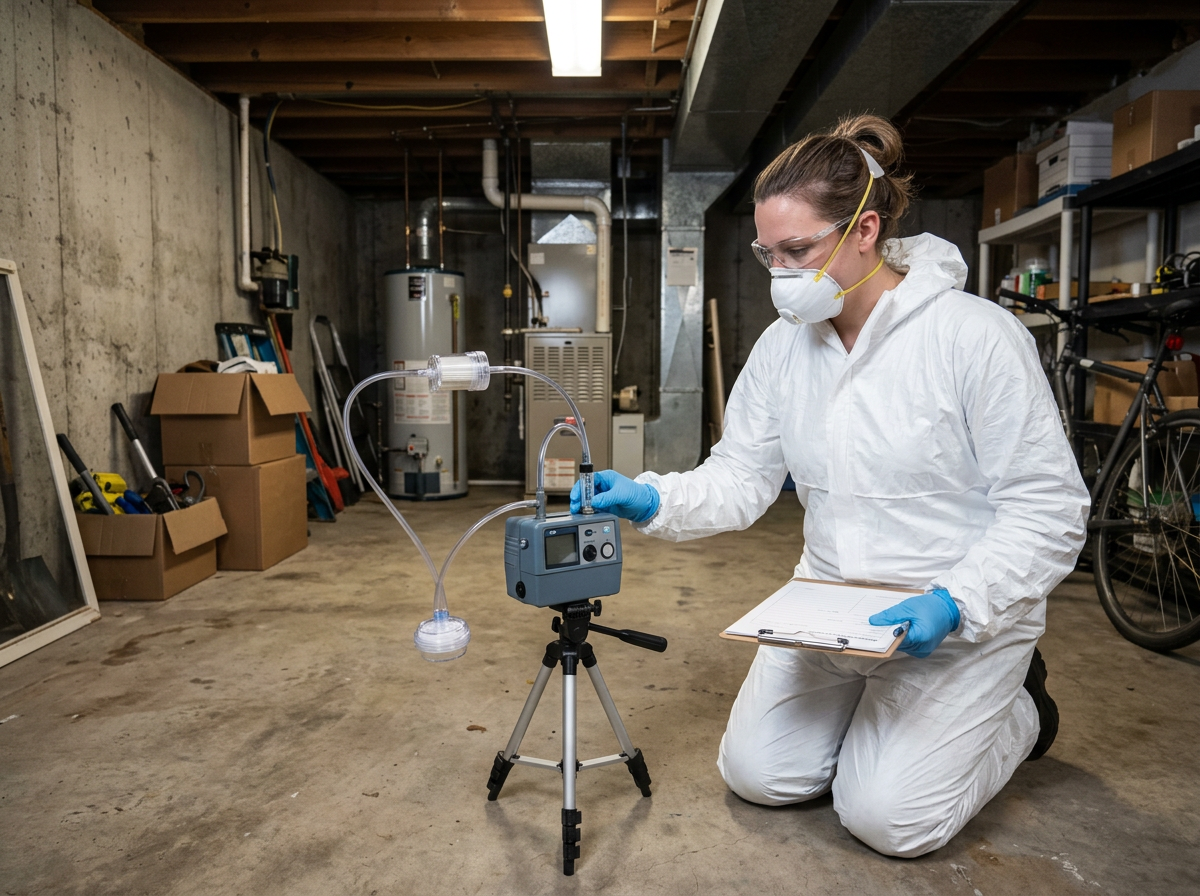
To genuinely safeguard occupants, property managers must look beyond surface-level aesthetics and employ scientific testing protocols. This includes detailed air sampling, surface swab collection, volatile organic compound (VOC) profiling, particulate matter monitoring, and analysis for airborne fungal spores. Our diagnostic process frequently incorporates thermal imaging and quantitative moisture mapping to pinpoint hidden leaks, capillary moisture rise, and interstitial condensation points that foster toxic biological growth. By leveraging certified laboratory analysis and unbiased empirical findings, we deliver data-backed technical reports that provide clarity and actionable remediation pathways.
Our commitment to independent evaluations means we provide non-biased assessments, ensuring there is zero conflict of interest between identifying issues and recommending remediation strategies. Because we do not profit from remediation contracting, our findings remain objective, focusing solely on the verified health status and structural safety of your building. From initial site intake to the final diagnostic delivery, our transparent workflow gives stakeholders complete confidence in the diagnostic findings.
Core Statutory Inspections: Fire, Electrical, Gas, and Asbestos
Compliance with legal health and safety frameworks is non-negotiable for property managers and residential landlords. The statutory landscape is continually evolving, with recent enforcement updates imposing stricter accountability. For instance, the Fire Safety Act 2021 and the Fire Safety (England) Regulations 2022 introduced strict requirements for multi-occupied residential buildings, including mandatory routine checks of fire doors and structural fire resistance. Furthermore, updated PEEP (Personal Emergency Evacuation Plan) regulations mandate identifying vulnerable residents needing evacuation assistance and maintaining formal, accessible evacuation statements.
Electrical safety demands regular Electrical Installation Condition Report (EICR) assessments, mandatory at least every five years for private rented properties. Any identified C1 (Danger Present) or C2 (Potentially Dangerous) defects require urgent remedial action within 28 days. Gas safety remains equally vital, requiring annual Gas Safe CP12 certificates covering all gas appliances provided by the landlord. Asbestos management also remains a vital duty under the Control of Asbestos Regulations 2012 (CAR 2012), requiring a strict “duty to manage” non-domestic premises and common areas of residential blocks, including maintaining an updated Asbestos Register and Management Plan.
Establishing clear operational roles is critical. We advocate for defining a ‘Responsible Person’ for each site, supported by a formal RACI (Responsible, Accountable, Consulted, Informed) framework for key compliance activities. This prevents management oversights and ensures distinct legal accountability across internal teams and third-party contractors.
Here is a snapshot of common statutory inspection frequencies and mandatory compliance standards across property portfolios:
Actionable Risk Registers and Property Health and Safety Governance
Effective property health and safety management hinges on a live, actionable risk register. Rather than relying on static annual PDFs, dynamic compliance platforms allow property managers to aggregate and prioritize hazards across hundreds of assets. Properties can be classified dynamically into high, medium, or low risk categories, enabling intelligent resource allocation. Key Performance Indicators (KPIs) serve as vital metrics during executive compliance reviews, such as tracking the percentage of portfolio sites with zero overdue statutory certificates and measuring the mean time to resolve high-priority defects.
Maintaining robust, courtroom-ready evidence for all completed inspections is essential. Best practices require timestamped high-resolution photos, mandatory data inputs detailing asset conditions, inspector registration credentials, and explicit sign-offs. Incomplete submissions can be eliminated at the operational level by enforcing a quick three-point verification check before closing inspection records: verification of asset identity, physical condition rating, and current regulatory compliance status.
Contractor management is another core pillar of governance. Non-negotiable pre-qualification standards require verifying trade insurance coverage, professional accreditations, proof of competency, and site-specific Method Statements and Risk Assessments (RAMS) before work authorization is granted. After physical repairs occur, standardized protocols like specialized Cleaning Property Health and Safety procedures ensure that post-remediation sanitization meets strict environmental standards prior to sign-off.
Converting assessment findings into trackable, digital task lists with strict deadlines ensures accountability. By ingesting technical PDF reports into a central compliance system, action items can be assigned directly to responsible personnel with automated escalation pathways. Real-time dashboards provide continuous executive visibility, ensuring portfolio-wide compliance and eliminating liability gaps. Regular review meetings should then confirm that actions are closed only after supporting evidence has been checked, rather than simply relying on contractor confirmation.

Conclusion: Strategic Governance and Next Steps
The landscape of properties health and safety is more complex, regulated, and closely monitored than ever before. From the nuanced demands of the Housing Health and Safety Rating System (HHSRS) and Awaab’s Law to mandatory fire, electrical, gas, and asbestos regimes, property managers face constant pressure to safeguard occupants and preserve physical assets. Strategic governance—anchored by clear operational roles, dynamic risk registers, bulletproof evidentiary standards, and accredited contractor management—is not merely a regulatory burden; it is a direct foundation for operational excellence, tenant satisfaction, and long-term asset value.
By fully operationalizing safety protocols, properties teams proactively reduce health risks, comply with statutory habitability standards, and construct immutable audit trails. This integrated approach minimizes regulatory enforcement exposure while protecting tenant welfare and asset equity.
Service Process, Transparent Pricing, and Schedule Your Inspection
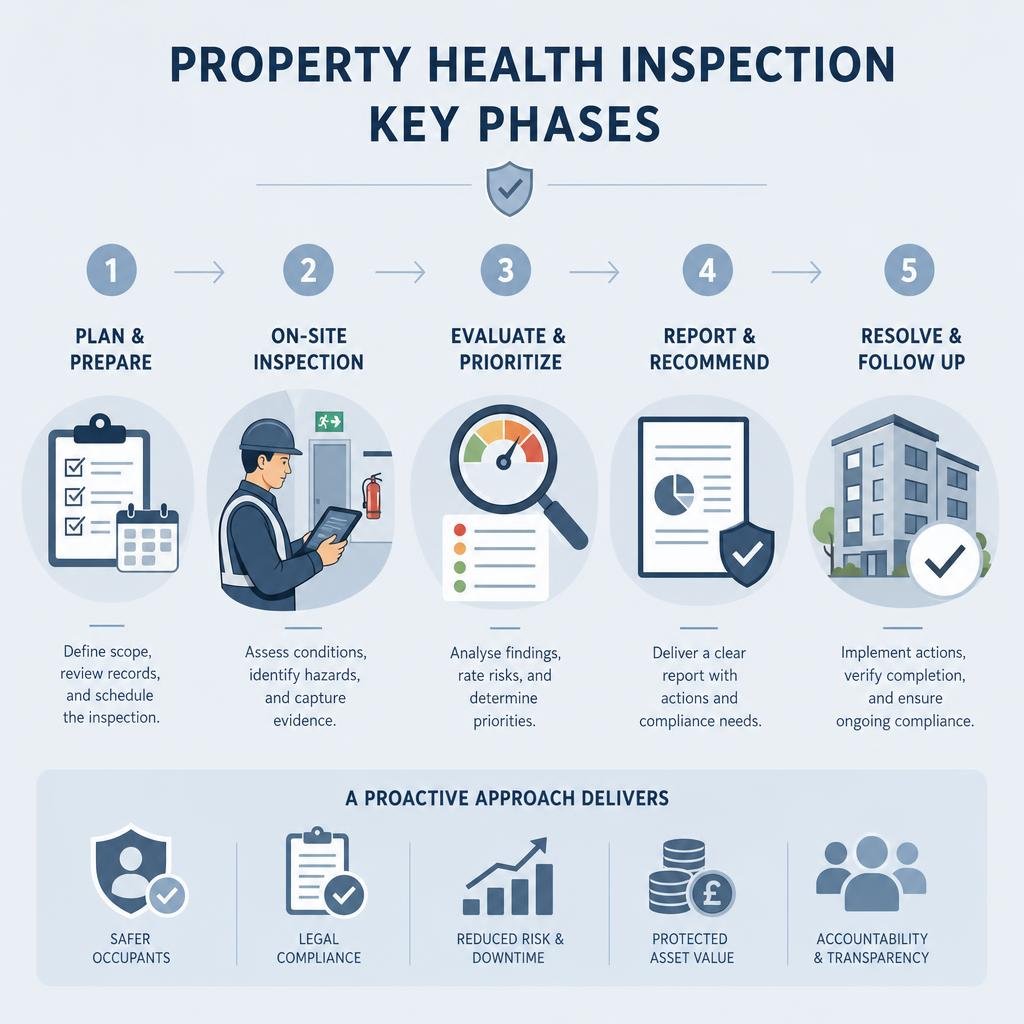
We believe in making invisible environmental risks visible through a structured, highly transparent site assessment workflow. Our diagnostic process begins with preliminary desktop review and site onboarding, followed by non-destructive physical sampling, thermal imagery collection, and accredited laboratory analysis. Our total independence from remediation contracting ensures our diagnostic reports remain completely objective, offering unbiased findings and precise recommendations. We provide straightforward, transparent pricing structures across all diagnostic services, offering clear initial cost estimates so management teams can budget effectively without unexpected financial surprises.
Ready to elevate your portfolio’s health and safety standards? Take the decisive step toward total compliance and operational peace of mind. Contact our team today to review our detailed service process or schedule an independent property health and safety assessment. Our certified technical specialists are standing by to help you build safer, healthier, and fully compliant properties environments.
