I replaced my kitchen faucet last year for a dumb reason: the old one started dripping from the base every time I used the sprayer, and after mopping up the same puddle three times, I gave up trying to tighten it back into submission. You don’t think about your faucet until it’s actively annoying you, and then you’re standing in a hardware store aisle trying to make a real decision in about fifteen minutes.
Here’s what I wish someone had told me before that first purchase.
Quick answer: A faucet’s worth buying if it has a ceramic disc valve, a brass or stainless body instead of zinc alloy, and a magnetic docking sprayer head. Touchless models need a sensor with a manual backup mode too. None of that shows up in a product photo, which is exactly why it gets overlooked.
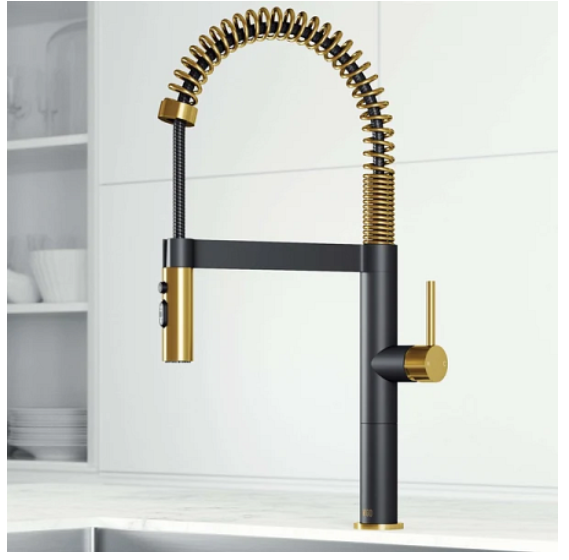
Pull-Down, Pull-Out, Touchless — Same Thing?
Not quite. A pull-down faucet has a tall gooseneck spout with a sprayer that pulls straight down — good for deep sinks and tall pots, and it’s basically the default for modern kitchens now.
Touchless just adds a motion sensor on top of that same pull-down design. Wave a hand near it, water turns on. Pull away, it stops. It’s not really a separate category so much as an upgrade layer.
The actual case for going touchless isn’t the novelty — it’s the number of times a day you’ve got raw chicken or bread dough on your hands and need water without smearing it on a handle. Use one for a couple weeks doing dishes and going back to a manual handle feels like a small hassle you’d forgotten you were living with.
What Actually Wears Out
Every faucet looks fine in a showroom. The differences show up two or three years in.
The valve matters most. A ceramic disc valve is rated for hundreds of thousands of cycles without dripping. Cheaper compression or ball valves wear out faster, and a leaking handle is almost always the valve’s fault. If a listing doesn’t mention the valve type, that’s usually telling you something.
Body material is next. Brass or stainless resists corrosion. Zinc alloy — common in budget faucets — can corrode from the inside over a few years even while the outside still looks okay.
Then there’s the spray head. A pull-down sprayer that doesn’t dock properly starts drooping within a year as the retraction spring weakens. Magnetic docking fixes this by snapping the head back into place with a magnet instead of relying on tension alone.
And the finish — the thing everyone actually judges a faucet by. A cheap plated finish shows water spots and fingerprints fast, then wears thin at the handle. A good multi-layer coating just holds up longer, which matters because you touch this thing five times a day.
For touchless faucets specifically, sensor calibration is everything. Too sensitive and it turns on every time you wave a pot lid near the sink. Not sensitive enough and you’re flagging it down like a cab. The decent ones get the balance right and still work manually if the batteries die.
Where VIGO Fits In
VIGO’s pull-down kitchen faucet collection checks the boxes above — ceramic disc valves, brass construction, magnetic docking heads. Styles range from the simple single-handle Zurich to the bridge-style Cass, in chrome, matte black, brushed gold, and stainless, so matching your existing hardware isn’t a guessing game.
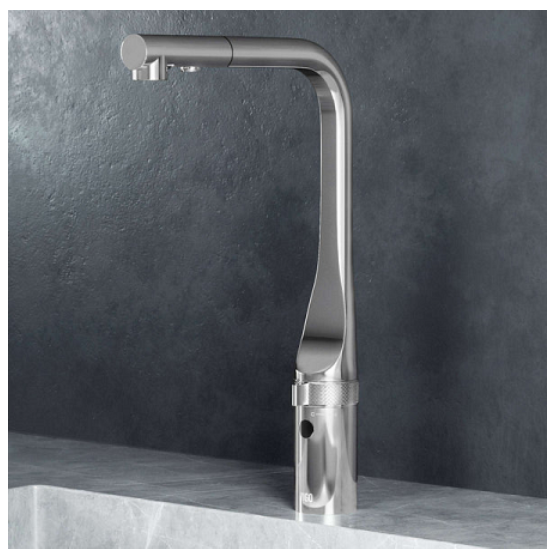
What I noticed going through it: the finishes aren’t just a coating slapped on at the end — they’re actually treated to resist spots and fingerprints, which is the real test a kitchen faucet has to pass. Looking good in a photo means nothing if it’s smudged by week two.
VIGO’s touchless kitchen faucet collection uses the same valve and body standards, just with a sensor layered on. The Edison and Greenwich touchless models sit on the same pull-down bases as their manual versions, so you’re not trading spray quality for hands-free convenience — you’re just adding the sensor on top of a faucet that already holds up on its own.
Installation Is Where the Cheap Ones Show Their Hand
A faucet swap sounds quick until you’re on your back under the sink with a flashlight in your teeth. This part is almost entirely about the product, not your skills.
Bargain faucets often ship with mismatched mounting hardware or vague instructions that leave you guessing which fitting goes where — which means extra trips back to the store. Better-designed ones include deck plates for whatever hole configuration your sink already has, quick-connect hose fittings you snap together instead of wrench-tightening blind, and clear labeled parts so you’re not sorting through unmarked hardware bags. Touchless models should also have a sensor housing meant to be installed once and left alone, not something you’re recalibrating every few months.
That’s the actual difference between an hour-long weekend job and a frustrated afternoon under the cabinet.
Quick FAQ
Pull-down vs. pull-out — what’s different?
Pull-down has a taller spout with the sprayer pulling straight down, better for deep sinks. Pull-out is shorter and more horizontal, common in smaller setups.
Do touchless sensors actually hold up?
Good ones are rated for hundreds of thousands of activations and include a manual mode as backup, so a dead battery doesn’t leave you stuck.
What valve should I look for?
Ceramic disc, every time. It’s the single biggest factor in whether a faucet still runs smoothly a few years in.
The Takeaway
A good faucet just disappears into your routine — no drips, no drooping sprayer, no fingerprints you’re constantly wiping off. Check the valve type and body material before you buy anything. That’s the whole difference between forgetting about your faucet and replacing it again in two years.
Image credit: Product photography provided by VIGO Industries.
