Early childhood education (ECE) is a primary influence on a child’s formative years, with long-lasting implications for cognitive, social, and emotional growth. During these crucial early stages, infants are remarkably receptive to their environments, making structured guidance and nurturing interactions essential. Families searching for infant care near me often seek settings that encourage secure relationships, sensory exploration, and foundational learning, all of which contribute to lifelong developmental outcomes.
The quality of experiences and learning infants receive in ECE programs often sets the trajectory for future academic, interpersonal, and behavioral success. Engaged caregivers and evidence-based curricula enrich the early years, making ECE not just desirable but critical to unlocking a child’s full potential.
Parents and caregivers who are proactive in seeking out structured early childhood education can help close early achievement gaps. Programs tailored for infants are proven to bridge social and economic divides, equipping children from all backgrounds for long-term success. For families, finding an ideal daycare for infants near me ensures each child has access to a nurturing and stimulating environment from their earliest days.
The Critical Role of Early Childhood Education
The first three years of a child’s life are recognized as a vital window for brain development. According to the Center on the Developing Child at Harvard University, young children form over one million new neural connections every second. These neural pathways, shaped by rich sensory input, responsive caregiving, and structured stimulation, set the groundwork for all subsequent learning. Many families seek out a daycare for infants near me to provide a consistent, safe, and engaging setting that inspires curiosity and learning, which is especially important as infants begin to develop a sense of security and worldview.
Studies highlighted by the New York Times have shown that children who participate in robust ECE programs demonstrate greater readiness for kindergarten, improved language skills, and stronger emotional regulation compared to peers with less structured early experiences. Trained educators introduce infants to language, music, tactile experiences, and play activities, all designed to stimulate young minds and foster adaptive skills.
Bridging Developmental Gaps
Children from various socio-economic backgrounds often begin life with different degrees of exposure to quality learning experiences. High-quality ECE programs help bridge these divides. Intervention studies have revealed that early educational support not only bolsters cognitive progress for all children but is especially transformative for infants from under-resourced families. These targeted interventions close achievement gaps, level the playing field, and promote academic equity.
The Power of Early Intervention
Programs that screen for developmental delays and provide individualized interventions can identify challenges while children are still highly adaptable. Early detection and support, whether for language, social behavior, or motor skills, are crucial. According to the Centers for Disease Control and Prevention, high-quality early childhood programs substantially improve outcomes for children with identified needs.
Learning Through Play
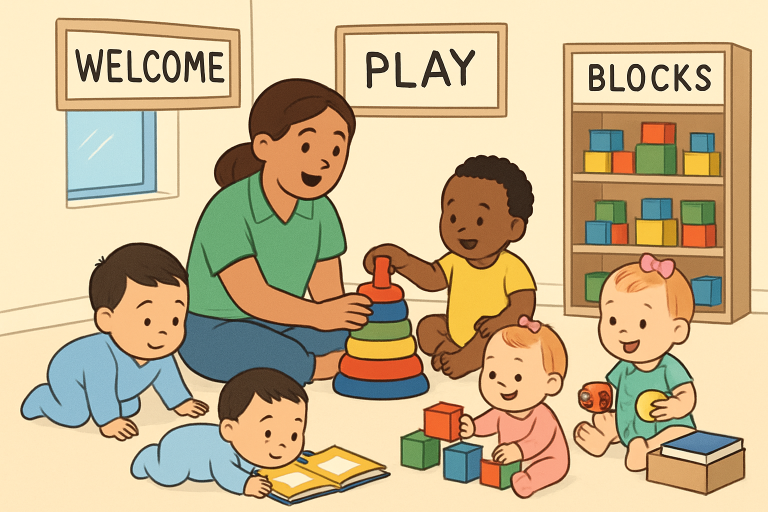
Play-based learning serves as the primary mode of discovery for infants. Play introduces both cognitive and social skills that support school readiness and lifelong resilience. Through activities like building blocks, puzzles, and group interactions, infants learn to solve problems, negotiate, communicate, and manage strong emotions. This learning is supported by attentive educators who scaffold play with open-ended questions and positive feedback, deepening children’s engagement and understanding of the world around them.
Creativity and Critical Thinking
Environments that encourage curiosity allow infants to experiment safely, take risks, and develop early decision-making skills. Whether through music, movement, art, or imaginative play, these experiences are the building blocks of innovative thinking and adaptable behaviors. The hands-on, child-driven nature of play ensures that learning is meaningful and lasting.
Economic and Societal Benefits
The value of investing in early childhood education extends far beyond the individual child. A comprehensive study by the National Institute for Early Education Research demonstrates that communities with robust ECE programs benefit from reduced special education needs, higher graduation rates, a more productive future workforce, and decreased long-term social welfare costs. High-quality ECE is widely regarded as one of the most effective strategies for promoting inclusive economic growth and social stability.
When families prioritize and support access to ECE, they contribute to a cycle of positive outcomes that touch not just individual lives, but society as a whole.
Final Thoughts
High-quality early childhood education stands at the core of healthy, holistic infant development. By offering nurturing environments, responsive caregiving, and opportunities for structured play and discovery, society can help all children realize their full potential. The advantages of early learning extend well beyond school readiness, preparing children for active citizenship and lifelong well-being. With a collective commitment to accessible, equitable ECE, families and communities can lay the groundwork for a more prosperous and inclusive tomorrow.
