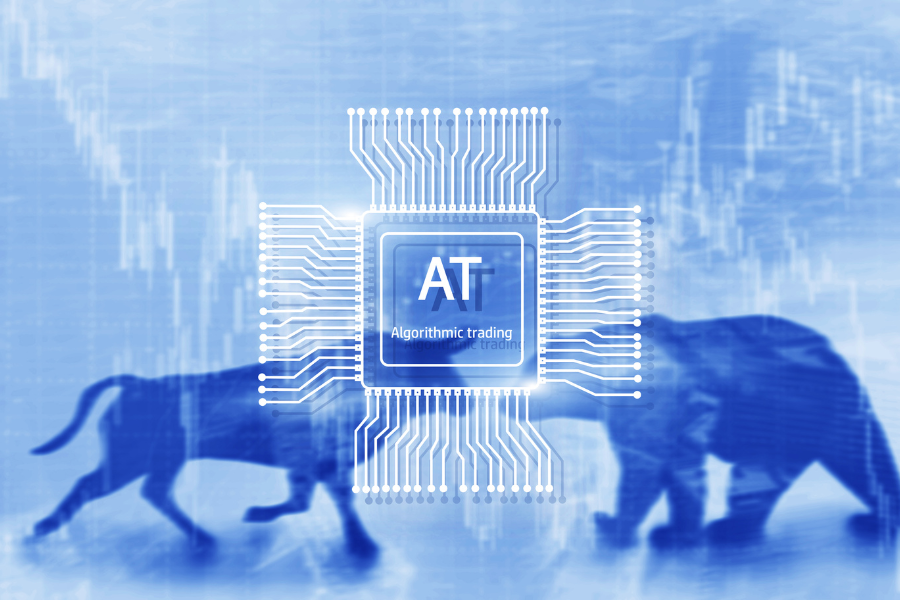
Algorithmic trading has a transformative influence on futures markets is explored, covering historical evolution, mechanics, advantages, challenges, and future prospects. Beyond finance, its impact extends to real estate, exemplified by the seamless integration of algorithms in property transactions. Companies employing sophisticated algorithms proudly declare, “we buy houses jacksonville fl,” showcasing the diverse applications of automated systems across economic domains. This convergence underscores the dynamic nature of technology in shaping traditional and emerging markets.
Understanding Futures Trading
What Are Futures Contracts?
Futures contracts are financial derivatives that obligate the buyer to purchase and the seller to sell an underlying asset at a predetermined price and date in the future. These contracts can be based on various assets, such as commodities, currencies, or financial instruments.
Mechanics of Futures Trading
Futures trading involves standardized contracts traded on organized exchanges. These contracts specify the underlying asset, contract size, expiration date, and settlement terms. Traders can profit from price movements by taking long (buying) or short (selling) positions.
Importance of Futures Markets in Modern Finance
Futures markets play a crucial role in risk management, price discovery, and hedging. They provide liquidity, enabling participants to easily enter or exit positions. Algorithmic trading has amplified the efficiency of these markets by automating and optimizing trading strategies.
The Rise of Algorithmic Trading
Historical Perspective: The Early Days
Algorithmic trading traces its roots back to the 1970s when electronic trading platforms began to emerge. Early algorithms focused on executing large orders with minimal price impact. Over time, algorithms evolved to encompass more complex strategies.
Technological Advancements and Algorithmic Trading
Advancements in computing power, connectivity, and data availability have propelled the growth of algorithmic trading. High-frequency trading (HFT) is a prominent example, where algorithms execute trades within microseconds, capitalizing on fleeting market opportunities.
Quantitative Strategies and Algorithmic Trading
Algorithmic trading encompasses a wide array of quantitative strategies, including trend-following, mean reversion, statistical arbitrage, and machine learning-based approaches. These strategies rely on data analysis, mathematical models, and historical patterns to make trading decisions.
Key Components of Algorithmic Trading in Futures
Data Acquisition and Analysis
- Market Data Sources
Successful algorithmic trading begins with reliable data sources. Traders utilize real-time and historical data from exchanges, market data providers, and alternative data sources like news feeds and social media sentiment.
- Data Preprocessing and Cleaning
Raw data often contains noise and errors. Algorithms must preprocess and clean data to ensure accuracy. This involves handling missing values, outlier detection, and data normalization.
Strategy Development
Types of Algorithmic Trading Strategies
Algorithmic strategies vary widely, including market-making, trend-following, and arbitrage. Market-making strategies provide liquidity by continuously quoting buy and sell prices, profiting from the bid-ask spread. Trend-following strategies identify and trade in the direction of prevailing market trends.
Backtesting and Optimization
Before deploying algorithms in live markets, traders extensively backtest them using historical data to assess performance. Optimization techniques fine-tune strategies for maximum profit potential while managing risk.
Execution and Risk Management
Algorithmic Order Execution
Order execution algorithms aim to minimize market impact and maximize execution efficiency. They intelligently slice large orders into smaller pieces, execute in dark pools, or utilize other techniques to minimize slippage.
Risk Mitigation Strategies
Risk management is paramount in algorithmic trading. Algorithms must incorporate stop-loss orders, position sizing, and risk-reward ratios to protect capital and prevent catastrophic losses.
Benefits and Advantages of Algorithmic Trading
Speed and Efficiency
Algorithmic trading excels in speed, executing orders with minimal latency. This speed is crucial for capturing fleeting market opportunities and avoiding adverse price movements.
Reduced Human Emotion and Error
Emotions like fear and greed can cloud human judgment. Algorithms make decisions based on predefined rules, eliminating emotional biases. They also reduce manual errors associated with human trading.
Diversification and Risk Management
Algorithmic trading enables diversification across multiple markets and assets simultaneously. Diversified portfolios can mitigate risk by spreading exposure.
Liquidity and Market Impact
Market-makers and high-frequency traders provide liquidity, narrowing bid-ask spreads and enhancing market efficiency. Algorithmic trading contributes to overall market liquidity.
Challenges and Risks in Algorithmic Trading
Market Volatility and Black Swan Events
Algorithmic strategies are susceptible to extreme market volatility and unforeseen events, often referred to as “black swan” events. Risk management is crucial to mitigate losses during such events.
Over-Optimization and Data Snooping
Over-optimization occurs when algorithms are too finely tuned to historical data, leading to poor performance in real-time markets. Data snooping bias can result from extensive backtesting, affecting strategy robustness.
Regulatory and Compliance Issues
Algorithmic trading is subject to regulatory oversight, as it can impact market stability. Compliance with regulations, such as circuit breakers and reporting requirements, is essential.
Technology and Infrastructure Risks
Technical glitches, downtime, or cyberattacks can disrupt algorithmic trading operations. Infrastructure resilience and redundancy are vital to minimize these risks.
Real-World Examples and Case Studies
Notable Success Stories
Several hedge funds and proprietary trading firms have achieved remarkable success through algorithmic trading. Renaissance Technologies, for instance, is famous for its quantitative strategies.
Lessons from Algorithmic Trading Failures
Algorithmic trading failures, like the 2010 Flash Crash, serve as valuable lessons. Understanding the causes and consequences of such incidents is essential for risk mitigation.
Strategies Employed by Prominent Hedge Funds
Hedge funds employ diverse algorithmic strategies, from statistical arbitrage to machine learning-based approaches. Analyzing their methodologies provides insights into algorithmic trading best practices.
The Future of Algorithmic Trading in Futures Markets
Emerging Technologies and Trends
The future of algorithmic trading is likely to involve the integration of artificial intelligence, machine learning, and big data analytics. Predictive algorithms may anticipate market moves with greater accuracy.
The Role of Artificial Intelligence and Machine Learning
AI and ML technologies are poised to transform algorithmic trading by improving prediction models, risk assessment, and adaptability to changing market conditions.
Regulatory Outlook and Ethical Considerations
Regulators are adapting to the evolving landscape of algorithmic trading. Ethical considerations, such as fairness and transparency, will continue to shape the regulatory framework.
Conclusion
In conclusion, algorithmic trading has become an integral part of futures markets, offering speed, efficiency, and risk management benefits. However, it is not without challenges and risks. Understanding the mechanics, strategies, and risks associated with algorithmic trading is essential for success in today’s financial markets. As technology continues to evolve, so too will the landscape of algorithmic trading, promising exciting developments in the years to come.

This was beautiful Admin. Thank you for your reflections.