As much as we hate it, grieving is a part of life. From family members to pets to leaving behind friends during a move, your child will eventually experience loss.
Even when you are grieving yourself, what are some healthy ways you can help your child process their grief?
Keep reading to learn how to support your child’s mental health when coping with something incredibly tough to deal with: loss.

Keep Things Developmentally Appropriate
Keep your child’s age in mind when discussing death or loss. Young children do not understand the concept of death, so understanding that a person or thing will be gone forever is hard for them.
It isn’t until a child reaches 5-7 years old that they begin to understand that death is permanent. When they start to understand, they may worry that another family member will die.
So for very young children, keep details brief and don’t use euphemisms. Euphemisms are a “nicer” way of saying something uncomfortable, but for younger children, this can confuse them.
Avoid euphemisms like:
- “Grandma went to sleep.”
- “They passed.”
- “She lost her battle.”
- “He kicked the bucket.”
Instead, be direct, clear, and calm.
For example, “There is some sad news I have to tell you. Grandpa died this morning.”
Share Your Emotions
Sharing your feelings helps your child feel safe to share their feelings.
You may be angry, confused, sad, and scared.
Your child may very well “catch you” crying, and you may wish they hadn’t seen it. But let them see you expressing your emotions (so long as you are relatively in control of them).

“I’m feeling sad about Grandpa. I needed to cry for a moment.”
By expressing yourself, you’re also supporting your child as they grieve.
Because grieving is hard. There’s no need to hide how you feel.
Let Your Child Feel Their Feelings
Like you, your child is also battling a mix of emotions when dealing with loss. So when their feelings grow, reassure your child that it’s okay and healthy to let them flow.
“I know how sad you are about Grandpa. It’s okay to cry.”
“It’s normal to feel this way. I feel that, too.”
Be There When They Need You
Children deal with trauma and death in different ways.
They may become quieter, reverse back to baby talk, or act younger than they are. They may become more irritable, pick fights, or wet the bed. They’ll likely ask questions because they’re curious.
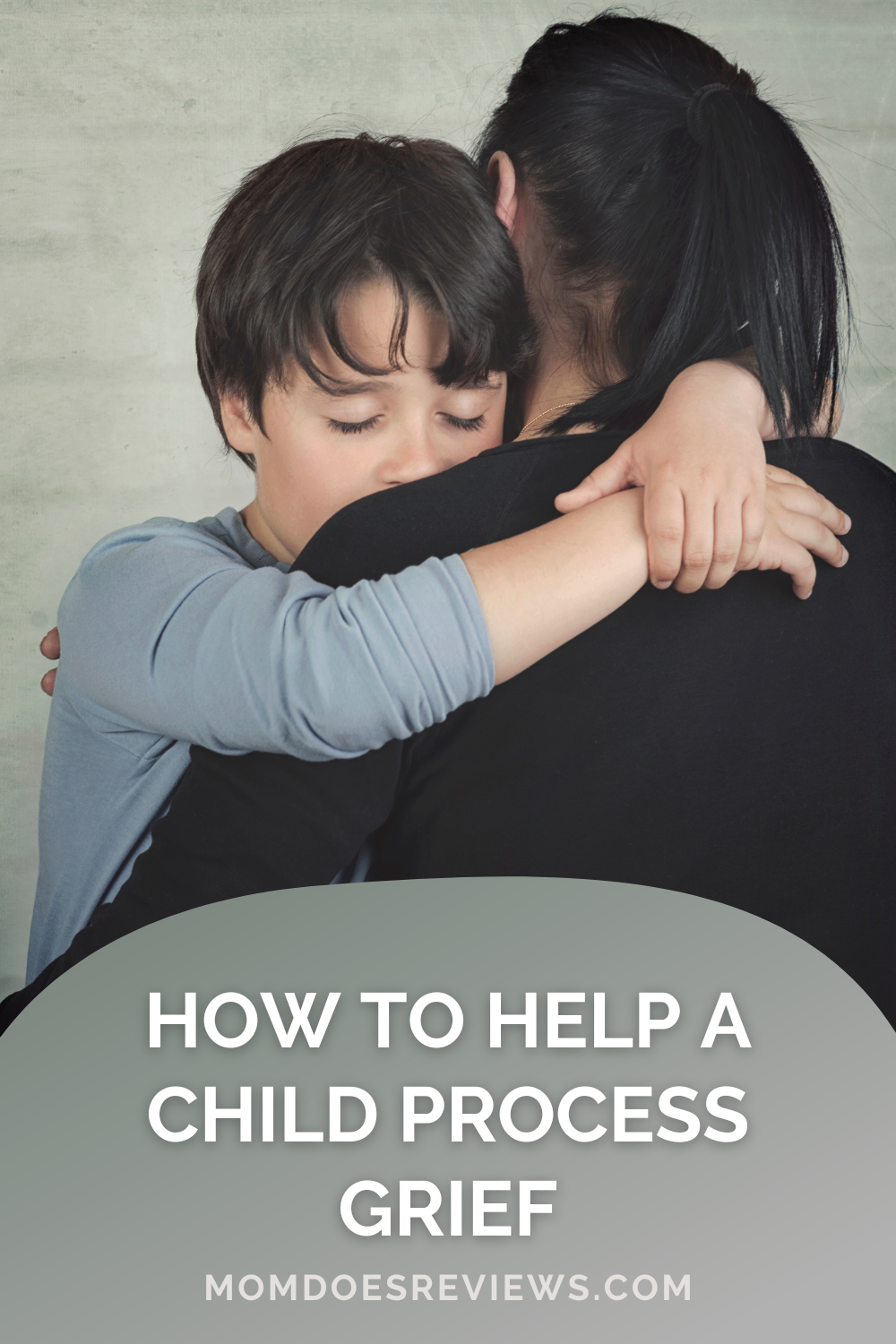
No matter how your child moves through their grief, be there with hugs and a listening ear when they need support.
Show Healthy Ways To Cope
Children are greatly influenced by the adults in their lives, so how you cope with grief is a blueprint for how they’ll deal with it themselves.
In addition to showing your emotions, show your child other healthy ways to cope.
For example, practice mindful movement (think yoga), spend time outdoors, and eat the right foods for your body.
Support With Play
If your child goes from crying to playing, don’t think your child isn’t “normal.” Play is a normal way for children to process their feelings and make sense of what has happened, especially while grieving.
Children’s play is normal even when it centers around themes of death (called “death play”).
Toppling over blocks to resemble an earthquake, taking their sick baby doll to the hospital, or falling to the floor and being “shot” are examples of death play.
So don’t judge your child’s play, but encourage it.
Talk About The Afterlife
Whether or not your family is religious, discussing the afterlife can be comforting for your child.
Share your beliefs and teach your child about others’ beliefs about death around the world.
You can explain that some cultures believe in reincarnation, and some believe a person’s soul goes to another world.
Honor Who Or What Was Lost
Another way to help your child process their grief is to honor your loved one or cherished thing (like your current home because you’re moving).
Together you can plant a tree, create a scrapbook or photo montage, and donate to their favorite charity.
Keep Your Routine
Sticking with your child’s routine helps them feel secure and safe. Try to maintain a normal schedule as possible, though don’t be afraid to lean on others for support to give yourself a break.
It may be helpful to create a list of things to get done, even if they were “small” tasks before, like doing the dishes or taking out the garbage.
Get Professional Help
If you think your child is having a tough time dealing with their loss, you may want to seek professional help.
Anxiety, depression, and aggressive outbursts are signs that they may have an adjustment disorder, which is when a child has difficulty coping with their feelings after a major event.
Talk with your child’s doctor or seek help from a children’s grief counselor.

Grieving is never easy, especially for young children who can’t yet understand the concept of death. So when talking to your child about loss, keep it age-appropriate and be direct. Show your emotions, model healthy ways to cope, and keep your routine as much as possible.
What are some ways you help your child process grief?
