New teachers often think that it wouldn’t differ teaching courses to generation x, y, or z. However, technology affects every generation on different levels and it created a difference in the adequate teaching ways for every generation. While baby boomers were used to the traditional way where a teacher talks for an hour without any engagement, the followed generation found this way to be ineffective. Millennials learned how to be independent and sole thinkers, they are mostly skeptical and cynical. Most millennials will double-check the information provided by the teacher before they believe an outdated curriculum. Painting the whole generation with the same brush doesn’t make sense. Generalizing and forcing the same characteristics on a large group of people will not help you to understand how to teach better. Everyone is different, but the sure thing about millennials is that they expect technology and engagement in the classroom.
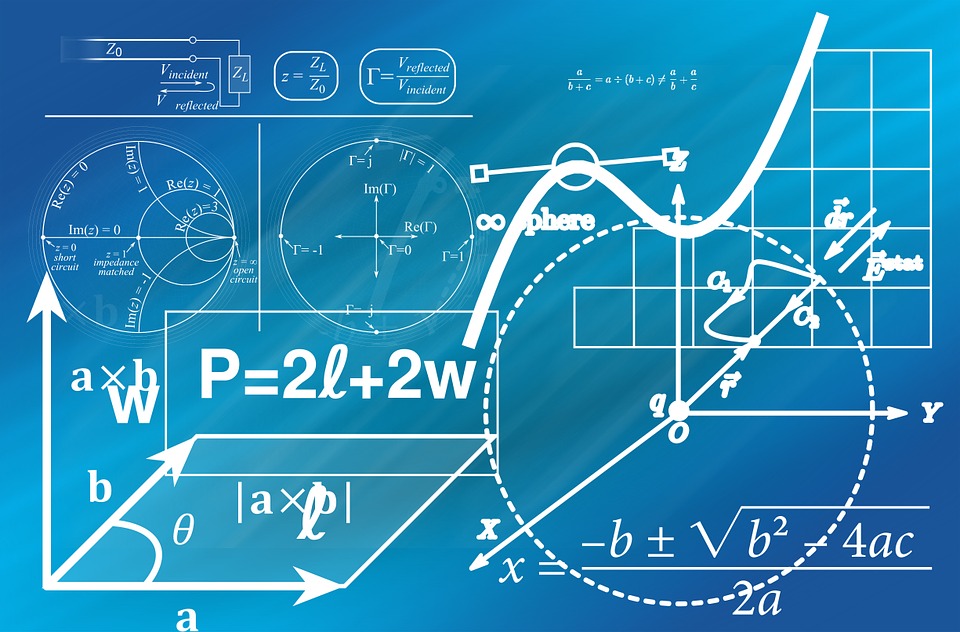
Technology is enabling a lot of teachers to make students see for themselves how all the theoretical equations and numbers translate to natural phenomenon in real life. The common approach for traditional educators is to try to remove the aspect of technology from the educational process as much as possible. In this day and age, using such a method is bound to backfire. Technology is revolutionizing not only how science is taught, but also how it’s perceived by students.
Embracing New Methods
Blocks of text filled on blackboards are a thing of the past nowadays. You won’t find any single student enthusiastic about spending more than 15 minutes contently writing behind a teacher or an instructor. Using applications and tablets makes the learning experience more dynamic and up-to-date. The general trend of losing interest in studying science can only be blamed on the wrong methods it’s being taught with. This decline in scientific interests has major consequences on the future of scientific fields and the economy. STEM jobs, which are any jobs related to science, technology, engineering, and mathematics, are expected to see a drastic increase in growth in the becoming years.
Appealing to the Practical Side
Technology can be used to show in a few minutes what can be explained in an hour. Simply talking about the scientific aspect on paper can be daunting for students who have no background about the subject. PASCO scientific equipment such as the Probeware introduces sensor-based collection and analysis of information that allows students to approach a problem and solve it using similar tools which are available to scientists and engineers. Incorporating technology in learning about physics has the highest benefit if it starts from childhood, by playing on the intrinsic instinct of children to explore the world around them and using it as motivation to help them learn about physical theories and experiments.
Collaboration
Millennials grew up in a world where every voice matters and every opinion bears weight. It’s only natural to invite them to think collectively on how the world around them works. It’s easy to feed them a huge amount of information while dictating it. What can truly make a difference is giving millennials space and tools to think together and reach the right conclusions aided by the support of knowledgeable teachers. Brainstorming sessions can prepare them for teamwork which is essential in the practical world of science, where scientific progress is collectively obtained. Students are more likely to learn if they find themselves trying to respond to actual science-based scenarios or challenges.

Visiting the Laboratory
Studying physics without conducting any experiments or practical drills to test and better understand different theorems is only going to add to the confusion a student can have. Thanks to virtual laboratories, scientific labs nowadays are able to conduct relatively complex experiments that otherwise may not be easily done in a school or a university’s traditional laboratory.
The process of teaching is seeing a lot of drastic changes over the years. Technology is going to open new paths and windows to easily allow students to have a firm and practical understanding of physics. A science teacher needs to have critical thinking, communication, real-life experiences, and needs to be ready to be asked questions of which the answer chosen should push them more towards an inquisitive state of mind. Millennial Students nowadays are expected to be able to analyze, interpret, observe, and then work collectively on a solution so they’d be able to engrain the concept into their understanding. Any physics class can either be a boring 2-hour talk or an engaging series of experiments that allow a physical concept to be perceived in its natural state.
