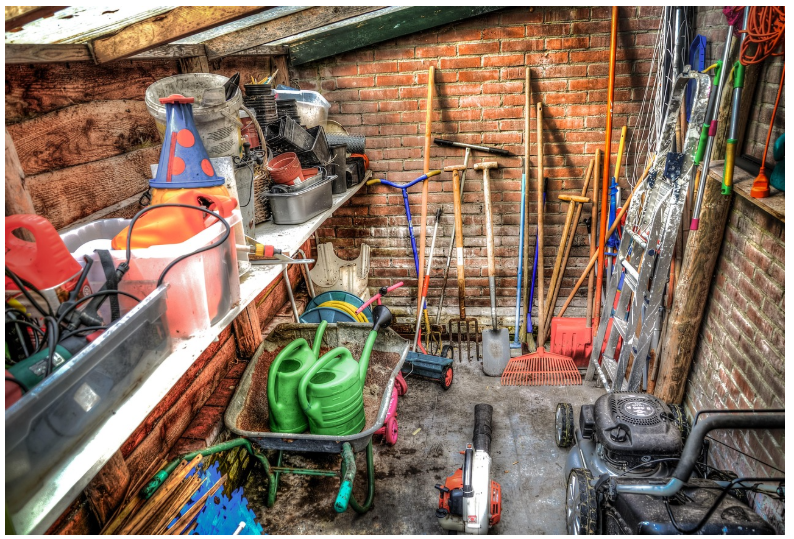
Tired of fighting your garage every single time the seasons change? You are not alone. Holiday lights, summer wardrobe, winter clothing, pool floats…somewhere it all must go. And most times it ends up crammed in the corner, bursting at the seams, taking over your entire house. Maybe you need to figure out the storage unit size you need for these items
Here’s the kicker:
The average American home contains an astonishing 300,000 items. (Source: UCLA Study) Okay. Seriously. That’s insane. Which is why it shouldn’t surprise you that 75% of Americans feel they have enough clutter in their home to cause stress.
The good news?
It can be remedied in no time. By having a basic decluttering checklist and knowing the proper storage unit size guide for your home decluttering needs, you take the guesswork out of the equation. Uncertain of how much space your seasonal belongings actually require? Find listings such as sparefoot.com/storage-unit-size-guide/10×25-storage-unit that break down everything that will fit in your storage unit.
Let’s dig in…
What’s inside this guide:
- Why Seasonal Items Take Over Your Home
- The Seasonal Decluttering Checklist
- Matching the Right Storage Unit Size
- Packing Tips That Save Space
Why Seasonal Items Take Over Your Home
Seasonal stuff is sneaky.
You only wear it eight months out of the year, and the rest of the time it hangs around your house mocking you. Look at yourself — snow boots in the summer or patio furniture in the winter are nothing but useless clutter taking up space in your closets.
Why does everyone have self-storage units? Self-storage rates are pretty cheap when you think about it on a monthly basis. Renting a storage unit allows you break down your belongings into what will fit in your home and what you need to put into storage. Prices start as low at $19 a month! And it only gets pricier from there. And it adds up quick. The need for additional space is increasing as well. Self-storage usage continues to grow, with 12.6% of US households renting space today.
Why does this keep happening? A few reasons:
- Your house is smaller than it used to be: Newer homes have less built-in storage.
- You purchase more than you throw away: Every year you always buy new equipment, but rarely get rid of your old stuff.
- Sentimental pull: It’s just hard to part with holiday keepsakes and memories.
The result is a cluttered living space year-round. Put those seasonal belongings into storage and free up space immediately.
The Seasonal Decluttering Checklist
Want to reclaim your house? Tackle this list room by room. Don’t try and do it all at once. That’s how overwhelm happens and people give up.
And you shouldn’t feel bad. In fact, approximately 44% of Americans feel that they will likely begin decluttering in the near future. So why wait? Start now.
Sort Into Three Piles
Grab three boxes and label them:
- Keep & Store: Seasonal items in good shape that you’ll use again.
- Donate or Sell: Things you haven’t touched in over a year.
- Toss: Broken, stained, or just plain junk.
Answer truthfully. If you didn’t even remember you had it, you probably don’t need it.
Go Category by Category
Hit these common seasonal culprits one by one:
- Holiday décor: lights, ornaments, fake trees, and inflatables
- Winter gear: coats, boots, sleds, and snow shovels
- Summer toys: pool floats, beach chairs, coolers, and sports equipment
- Garden tools: mowers, hoses, and patio cushions
- Bulky bedding: heavy comforters and spare blankets
Clean Before You Store
NEVER pack dirty items away in storage. Dirt and grime can attract bugs and odors. Launder all fabrics, wipe down plastics, etc. Allow everything to dry completely before packing. Your future self will thank you.
Matching the Right Storage Unit Size
Here’s where most people get it wrong…
They rent either an apartment that is too small and become clutterbugs or pay for more space than they need. Neither scenario is ideal.
The secret is sizing your storage unit to the pile of junk in front of you. Here’s a quick storage unit guide to help with your home de-cluttering junk pile:
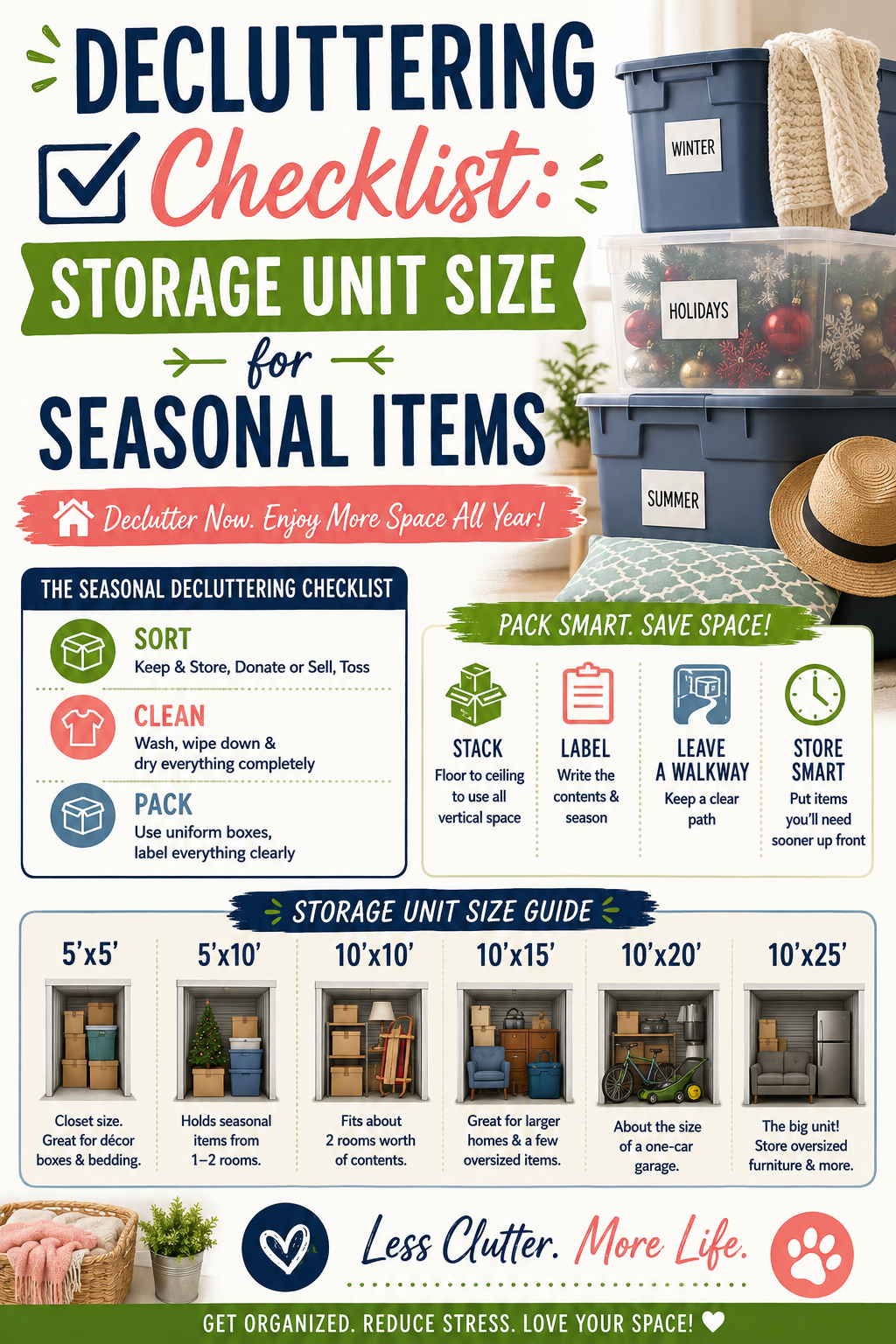
- 5×5 unit: Closet size. Enough room for some décor boxes and bedding.
- 5×10 unit: Used for storing seasonal belongings from one or two rooms. Example: Christmas bins and winter coats.
- 10×10 unit: Enough space for about two rooms worth of contents. Perfect if you have a budding seasonal wardrobe.
- 10×15 unit: Seasonal belongings from a larger home and a few oversized items.
- 10×20 unit: About the size of a one-car garage. Patio furniture, bikes, bins.
- 10×25 unit: This is it, the big unit. Store anything from holiday decorations to lawn mowers to oversized furniture.
Deciding which size to choose? If you’re ever unsure, go larger. Having extra space will allow you to access items much easier without having to unload the entire cabinet.
Don’t feel ashamed or embarrassed either. Most storage rentals are for personal use, about 77% in fact. Your seasonal clutter is what those units were meant for.
Packing Tips That Save Space
Pack smart. The better you pack, the smaller (and less expensive!) unit you can rent. Follow these tips to maximize space:
- Use uniform boxes: They stack neatly and won’t waste space.
- Go vertical: Stack floor to ceiling with the heaviest boxes on the bottom.
- Label everything: Write the contents and the season on every single box.
- Leave a walkway: Keep a clear path so you can reach the back.
- Store smart: Put what you’ll need soonest right by the door.
Vacuum bags work best for bulky bedding and winter coats. They compress everything down small and dehumidify simultaneously.
Cool, right?
Bringing It All Together
Seasonal clutter doesn’t have to rule your home.
When you declutter with a basic decluttering checklist and choose the correct storage unit size, you create more space, reduce stress and protect your seasonal belongings until you need them. Here’s a quick recap:
- Sort your seasonal items into keep, donate, and toss piles
- Clean everything before it goes into storage
- Match your unit size to the size of your pile
- Pack smart to save space (and money)
The worst part is always beginning. So just start with one room, toss three boxes, and dive in. You’ll be glad you did. Your future self and garage will thank you.
